European Sturgeon
Acipenser sturio
Identification
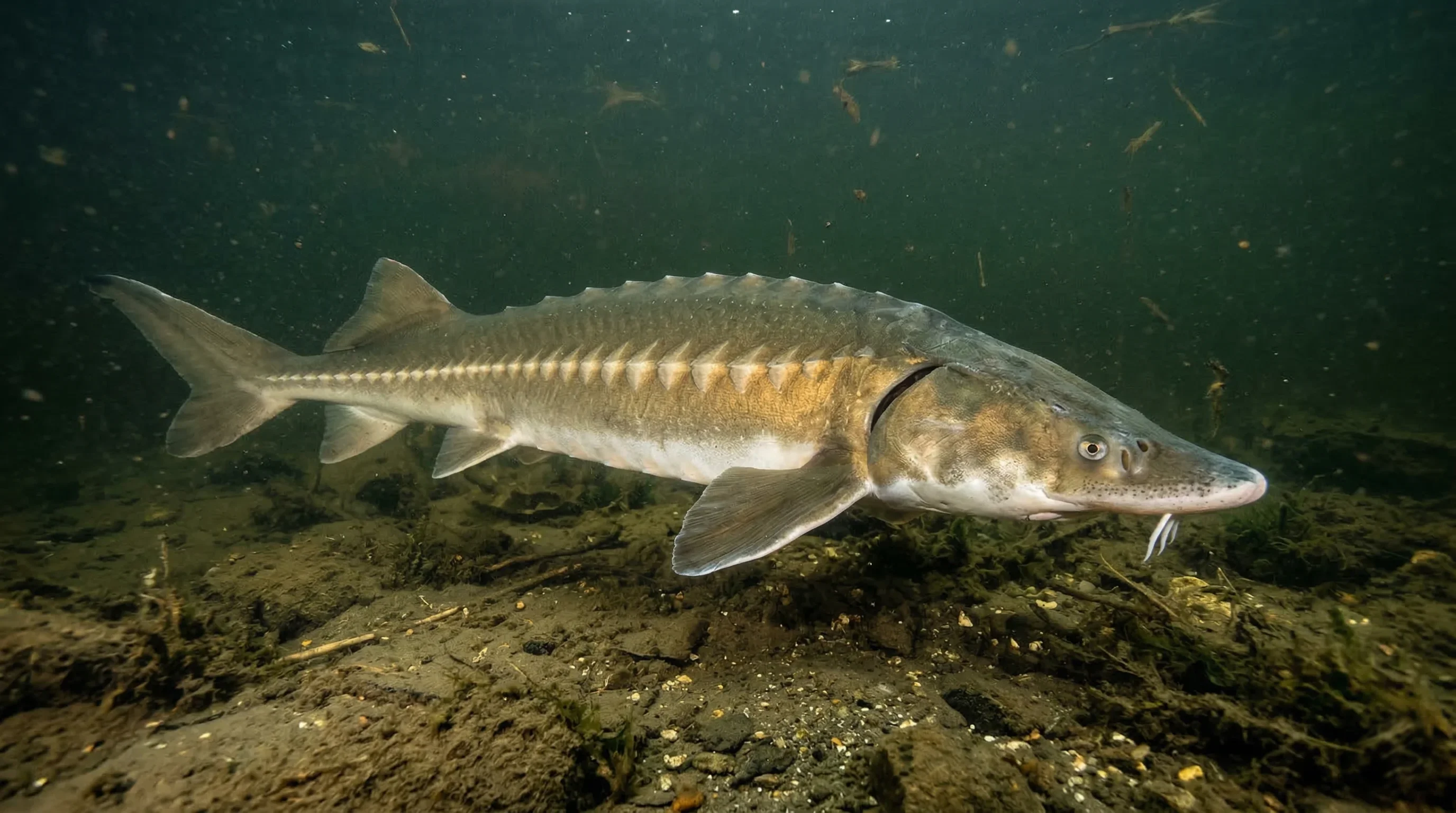
The European sturgeon (Acipenser sturio) is an impressive ancient fish that can reach 6 metres in length and over 400 kg. The body is covered with five rows of bony plates (scutes) instead of scales. The snout is long and pointed, with four barbels on the underside. Colouration is greyish-brown on the back and white on the belly.
Ecology
The European sturgeon is anadromous: adults live in coastal waters and estuaries, migrating upstream to spawn on gravel and stone beds. The species can live over 60 years. Sturgeons are bottom feeders that use their barbels to locate worms, molluscs and crustaceans. Juveniles remain in the river for several years before migrating to sea.
In the Netherlands
With only 98 observations in our database, the European sturgeon is critically endangered (IUCN: Critically Endangered). The species was originally native to the Rhine and Meuse but became extinct due to overfishing and loss of spawning grounds. Since 2012, a reintroduction programme has been running in the Rhine catchment, releasing young sturgeons from the French breeding programme (Gironde). The species is strictly protected under the Habitats Directive and CITES.
Upgrade to Specialist to see the best fishing spots for this species.
Seasonal patterns
Upgrade to see seasonal catch patterns for this species.
Key predictors
Upgrade to see the key predictors and statistical insights for this species.


