Identification
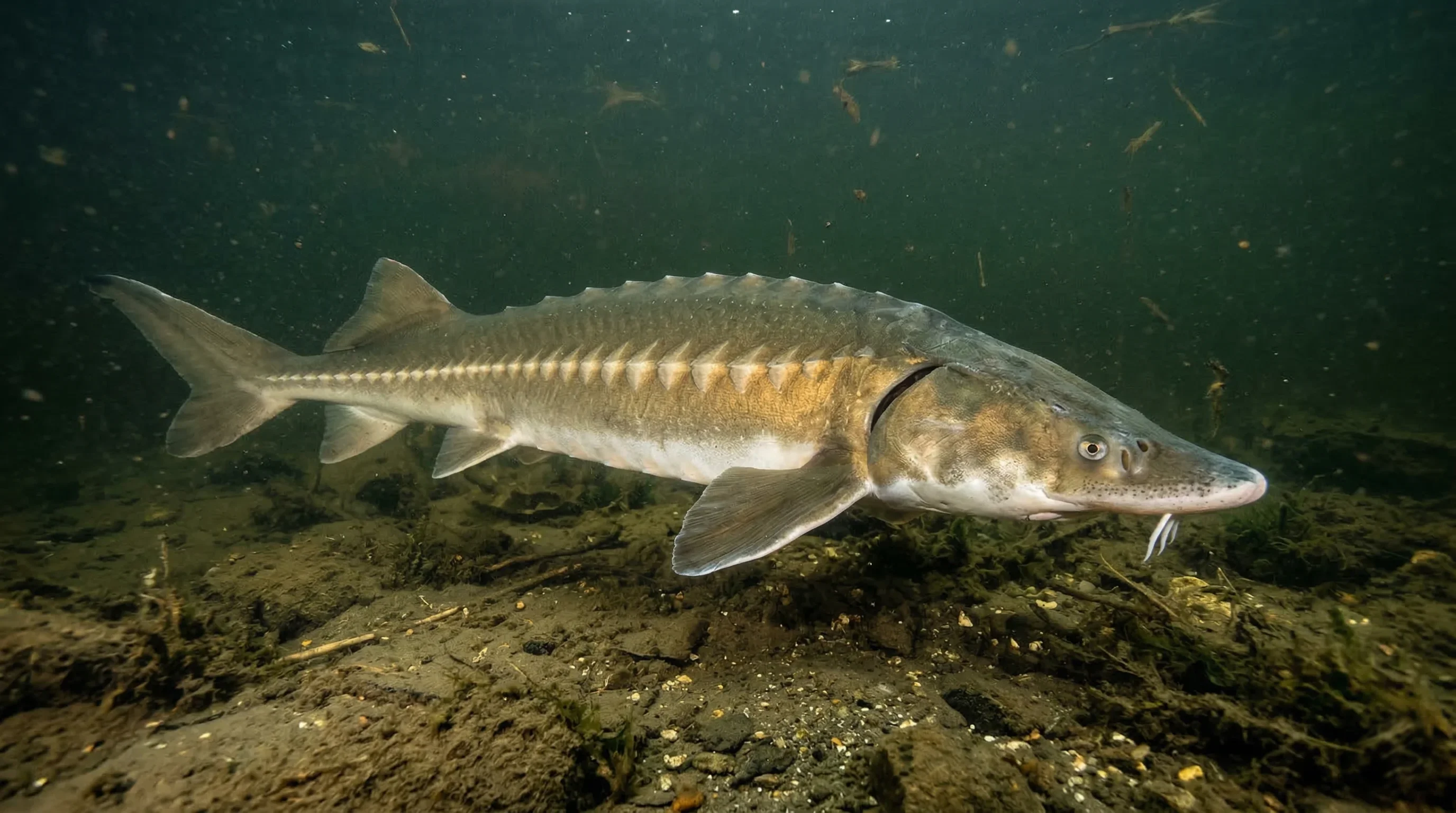
The Russian sturgeon (Acipenser gueldenstaedtii) owes its Dutch name 'diamantsteur' to the striking, star-shaped bony plates resembling diamonds. The species reaches up to 2.3 metres and 115 kg, though specimens in the Netherlands are typically much smaller. The snout is short and rounded. Colouration is grey-green to blue-grey on the back, with a white belly.
Ecology
The Russian sturgeon is originally an anadromous species from the Caspian Sea and Black Sea. In the wild, it spawns in large rivers on stony beds. The diet consists of benthic fauna: molluscs, worms and small fish. Like other farmed sturgeons, it is a popular species in European aquaculture for caviar production.
In the Netherlands
With 109 observations in our database, all Dutch records can be traced back to escaped specimens from farms or ornamental ponds. The Russian sturgeon is not native to Western Europe. No wild reproduction is known. The species is internationally protected under CITES due to severely declined wild populations around the Caspian Sea.