Identification
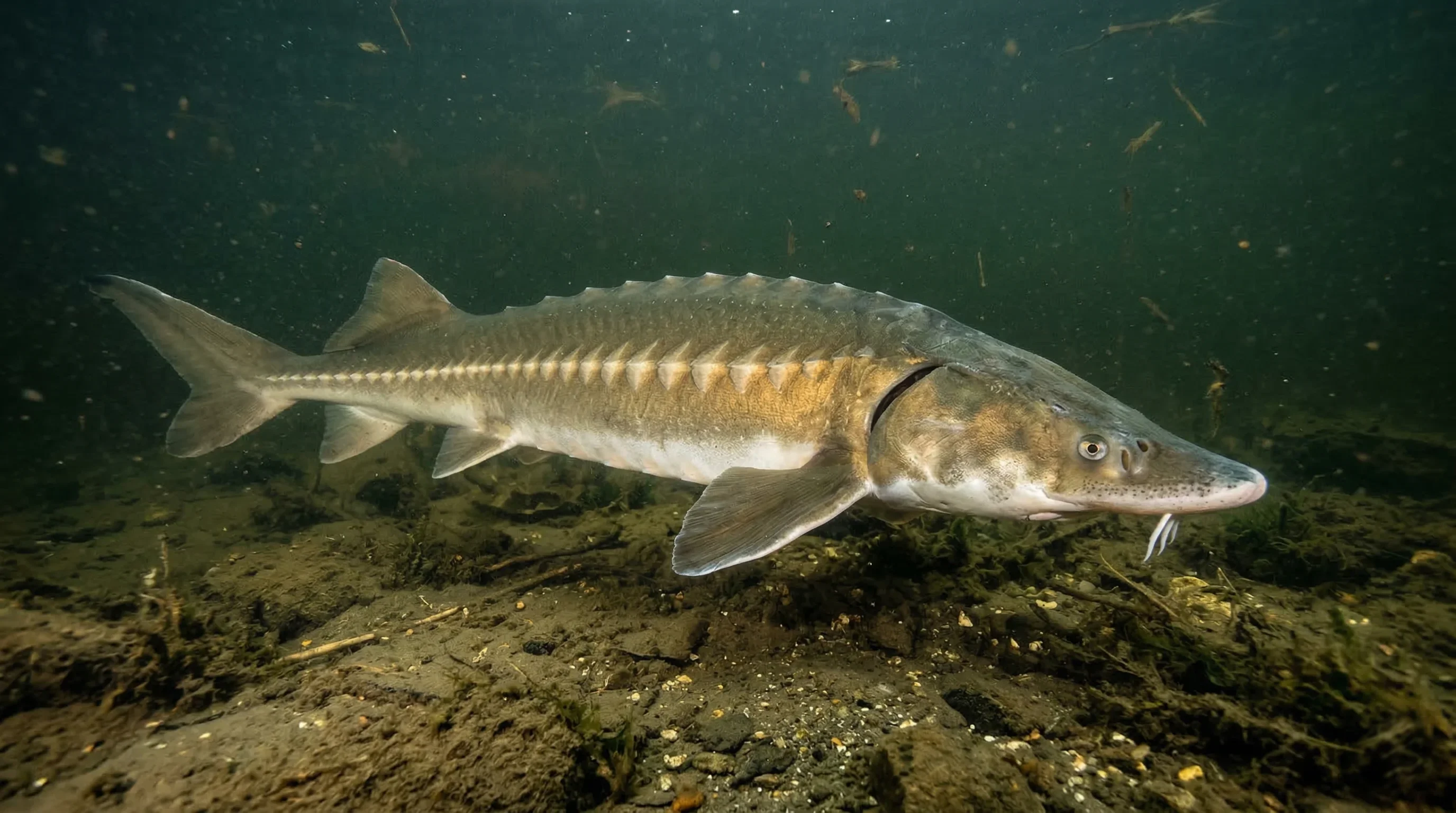
The Atlantic sturgeon (Acipenser oxyrinchus) is a large sturgeon species that can reach 4.5 metres. Characteristic is the long, sharp snout (oxyrinchus = sharp nose). The body bears five rows of bony plates. Colouration is olive-green to blue-black on the back and white on the belly. Juveniles have sharper bony plates than adults.
Ecology
The Atlantic sturgeon is an anadromous species that lives in coastal waters and migrates up large rivers to spawn. The species can live over 60 years and matures late (males after 10-14 years, females after 15-20 years). The diet consists of benthic organisms: crabs, worms, molluscs and small fish.
In the Netherlands
The Atlantic sturgeon is extremely rare in Dutch waters. Historically, the species entered rivers from the Atlantic coast. Present-day observations are very occasional and may involve strays or misidentification with other sturgeon species. The species is protected under CITES and the Habitats Directive. Reintroduction programmes are running in North America; in Europe, research is ongoing on whether A. oxyrinchus could play a role alongside A. sturio in sturgeon recovery.