Identification
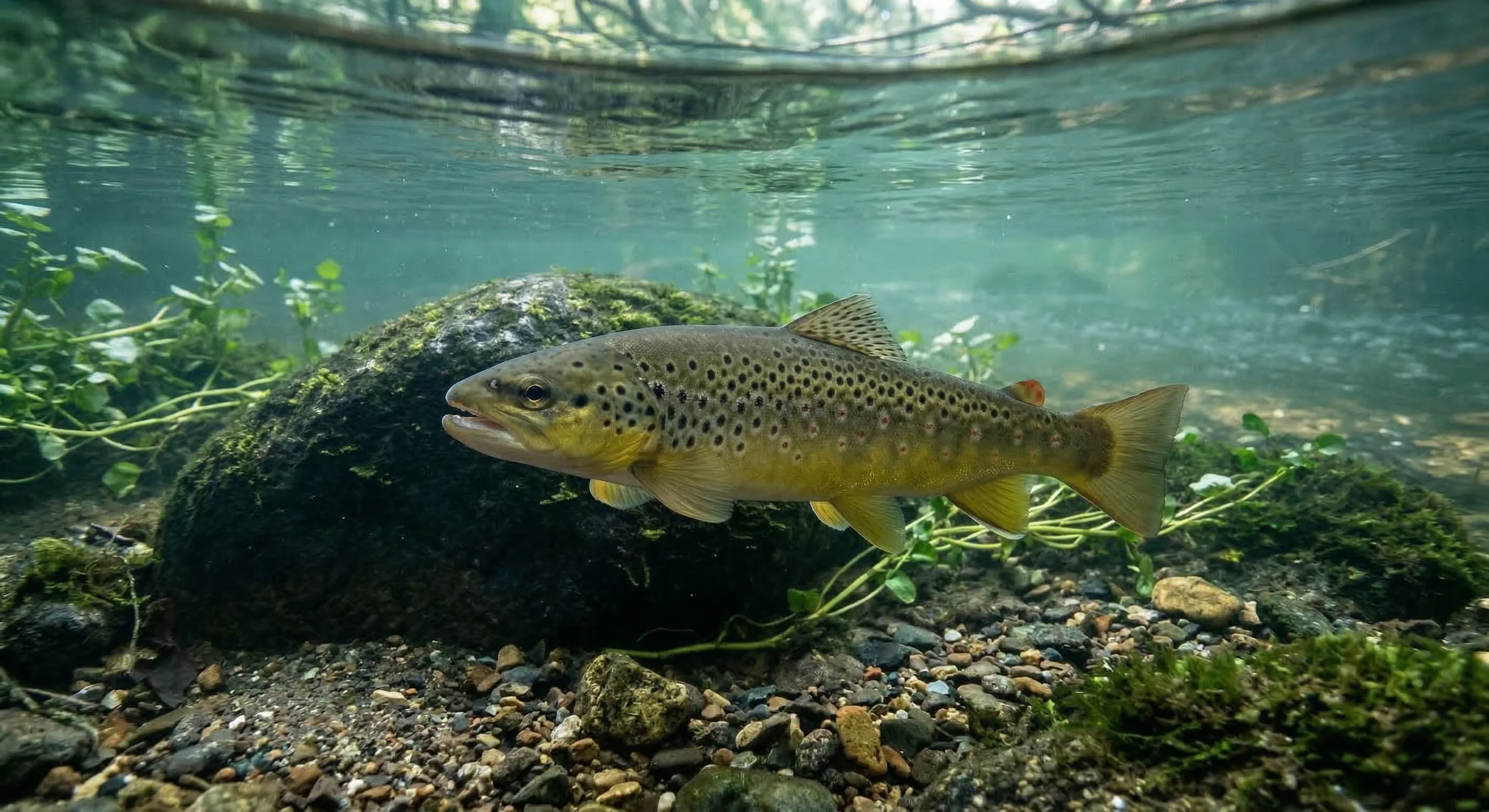
The chinook salmon is the largest Pacific salmon species, reaching 150 cm and over 60 kg in its native range. The body is robust with a dark olive-green to black back. Distinctive are the black spots on both lobes of the tail fin — separating it from other Pacific salmon. The lower jaw gums are black.
Ecology
The chinook spawns in major rivers along the North American and Asian Pacific coast. Some populations migrate over 3,000 km upstream. Like all Pacific salmon, all adults die after spawning. Juveniles grow up in rivers and migrate to the ocean as smolts, where they spend 1 to 6 years.
In the Netherlands
Does not naturally occur in Europe. Incidental records are extremely rare and likely represent aquaculture escapes. The species has not successfully established anywhere in European rivers.