Twaite shad
Alosa fallax
Identification
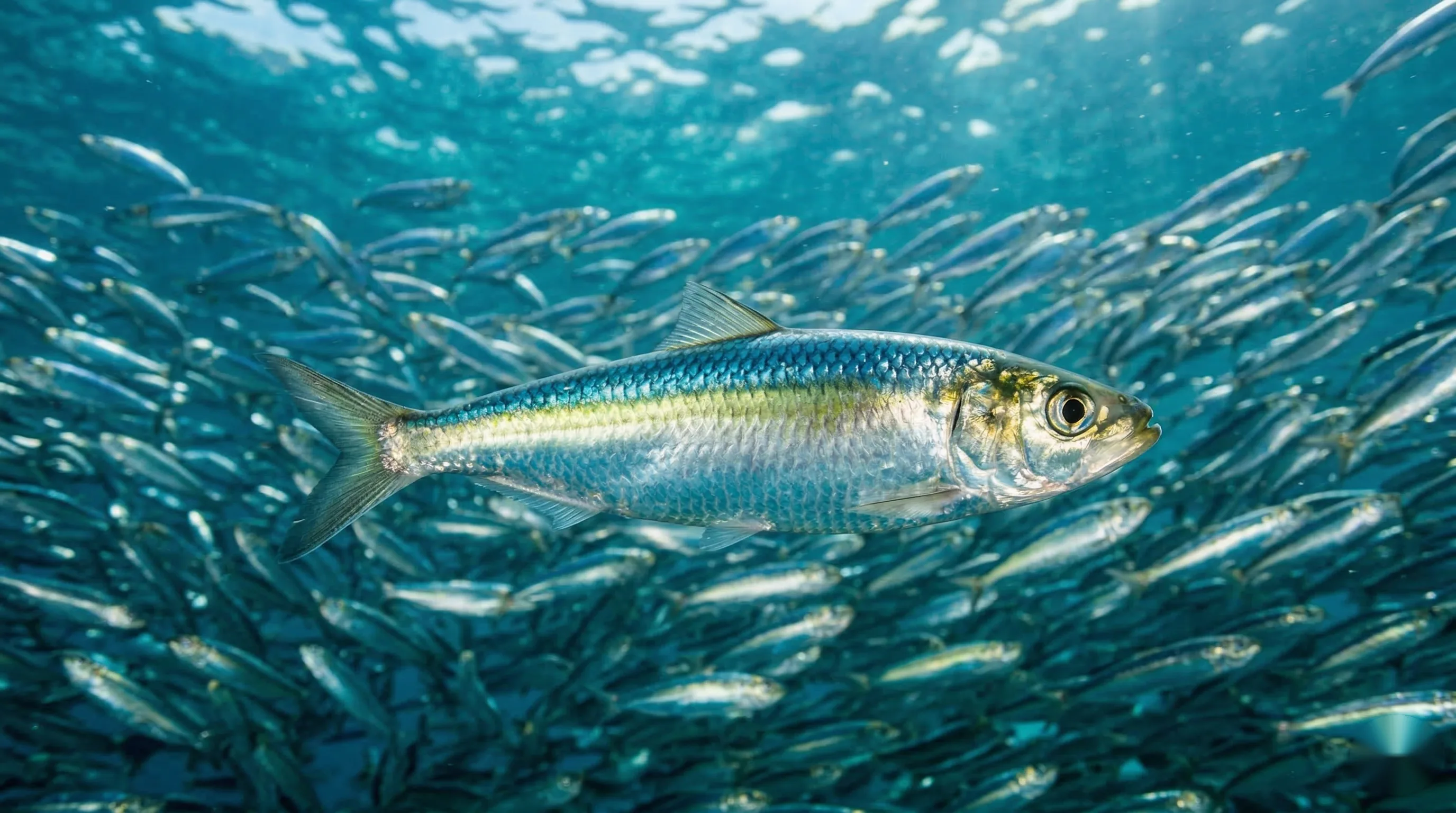
The twaite shad is a herring-like fish of 25 to 40 cm (up to 60 cm maximum) with a silvery, laterally compressed body. The back is blue-green, the flanks silvery with a row of 4 to 8 dark spots behind the gill cover — this spot pattern distinguishes the twaite shad from the Atlantic herring, which has at most one spot. The belly has a sharp keel of keeled scales. The lower jaw clearly projects beyond the upper jaw. The scales are large and detach easily when touched.
Behavior & ecology
The twaite shad is an anadromous migratory fish: it lives in the sea and estuaries but migrates upriver in spring to spawn. Spawning takes place from May to July in fresh or slightly brackish water, preferably on gravel and sand substrates in the tidal zone of rivers. Spawning occurs at night at the water surface with much splashing. The twaite shad feeds on plankton, small shrimp, and fish larvae. Young shad grow up in estuaries and migrate to sea in their first or second year. Adults return annually to the rivers where they were born.
In the Netherlands
The twaite shad is protected under the European Habitats Directive (Annex II and V) and is listed as vulnerable on the Dutch Red List. Historically, the twaite shad was an abundant migratory fish in Dutch rivers — thousands were caught per season in the 19th century. Water pollution, dams, and weirs caused severe population decline. Thanks to cleaner water and fish passages, the twaite shad is slowly returning to the Rhine, Meuse, and their estuaries. The Haringvliet and Western Scheldt are key areas. The twaite shad may not be caught by sport fishers — accidental catches must be released immediately.
Upgrade, um KI-gestützte Datenanalysen für diese Art freizuschalten.
Upgrade auf Explorer, um die besten Angelplätze für diese Art zu sehen.
Saisonale Muster
Upgrade, um saisonale Fangmuster für diese Art zu sehen.
Wichtigste Prädiktoren
Upgrade, um die wichtigsten Prädiktoren und statistischen Einblicke für diese Art zu sehen.