Identification
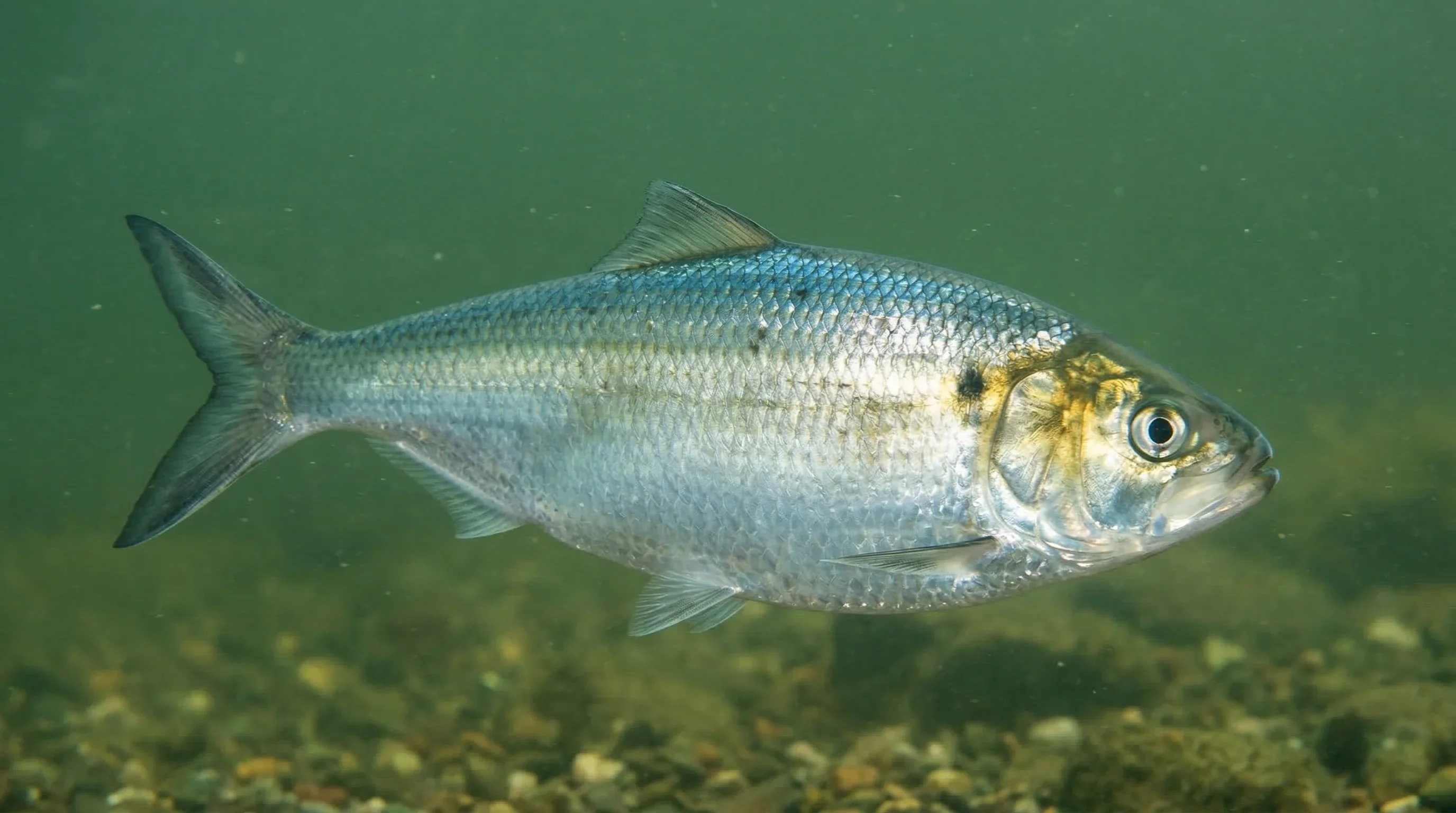
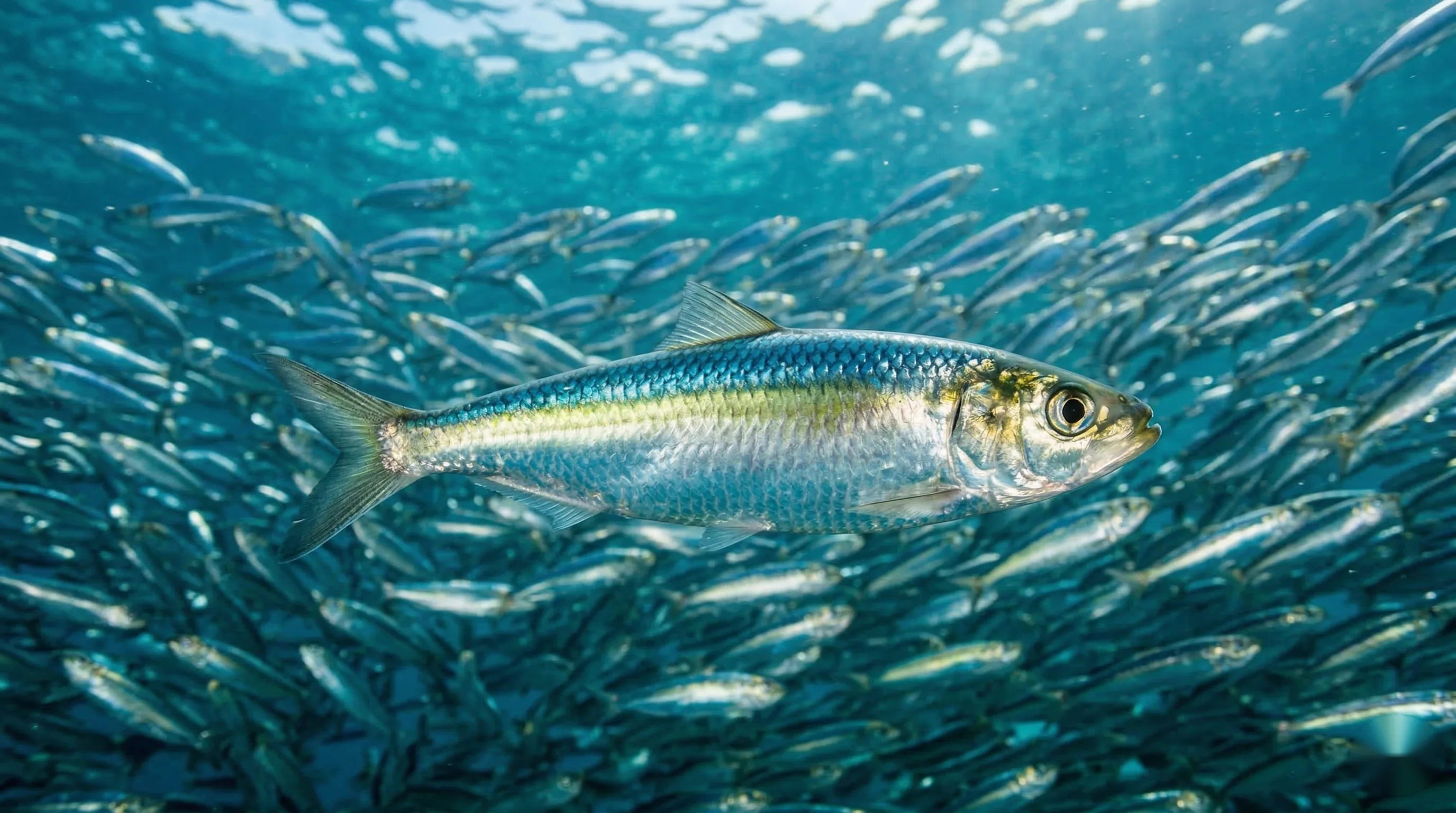
The Atlantic herring is a sleek, streamlined fish with a silvery-blue back and silver-white flanks. Adults typically reach 20 to 30 cm. The body is laterally compressed with large, loosely attached scales. Distinctive features include a single dorsal fin positioned midway along the body and a forked tail fin. The underside is sharply keeled — an adaptation for fast swimming in open water. Herring is sometimes confused with sprat or smelt but is larger and has a clearly protruding lower jaw.
Behavior & ecology
Herring lives in enormous schools that can number thousands to millions of individuals. It is a pelagic fish that feeds on zooplankton, small crustaceans, and fish larvae. Mysid shrimp (Mysidae) form an important part of its diet. Herring migrates seasonally along the Dutch coast: in autumn, large schools enter the North Sea and Wadden Sea. Spawning occurs on the sea floor, where eggs adhere to gravel and stones. The species is sensitive to water temperature and moves away when waters become too warm.
Fishing techniques
Herring is traditionally caught using a sabiki rig (paternoster) — a trace with multiple small hooks (size 8–12) fitted with shrimp imitations, feathers, or small flashers. This is cast vertically or at an angle into the current from piers, breakwaters, or boats. The best season is autumn (October–December) when herring schools migrate close to the coast. Popular locations include the North Sea piers, harbor walls, and the Afsluitdijk (the major Dutch sea barrier). A light sea rod with a sensitive tip is sufficient — herring bite eagerly and come in runs.
In the Netherlands
Herring holds enormous historical and cultural significance for the Netherlands. The herring fishery formed the backbone of the Dutch economy and naval power for centuries. "Hollandse Nieuwe" — lightly salted young herring — is an iconic Dutch product. The species occurs in the North Sea and Wadden Sea and enters fresh water through estuaries. Populations are managed through international quotas under the Common Fisheries Policy. Although North Sea herring stocks recovered after overfishing in the 1970s, continued monitoring remains essential.
What our models found for Atlantic herring
Below is what our models see in the data. These are links: where one thing occurs, the other occurs more often. That is not a cause. Each model answers one question and may not say more than it measured. The label by the heading tells you which question — and how sure the answer is.
Where this species lives Strong model
 Sprat (Sprattus sprattus)
One name carries this model almost on its own: the sprat, worth a good third. Herring and sprat are both small schooling fish of the same North Sea. That they turn up together this strongly is something we counted — a source explaining that link is not on the FishBase page for herring.
The rest of the list can be explained. Cod, whiting, poor cod and the cod family as a whole: those are predators. FishBase writes that herring schools attract predators such as fish, birds and marine mammals. So the model shows the school and what follows it.
Note: the cod family is in there as a family AND as three separate species. That looks like four names; it is one group. Flounder, mean temperature, pipefish and the brown shrimp (Crangonidae) are in the list too.
Where there are many A set, not a ranking Weak model
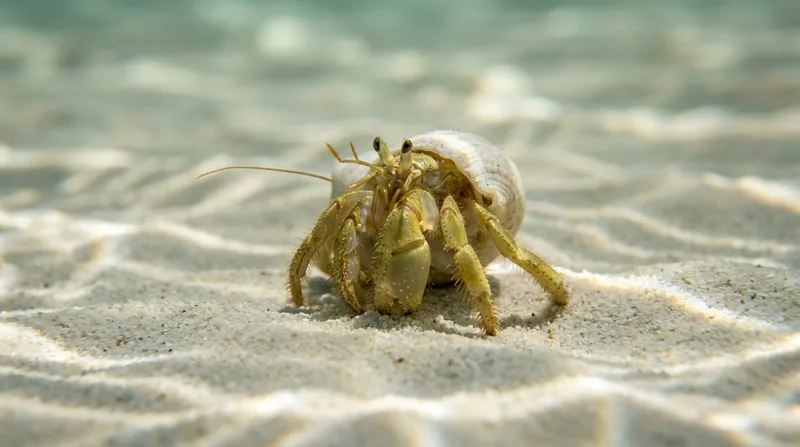 Small hermit crab (Diogenidae)
This model is weak and has only three features: depth, a warmer bottom and the small hermit crab (Diogenidae). All three go with MORE herring.
The depth fits how the herring spends its day. According to FishBase it stays deeper by day and rises at night.