Identification
The Atlantic cod is a large, powerful fish that can reach 100 cm, though most catches fall between 30 and 60 cm. The body is muscular and torpedo-shaped with three dorsal fins and two anal fins — characteristic of the cod family (Gadidae). The color varies from greenish-brown to grey-brown with dark spots on the flanks. The most prominent feature is the sturdy chin barbel on the underside of the chin. The lateral line is lightly colored and makes a conspicuous curve at the pectoral fins. The mouth is large with the upper jaw projecting beyond the lower jaw.
Behavior & ecology
The cod is an omnivore and opportunist that lives near the bottom but also hunts in the water column. It feeds on crabs, shrimp, worms, shellfish, and fish — from sprat and herring to small flatfish. Adult cod is an active predator that migrates in schools. The species lives in the cold waters of the North Sea at depths of 20 to 200 meters, with a preference for water temperatures below 12°C. Cod spawns in early spring (February–April) in deeper water, after which larvae drift with currents to coastal waters.
Fishing techniques
Cod is one of the most sought-after target fish for sea anglers. From a boat, pirking (jigging) is the classic method — a heavy metal pirk worked up and down near the bottom. From harbors, piers, and breakwaters, a bottom rig with a paternoster is effective. Strips of mackerel, shrimp, lugworm, and ragworm all work excellently as bait. Cod are greedy feeders that take the bait without hesitation. The best periods are autumn and winter (October–March), when cod move closer inshore. A sturdy sea rod is recommended — larger specimens fight hard.
In the Netherlands
Cod is an iconic North Sea fish with centuries of cultural and economic significance. However, commercial stocks in the North Sea have been under pressure for decades from overfishing and rising sea water temperatures — cod is a cold-water species shifting northward. For sport fishing, cod can still be caught from shore and from boats on the North Sea, especially in winter months. EU catch limits apply for recreational fishing. The decline of cod is one of the most discussed fisheries issues in Europe.
What our models found for Atlantic cod
Below is what our models see in the data. These are links: where one thing occurs, the other occurs more often. That is not a cause. Each model answers one question and may not say more than it measured. The label by the heading tells you which question — and how sure the answer is.
Where this species lives Strong model
 Herring (Clupea harengus)
The heaviest feature in this model is herring: almost a fifth of the model hangs on it. Add sprat and whiting and you are past a third.
And yet those three say little about WHERE cod are. Herring, sprat and whiting sit in most of the North Sea, including seas where we find no cod. A feature that is everywhere separates nothing from nothing. Weighing heavily and saying something are two different things.
Two names do separate cod water, though only just: poor cod and long rough dab. Both small bottom fish, and together worth less than a tenth of the model. That is the whole list that tells cod water from other sea water.
That fits the fish. Cod live in a variety of habitats, from the shoreline down to the continental shelf. A fish that lives everywhere is hard to tie to one kind of water, and this model shows it.
Where there are many A set, not a ranking Weak model
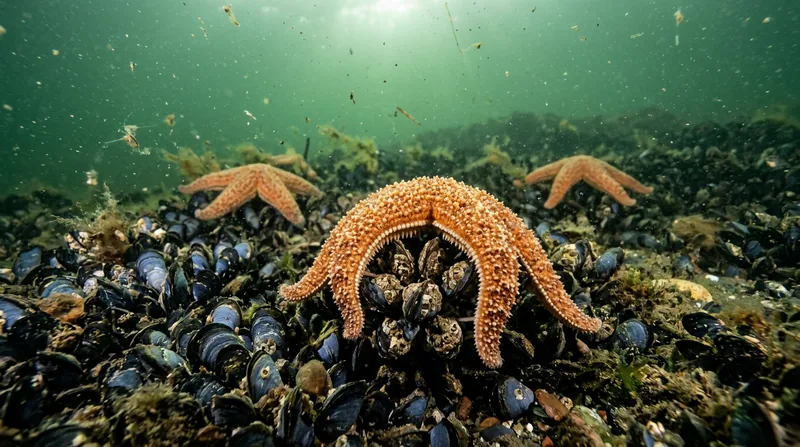 Common starfish (Asteriidae)
Plenty of cod goes with the common starfish (Asteriidae), the common whelk (Buccinidae), the shore crab (Carcinidae) and the queen scallop, a scallop (Pectinidae). We count fewer cod where the brittle star (Ophiuridae), the sea mouse (Aphroditidae) and the barrel jellyfish (Rhizostomatidae) live.
Two echinoderms stand opposed. The common starfish goes with plenty of cod, the brittle star with few. They live on the same bottom, but not in the same cod waters. Why, we do not know.
The shore crab is worth a look too. Here it goes with MORE cod. On the sea bass page the same crab goes with FEWER sea bass. One animal, two predators, two directions.


