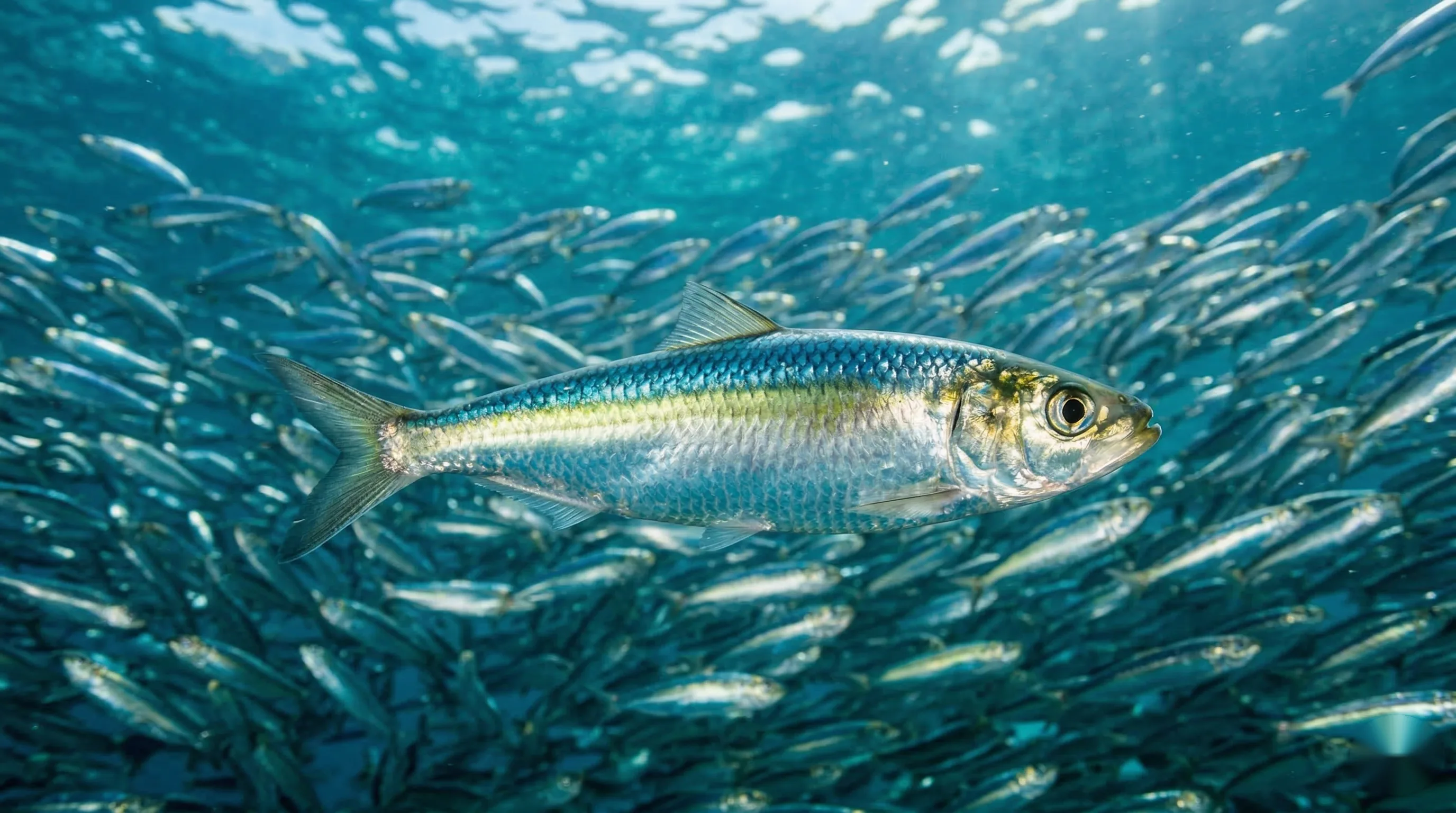
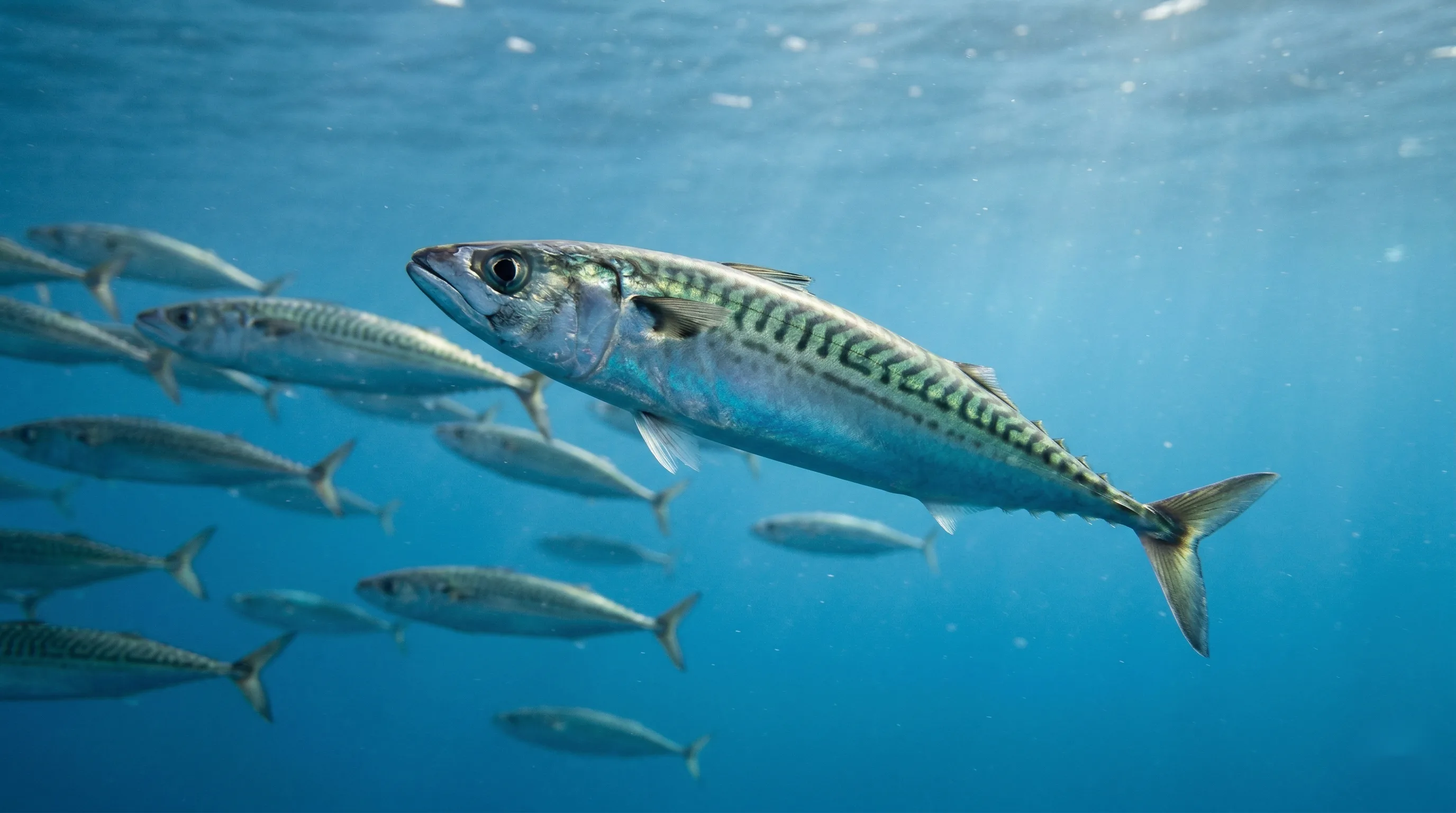
Atlantic herring
Clupea harengus
Identification
The Atlantic herring is a sleek, streamlined fish with a silvery-blue back and silver-white flanks. Adults typically reach 20 to 30 cm. The body is laterally compressed with large, loosely attached scales. Distinctive features include a single dorsal fin positioned midway along the body and a forked tail fin. The underside is sharply keeled — an adaptation for fast swimming in open water. Herring is sometimes confused with sprat or smelt but is larger and has a clearly protruding lower jaw.
Behavior & ecology
Herring lives in enormous schools that can number thousands to millions of individuals. It is a pelagic fish that feeds on zooplankton, small crustaceans, and fish larvae. Mysid shrimp (Mysidae) form an important part of its diet. Herring migrates seasonally along the Dutch coast: in autumn, large schools enter the North Sea and Wadden Sea. Spawning occurs on the sea floor, where eggs adhere to gravel and stones. The species is sensitive to water temperature and moves away when waters become too warm.
Fishing techniques
Herring is traditionally caught using a sabiki rig (paternoster) — a trace with multiple small hooks (size 8–12) fitted with shrimp imitations, feathers, or small flashers. This is cast vertically or at an angle into the current from piers, breakwaters, or boats. The best season is autumn (October–December) when herring schools migrate close to the coast. Popular locations include the North Sea piers, harbor walls, and the Afsluitdijk (the major Dutch sea barrier). A light sea rod with a sensitive tip is sufficient — herring bite eagerly and come in runs.
In the Netherlands
Herring holds enormous historical and cultural significance for the Netherlands. The herring fishery formed the backbone of the Dutch economy and naval power for centuries. "Hollandse Nieuwe" — lightly salted young herring — is an iconic Dutch product. The species occurs in the North Sea and Wadden Sea and enters fresh water through estuaries. Populations are managed through international quotas under the Common Fisheries Policy. Although North Sea herring stocks recovered after overfishing in the 1970s, continued monitoring remains essential.
Upgrade om AI-gestuurde data-inzichten voor deze soort te ontgrendelen.
Upgrade naar Explorer om de beste visplekken voor deze soort te zien.
Seizoenspatronen
Upgrade om seizoensgebonden vangstpatronen voor deze soort te zien.
Belangrijkste voorspellers
Upgrade om de belangrijkste voorspellers en statistische inzichten voor deze soort te zien.