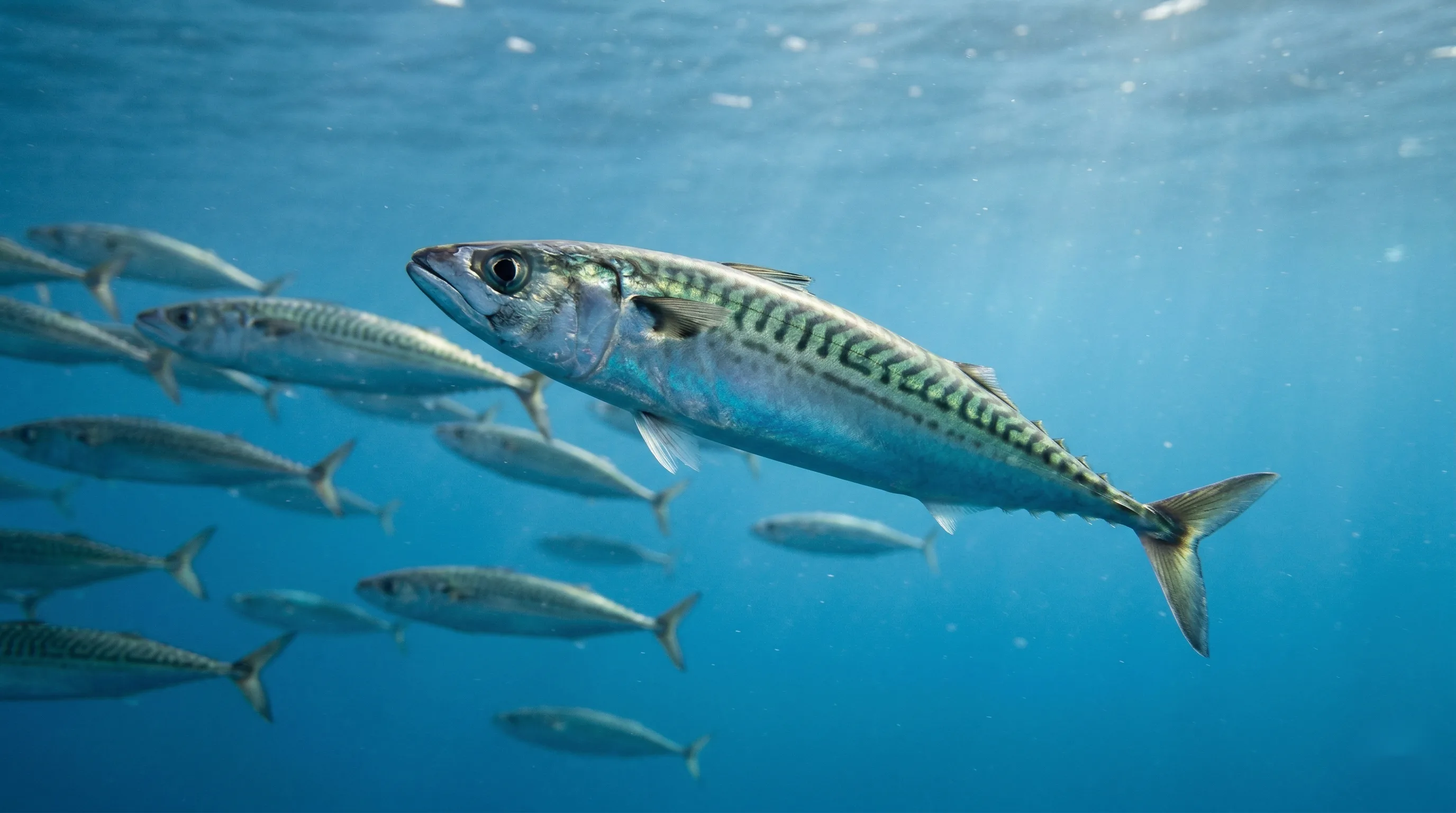
European Seabass
Dicentrarchus labrax
Identification
The European sea bass has a powerful, silvery-grey body with a darker back and lighter belly. The two dorsal fins are clearly separated: the first with sharp spines, the second with soft rays. Distinctive features include the large scales, the black spot on the gill cover, and the broad tail fin. Sea bass in Dutch waters can reach 80 cm, with specimens over a meter being rare exceptions.
Behavior & ecology
The sea bass is an active predator that hunts in the surf, around groynes, and near harbour walls. It feeds eagerly on shrimp, crabs, sand eels, and small flatfish. Sea bass migrate from the Channel and North Sea to the Dutch coast and the Eastern Scheldt in spring. They hunt in groups and are particularly active around tidal changes, when currents carry baitfish along.
Fishing techniques
Sea bass is the most popular sport fish along the Dutch coast:
- Spin fishing: Lures such as plugs, soft baits, and spoons along groynes and in the surf. Rising tide offers the best chances.
- Fly fishing: Streamer patterns imitating shrimp or sand eels, effective in shallow water.
- Natural bait: Shrimp, ragworm, or fish strips on a paternoster or running rig.
In the Netherlands
Sea bass numbers have increased significantly along the Dutch coast in recent decades, likely due to warming sea temperatures. Zeeland (Eastern Scheldt, Western Scheldt, coastal groynes) is the core area. Increasing catches are also reported along the South Holland and North Holland coasts. Minimum size and bag limits apply. Catch & release is encouraged to protect the population.
Upgrade to Explorer to see the best fishing spots for this species.
Seasonal patterns
Upgrade to see seasonal catch patterns for this species.
Key predictors
Upgrade to see the key predictors and statistical insights for this species.