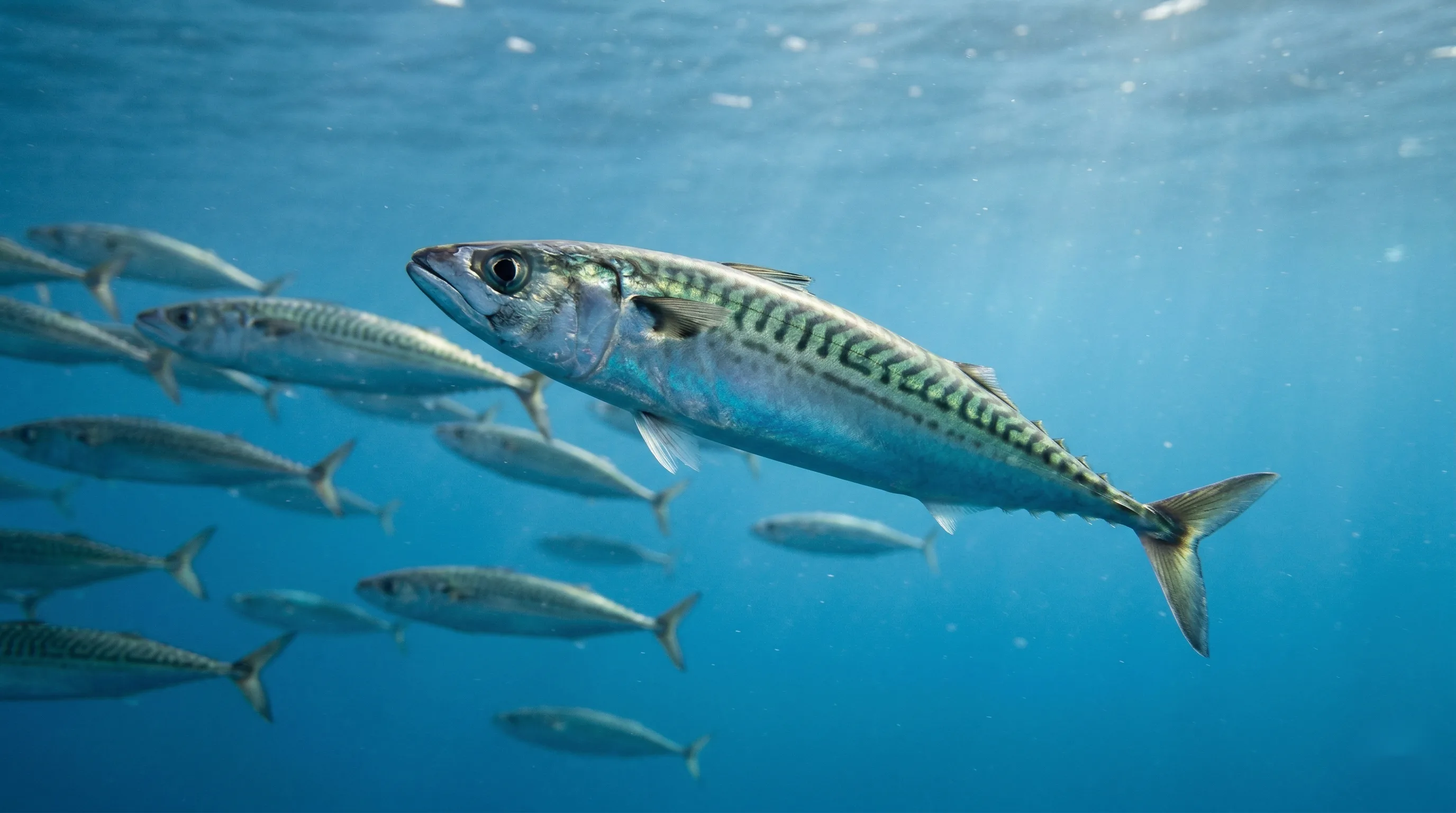
John Dory
Zeus faber
Identification
The John Dory is one of the most striking fish in the North Sea: a strongly laterally compressed, almost disc-shaped body with a large head and protrusible mouth. On each side sits a large, dark eye spot surrounded by a yellow ring — according to legend, the thumbprint of St. Peter. The dorsal fin has long, thread-like spines. Color is olive-yellow to grey-brown. Reaches up to 65 cm and 8 kg.
Behavior & ecology
The John Dory is a slow, solitary hunter that stalks its prey and engulfs it with a lightning-fast extension of its protrusible mouth. The flat body profile makes it nearly invisible to prey fish from the front. It feeds on small schooling fish such as sardines, herring, sand eels, and shrimp. The John Dory lives at 5 to 200 meters depth and prefers temperate waters.
Fishing techniques
John Dory is rarely targeted in the Netherlands:
- Bycatch during boat fishing: Occasionally caught on paternoster or pilker near wrecks and hard grounds.
- Baitfish: Small live or dead fish on a light bottom rig in deeper coastal water.
In the Netherlands
The John Dory is a warm-water species found occasionally in the southern North Sea, especially during warm summers and autumns. Catches are rare but increasing, likely due to rising water temperatures. Culinarily, the John Dory is a top fish: the white, firm flesh is prized in French and Italian cuisine as Saint-Pierre or San Pietro. A special catch for any angler.
Upgrade to Explorer to see the best fishing spots for this species.
Seasonal patterns
Upgrade to see seasonal catch patterns for this species.
Key predictors
Upgrade to see the key predictors and statistical insights for this species.