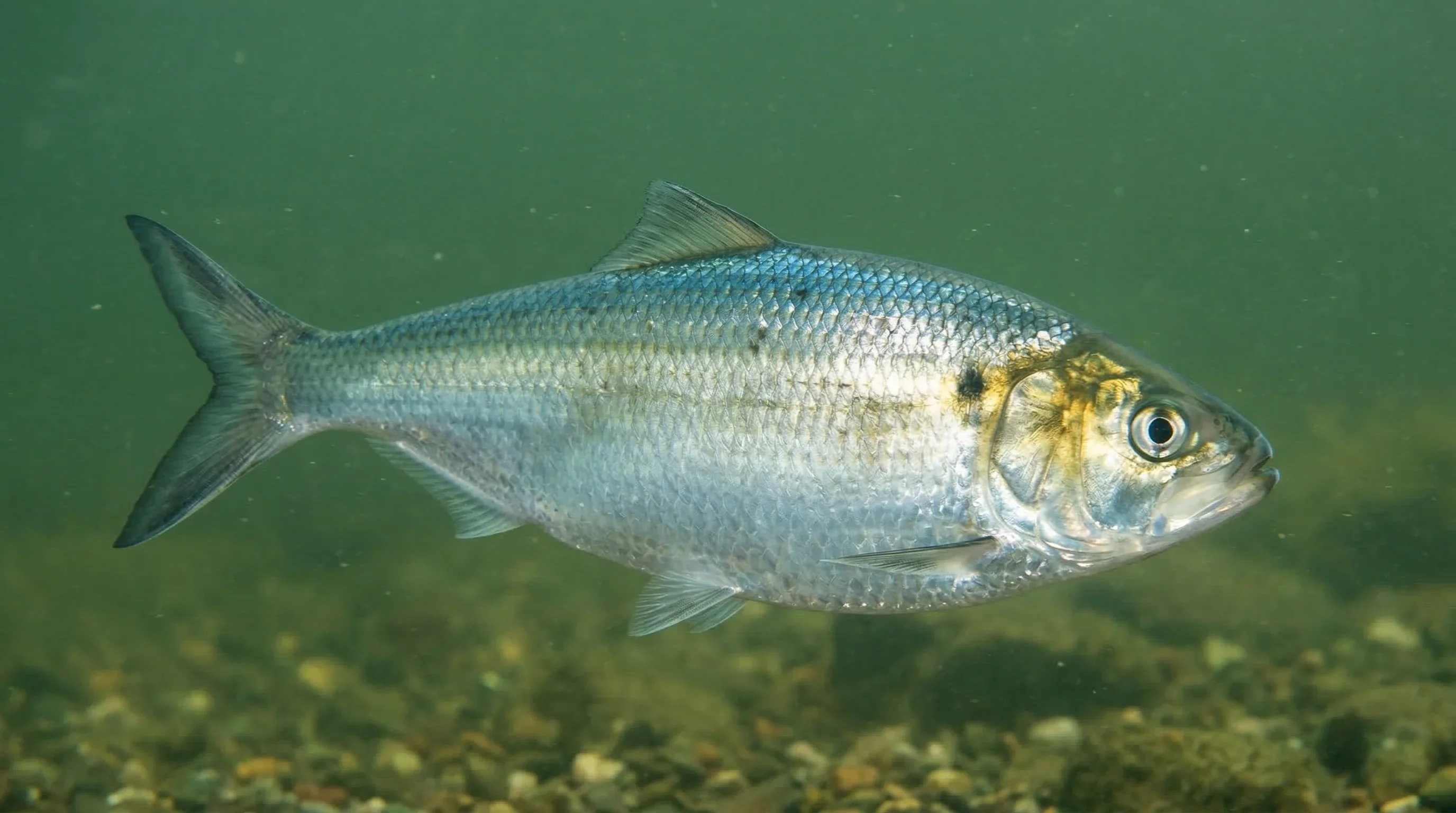
Identification
The ruffe is a small, stocky perch relative with a distinctive large spiny dorsal fin that runs from head to tail — two dorsal fins fused into one, unique among Dutch perch species. The color is yellowish-brown with dark spots and speckles across the entire body. The slimy skin and spiny gill covers are characteristic. Don't confuse the ruffe with a small perch: ruffe lack the distinct vertical bars and have a more rounded snout. Typical catch size is 8–12 cm, with occasional specimens reaching 20 cm.
Behavior & ecology
The ruffe is a true bottom-dweller that lives in schools on the beds of canals, rivers, and lakes. It is particularly active at dusk and night, locating food using its highly sensitive lateral line. Its diet consists mainly of midge larvae, worms, small crustaceans, and other benthic organisms. Ruffe spawn in spring (April–May) in shallow, sheltered areas where eggs are deposited on aquatic plants or stones. As prey, ruffe are an important part of the diet of pikeperch and eel — the correlation between ruffe and these predatory fish is very strong in our data.
Fishing techniques
The ruffe is not typically a target species for anglers but is very frequently caught as bycatch when fishing for perch and pikeperch. Those wishing to specifically target ruffe should try:
- Light float fishing with a fine hook (size 16–20) and a small piece of worm or maggot just above the bottom
- Drop shot with very small soft lures — ruffe readily bite slow-moving lures near the bottom
- Feeder fishing with small worms or maggots on the bottom
Best results come in summer (July–August), when nearly 45% of all ruffe catches occur. Fish canals and harbors, preferably at dusk.
In the Netherlands
The ruffe is one of the most common fish species in the Netherlands, with observations across nearly 1,000 unique areas. It occurs most frequently in canals (28%), rivers (14%), and waterways (9%) — typically the larger, deeper waters. The ruffe is an excellent indicator of healthy fish stocks: where you find ruffe, you almost always find bream, perch, roach, and pikeperch. Despite its small size, ruffe plays a crucial ecological role as a link between benthic organisms and predatory fish.
What our models found for Ruffe
Below is what our models see in the data. These are links: where one thing occurs, the other occurs more often. That is not a cause. Each model answers one question and may not say more than it measured. The label by the heading tells you which question — and how sure the answer is.
Where this species lives Strong model
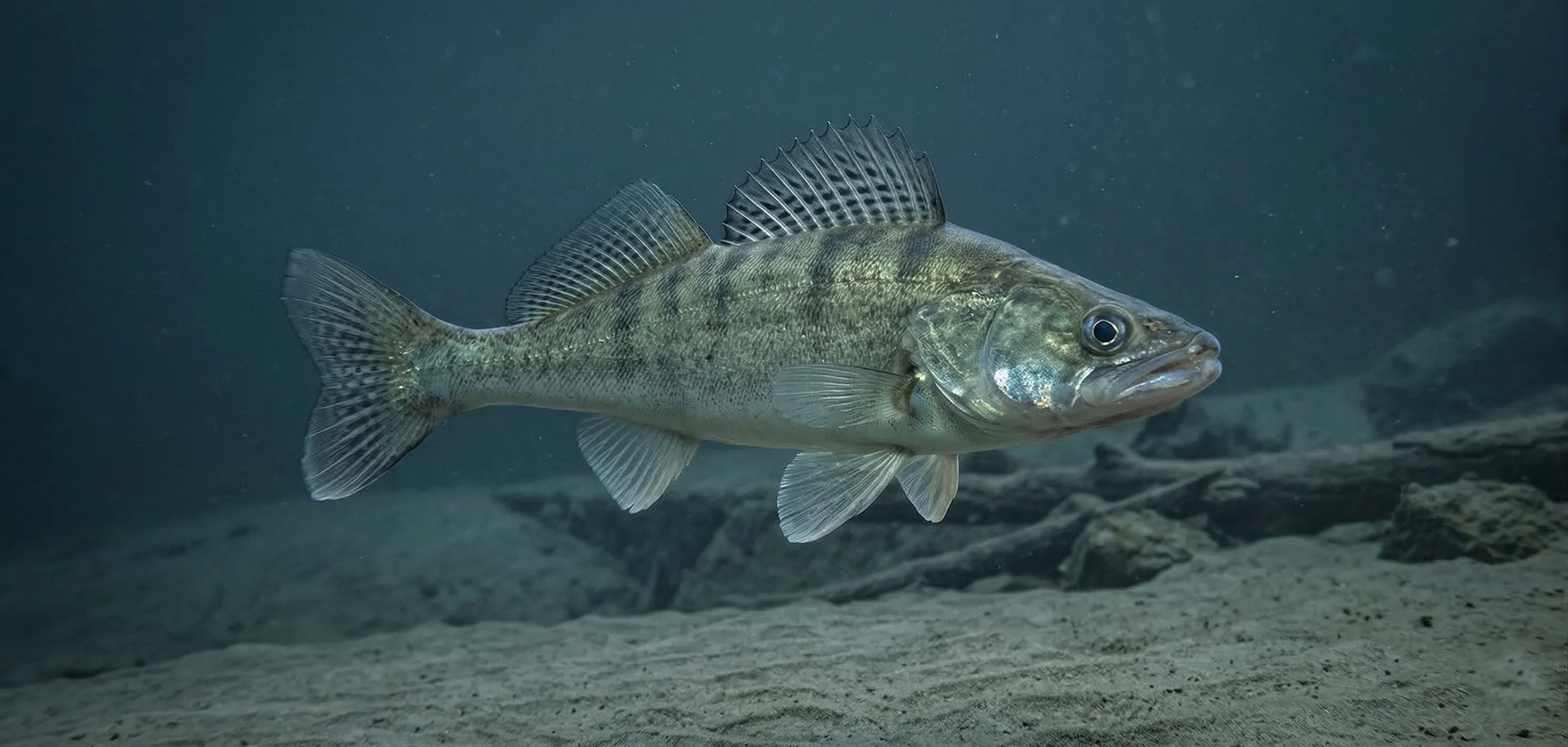 Zander (Sander lucioperca)
Zander and bream come first, together worth a good forty per cent of the model. Then silver bream and perch, and further down eel, roach, ide and asp.
That is the list of big, nutrient-rich lowland and river water. FishBase puts the ruffe in eutrophic lakes, lowland rivers and above all in the estuaries of large rivers. Silver bream and ruffe also point at each other: on the silver bream page the ruffe sits high as well.
Where there are many A set, not a ranking Weak model
Plenty of ruffe goes with American crayfish (Cambaridae), stoneworts (Characeae), diatoms of the family Cymbellaceae, small moss beetles (Hydraenidae) and organic matter in the water.
That last one is exactly what you would expect. FishBase writes that the ruffe gets more abundant as the water gets richer. We count fewer ruffe with the water fern (Salviniaceae), with mosses of the family Amblystegiaceae and with the banded demoiselle (Calopterygidae) — a damselfly of running water.
Where they grow big Strong model
 Flounder (Platichthys flesus)
This is the most interesting of the three models. The flounder comes first: where the flounder is, the ruffe are BIGGER. Bream and silver bream also go with bigger fish, and further down the zander.
The flounder is a sea fish that runs up into river mouths. That lines up with where FishBase calls the ruffe most abundant: in the estuaries of large rivers, in water that may be quite brackish. Big ruffe belong to big, open, slightly brackish water.
The other side confirms it. Ruffe are smaller with the monkey goby, the bullhead and pond skaters (Gerridae): small or running water. One name does not fit — riffle beetles (Elmidae) need current and here they go with BIGGER ruffe. Why, we do not know.