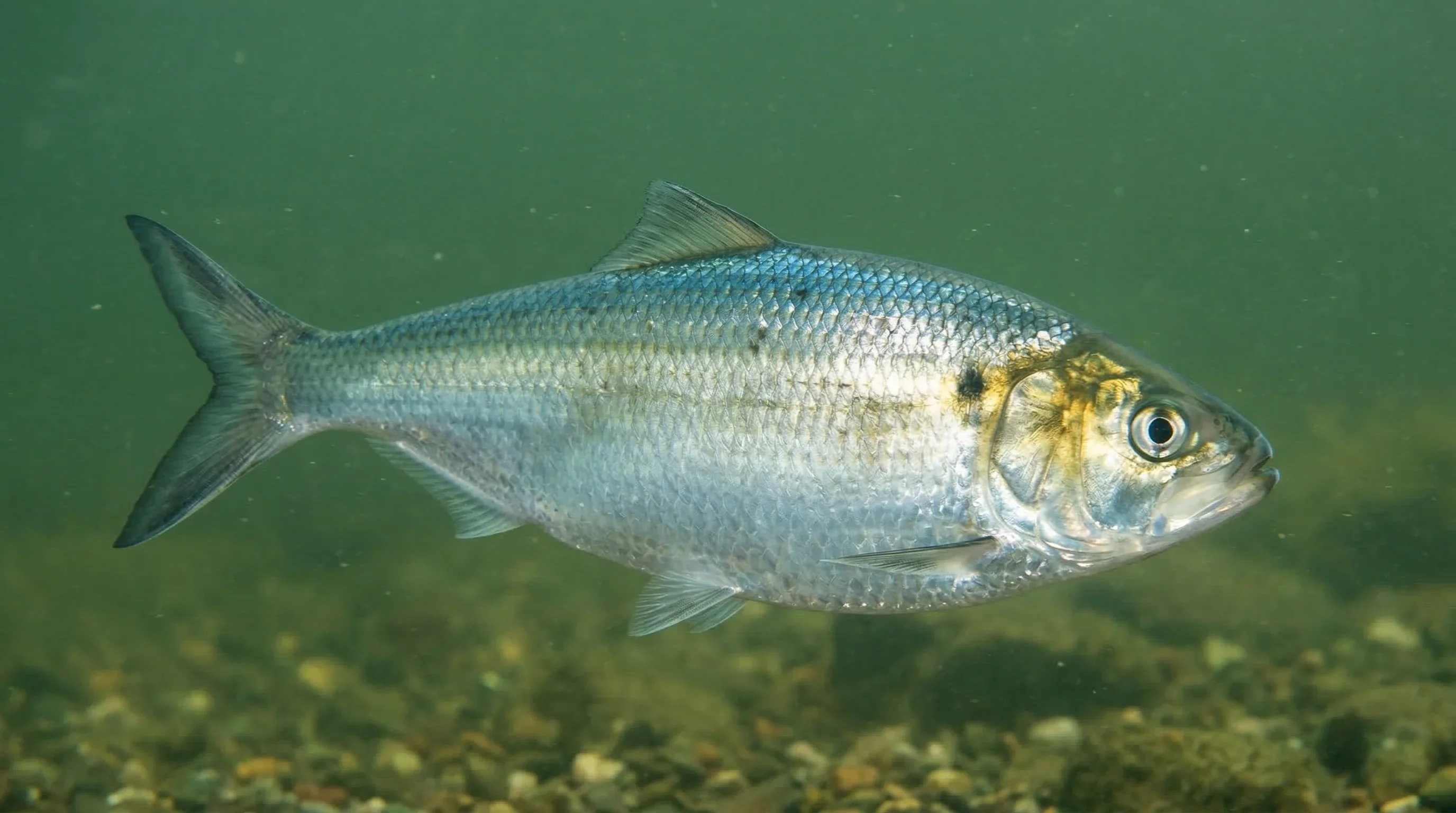
The perch is the predator you can catch almost anywhere in the Netherlands: in town canals, polder ditches, rivers and big lakes. You can fish for it with a worm under a float or with small lures. This page shows you how to recognise a perch, where to find it and how to catch it. It also covers when you may keep one, and how big perch can grow.
Identification
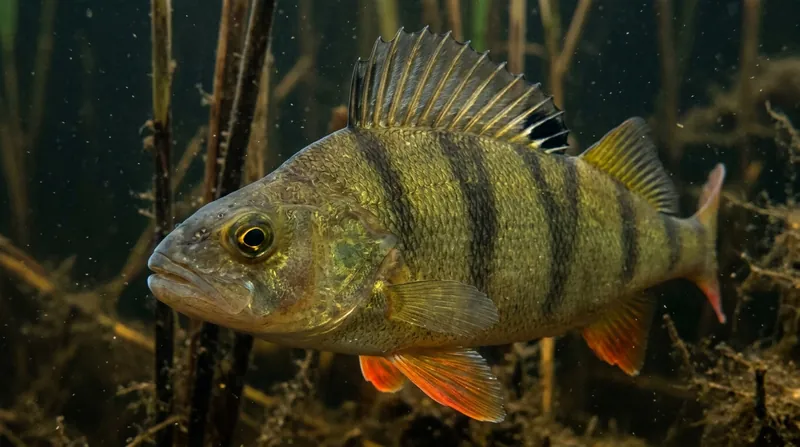 Spines in the first dorsal fin, with a black spot at the back
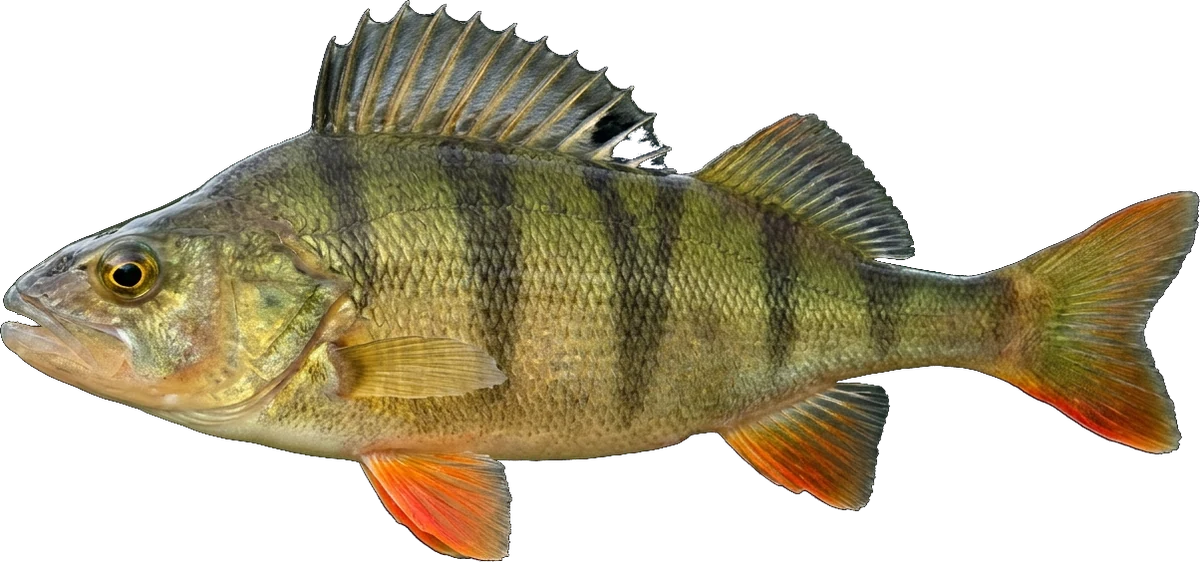
You recognise a perch by the dark bars on its sides. There are five to eight of them, running down from the back (RAVON), and they are often Y-shaped (FishBase). The back carries two separate dorsal fins. The front one is the taller (FishBase). It has only hard, sharp spines, with a black spot at its rear end (Sportvisunie). The pelvic fins and the anal fin are usually bright red, and sometimes the tail is too (Kennisdocument baars).
The gill cover ends in a sharp spine at the back (RAVON). A perch also feels rough: it has small scales with toothed edges and little slime. Older perch often have a markedly high back (Kennisdocument baars).
How big do perch get?
A typical perch is about 25 centimetres long (FishBase). Females usually grow faster and larger than males (Kennisdocument baars). A perch of 40 centimetres or more is a big one (Sportvisunie). Fish surveys in the Netherlands have measured more than 23,000 perch of 22 centimetres or longer. Only about 1 in 40 of them measured 40 centimetres or more, and only 5 reached 50 centimetres. How big the biggest perch ever were is under the records.
Yellow perch, Nile perch: the same fish?
No. This page is about the European perch, the perch of Dutch waters. The yellow perch of North America is a close relative; it is sometimes even counted as a subspecies of ours (Wikipedia). The Nile perch is a different fish altogether: a freshwater fish from Africa, from another family (Wikipedia). Dutch names can mislead too. Many fish with "baars" in their Dutch name are not perch at all. "Zeebaars" is the sea bass (Wikipedia). "Roodbaars" is redfish, a scorpionfish that lives 100 to 1000 metres down in the sea (Wikipedia). The perch's real relatives in Dutch water are the zander and the ruffe: all three belong to the perch family, Percidae (RAVON).
Perch, ruffe or zander?
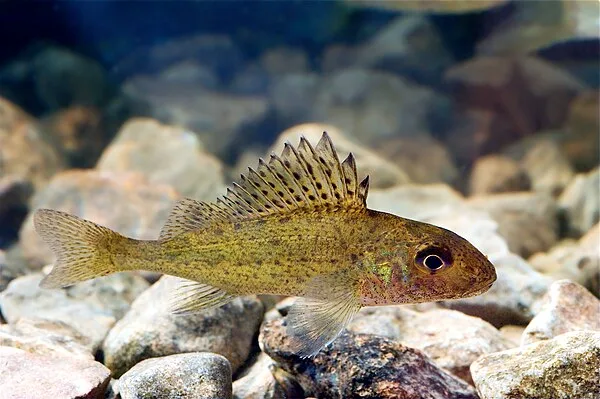 A ruffe: no bars, but dark spots
A small perch can look like a ruffe. The two are related, but the difference is easy to see. A ruffe has no bars, but an irregular pattern of dark spots (RAVON), on its dorsal fin and tail too (Sportvisunie). Its two dorsal fins are joined; a perch's are separate. And a ruffe only grows to about 20 centimetres (RAVON).
A young zander can also pass for a perch, because at that age both are slim and pale (Wikipedia). Look at the first dorsal fin. A perch has a black spot at its rear end; a zander does not (RAVON), but has many small dark dots all over the fin instead (Kennisdocument snoekbaars). A zander also lacks the red in the fins, and its body is much slimmer (Kennisdocument baars). There is more on the difference under zander, pike or perch.
The pumpkinseed is not a close relative. It is deep-bodied and flat, with orange, red and blue spots, and usually a black spot on its gill cover (RAVON). Its dorsal fin is one single fin (Sportvisunie).
Hybrids are known as well: between perch and ruffe, and between perch and zander (Kennisdocument baars).
Life and spawning
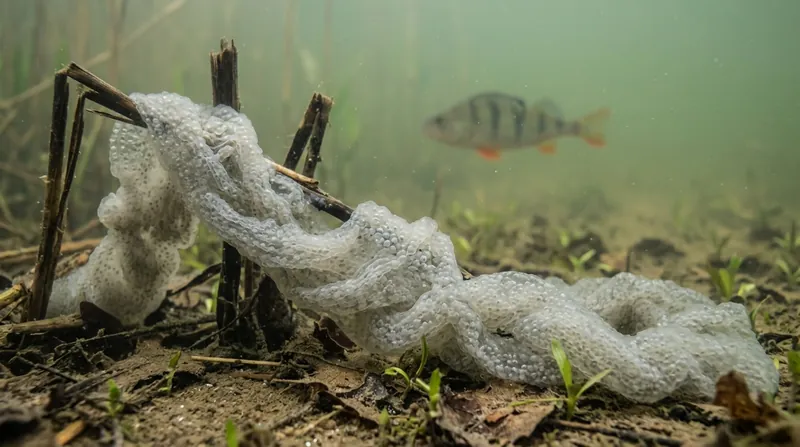 A perch's egg strand: it can be more than 2 metres long
Perch hunt by day, by sight, and like clear water (RAVON). They feed mainly around sunrise and sunset (FishBase). In murky water they catch less, and there they stay smaller (RAVON).
Young perch often live in big shoals, usually of fish of the same age and size (Kennisdocument baars). Older perch prefer deeper water and live in smaller groups or alone (RAVON). In summer perch stay in shallower water; in winter they move deeper (Kennisdocument baars).
A young perch eats plankton first: tiny animals that drift in the water. It then moves on to larger water creatures, such as insect larvae. From about 10 centimetres it eats small fish too (RAVON), and above 15 centimetres mostly fish (Sportvisunie). Its favourites are smelt and smaller perch (Soortprofiel baars). Yes, perch eat perch, mostly where there are many perch and little other prey (Kennisdocument baars).
Why do perch stay small in some waters?
Perch often stay small: no longer than about 13 to 15 centimetres. These small, often dark perch are known in Dutch as 'zwarte baars', black perch. The Dutch angling federation's knowledge document gives an explanation. From a certain size on, a perch has to switch to eating fish. If there is too little fish to eat, and it keeps eating small water creatures, its growth can fall behind. This can also happen in water with many plants: there are small fish there, but a perch struggles to catch them among the plants. An older source in the same document advises bringing in more predators, such as pike or zander. Perch grow best in large waters that are not too deep, with few plants and plenty of prey fish, such as smelt, roach and young perch (Kennisdocument baars).
A study of four lakes fits this. Two lakes held only perch; the other two had pike as well. The lakes with pike held fewer perch, but those perch grew faster. According to the researchers, this pointed to the perch competing less with each other for food (Persson et al.).
Perch spawn in spring, in the Netherlands between March and June (RAVON), mostly in April, when the water is 8 to 12 degrees (Kennisdocument baars). The female lays her eggs in a long, translucent strand, folded like an accordion. Such a strand can be more than 2 metres long and 5 to 10 centimetres wide (Kennisdocument baars). She lays it on water plants, tree roots, branches or stones (RAVON), or on the bottom (Kennisdocument baars). The parents hardly guard the eggs, if at all. They hatch after 1 to 4 weeks, depending on the temperature (Kennisdocument baars).
That is when perch have their closed season. What you may and may not do then is under closed season and rules.
Where to find perch
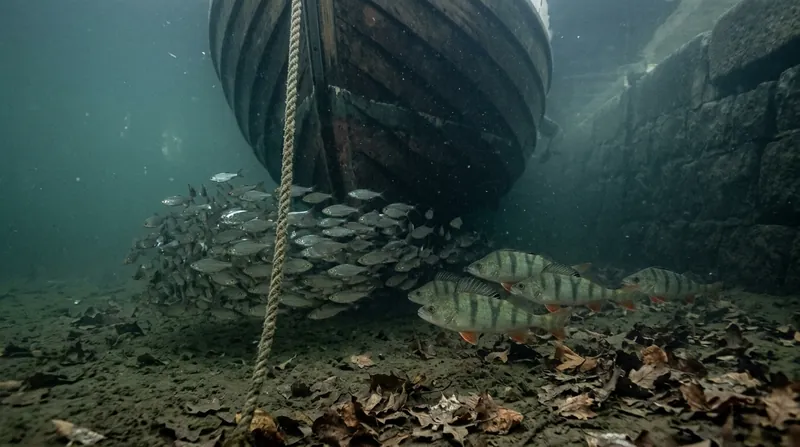 In the cold months perch move into harbours, where the small fish gather
You can catch perch almost anywhere (Sportvisunie): in town canals and ponds, polder ditches and canals, the rivers and the big lakes. They mostly live in water that is not too murky (Sportvisunie).
Look for places where something stands in the water: bridges and culverts, the point where two ditches meet, and branches that hang over the water (Sportvisunie). In a harbour, jetties, boats, quiet corners and deeper stretches are good spots. Wherever there is shelter, warmth and prey, you can meet perch (Sportvisunie).
Where the small fish are, perch are usually close by. In the cold months many coarse fish, roach above all, move into harbours: the water there is deep and calm, with plenty of shelter. The perch follow and often sit at the edge of a shoal. Those shoals move around, though. A spot that fishes well one week can be empty the next. So keep searching, and move on when a spot gives you nothing (Sportvisunie).
On a river, look for the seam: the line where flowing water meets still water. Predators wait there for prey drifting past. You find one behind the head of a groyne, by bridge piers and at the mouth of a harbour (Sportvisunie). Groynes are the stone dams that stick out into Dutch rivers.
On the IJsselmeer, perch and zander seek out sandy spots, and they are drawn to the lake's natural underwater slopes (Sportvisunie). There is more on the IJsselmeer page. Note that stricter rules apply there in spring; see the closed season.
Perch fishing through the year
Further down this page is the seasonal patterns chart. It shows, month by month, how often a catch reported on mijnvismaat.nl is a perch, compared with the yearly average. Experienced anglers say autumn is the time for big perch (Sportvisunie).
Winter. Look for perch in harbours, where the small fish gather (see where to find them). Fish slowly and close to the bottom: that is where most predators lie (Sportvisunie). In frost, put a perch back extra quickly; see releasing.
March. By law you may still fish for perch with lures in March, and keep one that is long enough if your permit allows it (Sportvisunie). A pike must go back, because its closed season has already begun. Check the VISplanner as well: some waters have a longer closed season (Gezamenlijke Lijst). On the IJsselmeer, the Markermeer and the IJmeer, the VISpas bans lures from 16 March.
April and May. Perch spawn now, and it is the closed season. On most waters you may not fish with lures or dead bait, and every perch you catch goes straight back. What you may still do is under the closed season.
From late May. From the last Saturday of May the law lets you fish for perch with lures again. Some waters take longer, such as the IJsselmeer, the Markermeer and the IJmeer, where the VISpas bans lures and dead bait up to and including 30 June.
Summer. Now surface lures work; see techniques. Small insect imitations are worth a try on warm days too (Sportvisunie).
Autumn. Big perch now gather in shoals. They move to the places where they will spend the winter and feed hard there. Find such a spot and it can be a real goldmine (Sportvisunie). Catch one, and keep fishing the spot: there are often more together (Sportvisunie).
Techniques and tackle
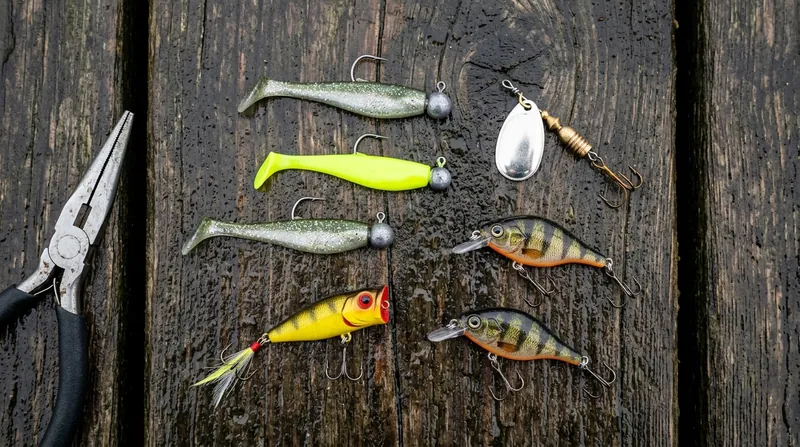 Small lures for perch: shads on light jig heads, a spinner, crankbaits and a popper
Perch call for light tackle. A soft spinning rod of 2.30 or 2.40 metres with a casting weight of 3 to 15 grams is enough. Add a small reel with thin braided line (Sportvisunie). Keep the lures small, such as a small shad on a 3 or 5 gram jig head. A shad is a soft lure shaped like a little fish; a jig head is a hook with a lead head moulded on (Sportvisunie). Spinners work too, in small, fairly shallow water, and so do crankbaits up to 12 centimetres (Sportvisunie).
To fish a shad, let it sink to the bottom and keep the line tight. Then lift it 25 to 50 centimetres with the rod and let it sink again, over and over. The bite often comes just when the lure hangs still for a moment (Sportvisunie). On a drop-shot rig the weight sits at the end of the line and the hook a little above it. That way the lure hovers almost still, just off the bottom.
You can also simply fish for perch with worms. Dendrobenas and dew worms are real favourites, according to Sportvisunie. Fish them under a long, slim float and try different depths. Put the shot about 50 centimetres above the hook so the worm can move freely. Now and then, draw the float in a little: that can be just what triggers a bite (Sportvisunie). A worm on a drop-shot or a small jig head catches perch too. But with the VISpas that is not allowed from 1 April to the last Saturday of May: see the rules. With the VISpas you may not even carry dyed maggots or worms (VISpas conditions).
In summer you can catch perch at the surface, with lures that splash, pop or zigzag across the top, such as a popper. For perch they are usually no longer than 10 centimetres. Pause now and then: the moment the lure moves again after a short stop is often when a predator strikes (Sportvisunie).
Many waters hold pike as well, and a pike takes a perch lure just as happily. How to protect your line from pike teeth is on the pike page.
Closed season and rules for perch
Every spring there is a closed season for perch, because that is when they spawn. You may still fish then, but every perch you catch goes straight back. Lures, dead bait, pieces of fish and slaughter products are banned on most inland waters at that time. The table below shows when it ends this year.
- April 1 – May 29 Closed season: catch and release You may fish, but on most inland waters not with lures, a dead fish, pieces of fish or slaughter products. Artificial flies of up to 2.5 cm are allowed, and so is other bait such as worms or maggots. Every fish of this species that you catch goes straight back.
- May 30 – March 31 now Open season The normal rules apply. You may keep a fish if it is long enough.
The closed season lasts until the last Saturday of May, and on that Saturday you may fish again. So the date moves every year: May 30, 2026 · May 29, 2027 · May 27, 2028. The legal minimum size is 22 cm (Uitvoeringsregeling visserij, art. 5b).
For most inland waters you need a VISpas; together with its list of waters it is your fishing permit. Its conditions add rules of their own on top of the law.
Can you fish for perch in April and May?
Not with lures or dead bait. Until the last Saturday of May that is banned on most inland waters, whatever fish you are after. The ban does not apply on Walcheren, Schouwen-Duiveland, Tholen and Noord-Beveland, in the canal through Zuid-Beveland, the harbour of Goes, the Veerse Meer and the Grevelingenmeer. In the Geul and the streams that flow into it, it does not apply to lures (Reglement voor de binnenvisserij, article 6).
With the VISpas you may also not fish in a way that makes it likely you will catch a zander. As examples, the VISpas conditions name actively fishing a drop-shot rig or a jig head baited with worms (VISpas conditions). For the rest of the year, those are good ways to catch perch. The explanation in the conditions says why the ban on lures exists: to protect zander and other predators, "including perch and pike". It is "explicitly the intention" that these fish are not caught in this period. Coarse fishing with a worm lying still on the bottom or hanging under a float is allowed (VISpas conditions). If a perch takes your worm, put it straight back. Our advice: do not target perch at this time of year, not even with a worm under a float. Some clubs are stricter, so always check the VISplanner.
How many perch may you keep?
By law a perch must be at least 22 centimetres long (Uitvoeringsregeling visserij, article 5b), measured from the tip of the snout to the end of the tail fin (Reglement minimummaten en gesloten tijden, article 1). With the VISpas you may keep at most three, and only fish between 22 and 45 centimetres. A bigger perch always goes back. On top of that, the VISpas lets you have no more than 15 fish with you in total, no more than 5 of them over 25 centimetres. You may keep more fish only temporarily and alive, under the keepnet rules. And you may never sell fish (VISpas conditions).
The upper limit of 45 centimetres is part of the new conditions for 2026 to 2028, meant to protect the big fish. Under the old conditions you could, for example, have kept ten perch of 45 to 50 centimetres. "And we find that undesirable," the explanation says (VISpas conditions). How rare such perch are is under identification.
Can you keep a small perch in a bucket, or use it as bait?
Yes, except on the IJsselmeer. By law you may keep a perch under 22 centimetres alive in a keepnet or a bucket. It must then go back alive into the same water. And you may carry up to 20 dead perch under 22 centimetres as bait (Reglement minimummaten en gesloten tijden, article 7). With the VISpas you may have no more than 15 fish with you in total, dead bait fish included (VISpas conditions). With the VISpas you may only keep fish in a keepnet or other container between sunrise and sunset (VISpas conditions).
You may keep a bait fish alive if it has enough oxygen and room. Before you fish with it, kill it with a sharp tap on the head. Put any live bait fish you have left back into the water they came from (VISpas conditions). Fishing with a live fish as bait is banned (Gezamenlijke Lijst). And from 1 April to the last Saturday of May a dead fish is banned as bait on most inland waters too.
What applies on the IJsselmeer?
The rules are stricter there. On the IJsselmeer the closed season for perch runs up to and including 31 May (Uitvoeringsregeling visserij, article 61). For that rule, the Markermeer, the IJmeer and the open harbours count as part of the IJsselmeer (Reglement voor de binnenvisserij, article 1). On top of that, the VISpas has an extra rule for the IJsselmeer, the Markermeer, the IJmeer and the Oostvaardersdiepen near Almere and Lelystad. There, lures and dead bait are banned from 16 March up to and including 30 June (Gezamenlijke Lijst).
Unhooking and releasing perch
Hold a small perch by its lower lip. Always support a big one under the belly, and use a landing net when you fish from a high quay. Never let a perch hang from its mouth, because that can injure it. Unhook it in the water if you can, and put it back quickly (Sportvisunie). Watch out for the hard spines of the first dorsal fin, and for the sharp spine on the gill cover (RAVON).
In frost a fish out of the water is extra vulnerable: its slime layer can freeze and its eyes can be damaged. Keep it out of the water for as short a time as you can, and only lay it on an unhooking mat you have just wetted (Sportvisunie).
Watch the depth as well. When a fish is pulled up fast from deep water, the gas in its swim bladder expands, which can injure it inside. We found no research on this for our perch. There is for the yellow perch, a North American species closely related to ours (Wikipedia). It adapts only slowly: it needs seven hours to get used to 40 per cent less pressure (Kennisdocument baars). And when yellow perch and a few other American fish are caught deeper than about 10 metres, most studies find that many more die after release (North Dakota Game and Fish). Our advice: if you want to release your perch, do not fish deeper than about 10 metres.
The biggest perch ever caught
The Dutch perch record is 56 centimetres. Thomas Gronenwald caught it in December 2019. The world record is a perch of 2.9 kilograms, caught by Kalle Vaaranen in 2010 off Kökar, in Finland's Åland Islands. The longest perch we found as a record on a national list is 59 centimetres: the Austrian record from 2000.
22 cm Minimum size: you may not keep a smaller perch
25 cm A typical perch: the middle one of more than 23,000 perch of 22 cm or more (the minimum size) measured in fish surveys
52 cm The longest of more than 500,000 perch measured in fish surveys
56 cm Dutch record (2019)
59 cm The longest we found as a record on a national list (Austria, 2000)
Dutch record
56 cm
Thomas Gronenwald caught this perch on 15 December 2019 (Dutch record list). He was fishing from his belly boat, an inflatable float you sit in on the water (Sportvisserij Nederland). It measured 56.5 centimetres (Roofmeister). The Dutch record list goes by length only and rounds down to whole centimetres (Sportvisunie). It lists the fish at 56 cm, with its weight: 3.05 kilograms. None of the reports names the water. Gronenwald did say that he spends most of his time on the Meuse and the lakes connected to it. He also said that he caught this perch in exactly the same spot as a perch of 54 centimetres the winter before (Totalfishing).
The previous Dutch record was a perch of 54 centimetres as well, caught by Pieter-Bas Broeckx at the end of 2016 (Sportvisserij Nederland).
World record
2.90 kg
The IGFA, the international body for angling records, keeps the world record. Kalle Vaaranen caught the perch of 2.9 kilograms on 4 September 2010 off Kökar, in the Åland Islands of Finland. IGFA gives only its weight.
National lists hold heavier perch than the world record, such as in Germany (3.375 kilograms), Norway (3.17) and Sweden (3.15). The Dutch record fish weighed more too: 3.05 kilograms. None of these fish is on IGFA's list: a fish only gets there if it is submitted to IGFA and approved.
IGFA keeps a separate world record for length, and it comes from the Netherlands: 49 cm. Jay Siemens caught that perch on 24 February 2026 in the Haringvliet near Oude-Tonge. IGFA measures length to the fork in the middle of the tail, not to its tip (IGFA rules). With the whole tail fin, such a perch is a few centimetres longer (FishBase), but still shorter than the Dutch record. IGFA's length record on the fly comes from the Netherlands as well: 47 cm, caught in the River Lek in 2016 by Richard Hart.
Longest on a national list
59 cm
The longest perch we found as a record on a national list is on the Austrian record list: 59 cm and 2.98 kilograms. Erich Schwarz caught it in 2000 in the Millstätter See, in Carinthia. The list adds a note of its own: the photo of the record may show a different perch, of 2.68 kilograms, from the same year. Number two on that list is 59 cm long too: a perch of 2.86 kilograms, caught by Erich Heiß in 1987. The list does not say how it measures length. It is not kept by a federation, but by two collectors, Heinz Machacek and Christoph Wimmer (Rekordfische.at).
The heaviest perch we found on a national list is the German record: 3.375 kilograms, caught in the Edersee in 1962 (Fisch & Fang). Machacek also keeps his own list of world records, and it holds heavier and longer perch (fishing-worldrecords.com). As the heaviest caught on a rod, he gives two perch of 4 kilograms, from the Laacher See in Germany and from the Olt River in Romania. As the longest, he gives 67 centimetres. None of these fish has an angler's name. A German angling site mentions a perch of 67 centimetres and 5.91 kilograms from Chiddingstone Castle Lake in England (Barsch-Alarm). These fish are not on the national lists we checked, nor at IGFA. Machacek files a perch of 7 kilograms from the Edersee, from the 1940s, under fish not caught on a rod (fishing-worldrecords.com). Barsch-Alarm says it was 68 centimetres long.
Machacek also names the biggest perch of which a photo has been published: 3.75 kilograms and 58 centimetres, caught in the Meuse by Stephan Gockel in 2010 (fishing-worldrecords.com). A German catch site dates it to January 2010 (Fisch-Hitparade), and English Wikipedia mentions it too. The fish was never on the Dutch record list. The record then stood at 53.5 centimetres (Beet, archive).
The top of this page gives 60 cm and 4.8 kilograms as the largest length and weight. Those figures come from FishBase, a large database of fish. The 60 cm is measured without the tail fin: with the tail, such a fish is a good deal longer. English Wikipedia quotes the 60 cm without that detail. The 4.8 kilograms comes from an old handbook on the fishes of the Soviet Union (FishBase). No perch on the national lists we checked, or at IGFA, is that heavy.
Records by country
Every country keeps its own list, with its own rules. Some lists count length, others weight, so the numbers cannot always be compared.
| Country | Record | Angler | Where caught | Date | List |
|---|---|---|---|---|---|
| Netherlands | 3.05 kg · 56 cm | Thomas Gronenwald | — | Dec 15, 2019 | Sportvisunie |
| Austria | 2.98 kg · 59 cm | Erich Schwarz | Millstätter See (Carinthia) | 2000 | Rekordfische Österreich |
| Denmark | 2.785 kg | Mark Andersen | a bog pond in Ballerup | Apr 23, 1997 | Danske Fiskerekorder |
| Denmark | 52.4 cm | Elias Zachariassen | Ishøj | Oct 9, 2025 | Danske Fiskerekorder |
| Germany | 3.375 kg | H. Kabisch | Edersee | 1962 | Fisch & Fang |
| Hungary | 1.90 kg | Káldi Ádám | Győrfi canal (Szigetköz) | Jan 25, 2018 | MOHOSZ |
| Ireland | 2.49 kg (5 lb 8 oz) | S. Drum | Lough Erne | 1946 | ISFC |
| Latvia | 2.15 kg | K. Cekuls | Lake Cepša | 2003 | LMSF |
| Norway | 3.17 kg | Knut Erik Berg | Mjøsa | May 28, 1965 | Villmarksliv |
| Poland | 2.76 kg · 52 cm | Zbigniew Czarny | — | 2025 | Wiadomości Wędkarskie |
| Sweden | 3.15 kg · 51 cm | Gary Wickins | Hällers myr (Västra Götaland) | Mar 9, 1985 | Sportfiskarna |
| Switzerland | 2.95 kg · 56 cm | Rochus Brotzer | Upper Lake Zurich | Jan 3, 2005 | Petri-Heil |
| United Kingdom | 2.806 kg (6 lb 3 oz) | Neil Stephen | Stream Valley Lakes, Crowborough | 2011 | BRFC |
| United Kingdom | 2.806 kg (6 lb 3 oz) | Ken Brown | Willstone Fishery, Tring | 2011 | BRFC |
A dash means the list does not give it. Checked on October 16, 2026. A record can be broken at any time, so we check these lists at least once a year.
In the Netherlands
The perch is a native Dutch fish (Kennisdocument baars). It lives naturally in almost all of Europe. In the Netherlands it occurs in almost every kind of water and is one of the most widespread fish in the country (RAVON). On the IUCN Red List it is of Least Concern (FishBase). It can cope with a little salt, and also lives in the brackish water of the Baltic Sea (Wikipedia). On the islands of Zeeland it is less common, though: there the water is probably too salty in many places for it to spawn well (RAVON).
The Haringvliet and the Hollandsch Diep lie in the delta of the Rhine and the Meuse. Big perch from that delta have drawn predator anglers from home and abroad for years, Germany included (Sportvisunie). The IGFA, the international body for angling records, also has its length record from the Haringvliet; see the records. Even so, little is known about how these big perch live: where they swim, spawn and stay. That is why Dutch and German researchers and the Dutch angling federation started the PERCHTRACK study in March 2025. They follow 72 perch of over 40 centimetres, each with a transmitter in its belly, using 80 receivers in the Haringvliet and the Hollandsch Diep. The study runs for about two years (Sportvisunie).
If you catch a perch with a tag by its dorsal fin there, note the code, the length and the place, and report it on sharkray.eu. If you can, release the fish alive (Sportvisunie).
What our models found for Perch
Below is what our models see in the data. These are links: where one thing occurs, the other occurs more often. That is not a cause. Each model answers one question and may not say more than it measured. The label by the heading tells you which question — and how sure the answer is.
Where there are many A set, not a ranking Weak model
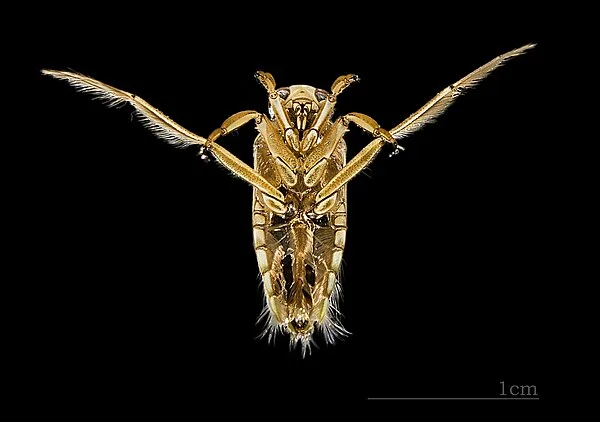 Backswimmers (Notonectidae)
Plenty of perch goes with backswimmers (Notonectidae) and the bankside plant sweet flag (Acoraceae): still, shallow water with plants along the edge. We count fewer perch where we find brown shrimp (Crangonidae) and edible crab (Cancridae). Also where net-spinning caddisflies (Hydropsychidae), mayflies (Baetidae) and ramshorn snails (Planorbidae) set the tone.
Shrimp and crab are sea animals. They mark the salty end of the perch's range. Not a wall, though: perch are common in the brackish water of the Baltic Sea. But where those two set the tone, the water is saltier than where we count most perch.
One thing does not fit. A third sea animal sits in the list — the barrel jellyfish (Rhizostomatidae) — and it goes with MORE perch, not fewer. Two sea animals point one way and one points the other. We found no explanation.
Where they grow big A set, not a ranking Weak model
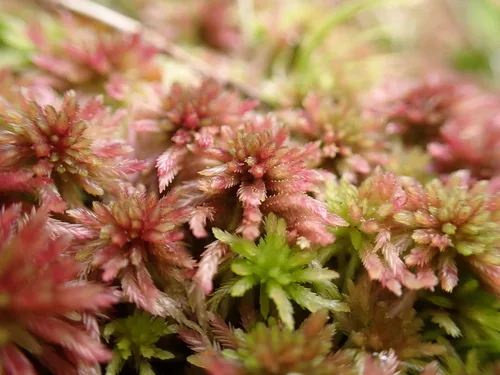 Peat moss (Sphagnaceae)
Perch live in almost every kind of water: from estuarine lagoons to lakes of all types and medium-sized streams. So the question is not where they are, but what kind of water grows them big.
Peat moss (Sphagnaceae) goes with water where perch stay small. So does a diatom from the family Rhizosoleniaceae — in our data Urosolenia — and diatoms from the family Gomphonemataceae. On the other side stand plants of the water's edge and the bank above it: water forget-me-not and comfrey (Boraginaceae), lesser water-parsnip (Apiaceae), Himalayan balsam (Balsaminaceae) and ash (Oleaceae) — plus opossum shrimps (Mysidae).
Peat moss belongs to acidic, nutrient-poor water. FishBase gives perch a pH range of 7.0 to 7.5, and a peat pool sits well below that. The plants on the other side belong to rich, grown-up margins. Whether it is the acidity, the food or the crowding, we have not measured.
One more thing about that diatom. The family name Rhizosoleniaceae sounds marine, and Rhizosolenia is indeed a sea genus. But in our data this is Urosolenia, which lives in inland waters. Going by the family name would have produced a sea story that is not there.
Zander is the oddest name in this model, because it sits on the bigger side. Zander eat perch, so you would expect the opposite. Perhaps the small perch are the ones that go, or perhaps these are simply big rich waters that suit both. We do not know.