Identification
The pumpkinseed is one of the most colorful fish in Dutch waters. The body is deep, laterally compressed and disc-shaped. The back is olive-green with blue and orange spots, the flanks display striking turquoise and orange stripes. The most distinctive feature is the black 'ear spot' on the gill cover with a bright red or orange border — a sort of false eye. Males turn bright orange to red on the belly during spawning season. Pumpkinseeds are small: most specimens are 8-15 cm, and specimens over 20 cm are rare.
Behavior & ecology
The pumpkinseed is a North American invasive species introduced to Europe around 1900 as an aquarium fish and has since spread widely. It is a territorial fish: males dig a nest depression in the bottom and aggressively guard their eggs and fry. Pumpkinseeds live in shallow, warm, still waters with plenty of vegetation — ponds, pools and sheltered stream banks. They are omnivores feeding on insect larvae, small crustaceans, fish eggs and even small fish. In some waters, pumpkinseeds can multiply explosively and compete with native species for food and nesting sites.
Fishing techniques
The pumpkinseed is a fun fish for beginning anglers and children due to its eager bite and colorful appearance:
- Light float fishing — small float rig (0.5-1.5 gram) with a piece of worm, maggot or bread crumb; fish close to the bank in vegetation
- Ultralight spinning — tiny spinners or micro-jigs on a UL rod; playful and sporting
- Fly fishing — small nymphs or dry flies (size 14-18); pumpkinseeds eagerly take flies from the surface
Use the lightest tackle you have — an ultralight rod turns this small fish into a fun fight.
In the Netherlands
The pumpkinseed is an invasive species now found throughout large parts of the Netherlands, especially in ponds and pools in the south and east. The species is still expanding, partly through irresponsible releases by aquarium keepers. There is no closed season or minimum size — pumpkinseeds may be taken year-round. From an ecological perspective, the spread is concerning: pumpkinseeds eat eggs and fry of native species and can put pressure on biodiversity in small, isolated waters.
What our models found for Pumpkinseed
Below is what our models see in the data. These are links: where one thing occurs, the other occurs more often. That is not a cause. Each model answers one question and may not say more than it measured. The label by the heading tells you which question — and how sure the answer is.
Where this species lives Strong model
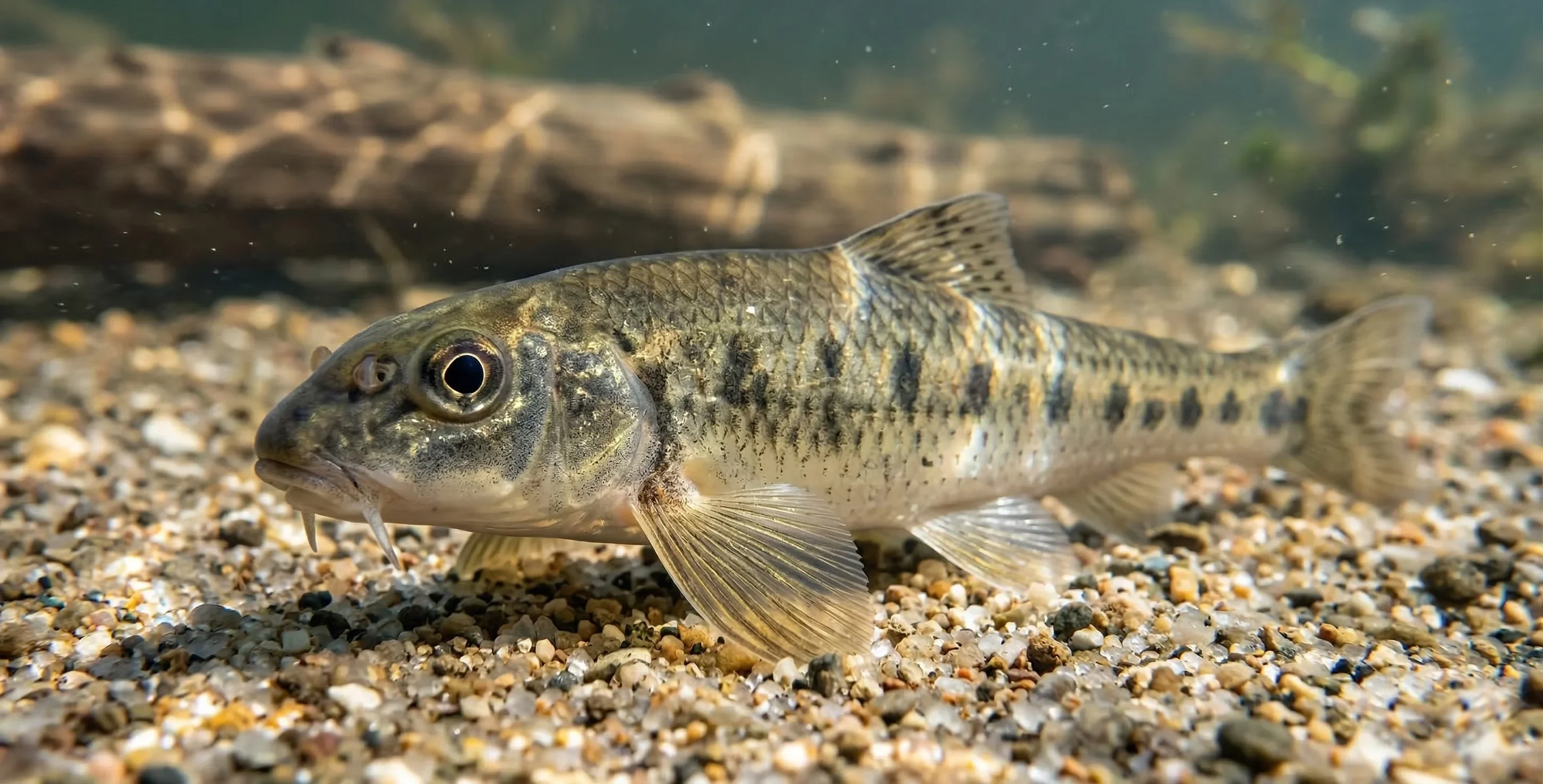 Gudgeon (Gobio gobio)
This model needs to be read with care, and we will explain why.
The gudgeon and the stone loach come first, then the banded demoiselle (Calopterygidae) and blackflies (Simuliidae). Every one of those is an animal of RUNNING water. But FishBase says the pumpkinseed inhabits vegetated lakes and ponds and avoids swift waters.
There are names in the list that do fit: tench, pike and sunbleak, all three fish of still, weedy water. But the heaviest biological names point the wrong way.
On top of that, nearly a fifth of this model rests on four values: wind, humidity, heavy metals and nutrient level. The first two mostly say something about WHERE a cell is — on the coast or inland — and little about the water itself. So we treat this list as a hint, not as a description.
Where there are many Weak model
This model is weak. Plenty of pumpkinseed goes with riffle bugs (Veliidae), water mites of the family Oxidae and the water lily beetle (Chrysomelidae), which feeds on floating leaves.
We count fewer pumpkinseed with the horse leech (Haemopidae), bladder snails (Physidae), duckweed (Araceae) and china-mark moths (Crambidae).