Identification
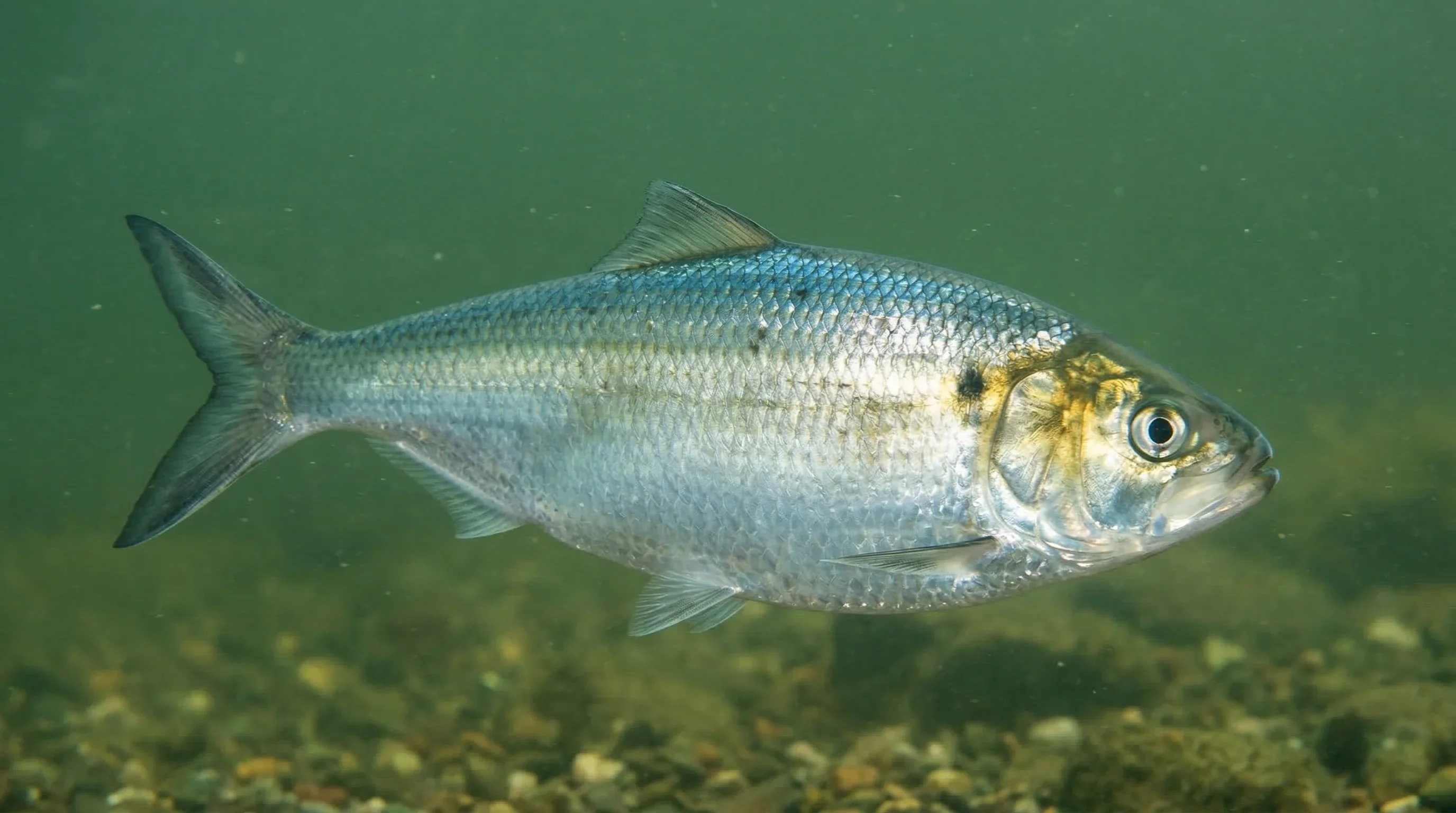
The largemouth bass is a sturdy, laterally compressed centrarchid reaching 30 to 50 cm. The body is olive-green with a dark, irregular lateral band along the side. Characteristic is the large mouth: the upper jaw extends beyond the eye, distinguishing it from the smallmouth bass. The dorsal fin is deeply notched, almost divided in two, with a spiny front and soft rear portion.
Behavior & ecology
The largemouth bass is a territorial ambush predator. It lurks among aquatic vegetation, fallen trees, and other structures, attacking prey with explosive strikes. Diet includes fish, crayfish, frogs, and even small waterbirds. In North America, it is the most popular sport fish, with an enormous competitive fishing industry.
In the Netherlands
The largemouth bass is not established in the Netherlands. Occasional catches involve released or escaped specimens from ornamental ponds. The species is on the EU list of invasive alien species and may not be imported, kept, or released. In southern Europe (Spain, Italy), largemouth bass has established itself and causes ecological damage through predation on native species.