Identification
The roach is a slender, silvery coarse fish and one of the most common fish in the Netherlands. The most striking feature is its red eyes — this immediately distinguishes roach from most other coarse fish species. The fins are grey to orange-red. The difference with rudd is a frequently asked question: roach have red eyes (rudd: orange/golden), a more downward-pointing mouth (rudd: upward-facing), and less brightly colored fins. Roach have 42-45 scales along the lateral line, rudd only 40-43. In practice, mouth position and eye color are the quickest identification points.
Behavior & ecology
The roach is a pronounced shoaling fish that travels in groups of tens to hundreds. It is an omnivore that adapts to whatever is available: aquatic plants, algae, insect larvae, freshwater shrimp, and small snails. This flexibility explains why roach can thrive in virtually every water type.
Spawning takes place from April to May in shallow, vegetated water. Spawning roach develop characteristic spawning tubercles: small white bumps on the head and body. After spawning comes an active feeding period that continues throughout summer. Roach forage mainly in mid-water but adapt: in summer also at the surface, in winter closer to the bottom.
Fishing techniques
Roach is the ideal coarse fish for light, finesse fishing. The most effective methods:
- Float fishing: The classic method. A light waggler or pole with a fine rig. Set depth at mid-water to just above the bottom. Small hook (size 16-20) with one or two maggots.
- Light feeder: A small cage feeder with fine, cloudy groundbait at longer range. Short hooklink (20-30 cm) with a single maggot or caster on the hook.
- Bait: Maggots are the staple. Casters (pupated maggots) select for larger roach. Hemp seed as feed attracts roach selectively. In summer, bread flake on the surface works excellently.
- Match fishing: Roach is the ultimate competition fish. Strike quickly on the dip bite, feed constantly with small portions, and maintain a high tempo.
Use a light rod (3.60-4.20m) with thin line (0.12-0.16mm). Roach bite subtly — a sensitive float or quiver tip is essential.
In the Netherlands
Roach is alongside bream the most common freshwater fish in the Netherlands. The species occurs in every conceivable water type: ponds, canals, waterways, rivers, ditches, streams, and urban waters. There is no closed season. Roach is an important prey species for pike, pikeperch, and perch — its slender body makes it an ideal prey for virtually every predator. In competitive angling, roach is alongside bream the most counted species.
What our models found for Roach
Below is what our models see in the data. These are links: where one thing occurs, the other occurs more often. That is not a cause. Each model answers one question and may not say more than it measured. The label by the heading tells you which question — and how sure the answer is.
Where there are many A set, not a ranking Weak model
 Stoneworts (Characeae)
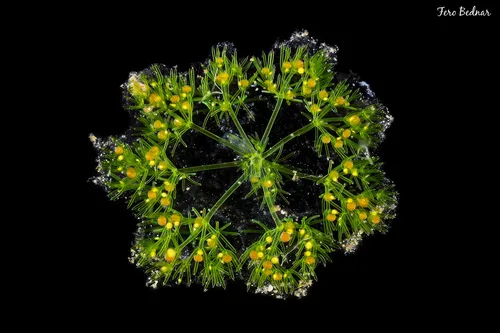
Plenty of roach goes with stoneworts (Characeae), soft rush (Juncaceae), the diatom Amphora pediculus (Catenulaceae) and American crayfish (Cambaridae). We count fewer roach where amphibious bistort and water dock (Polygonaceae) grow. Also where green algae from the family Oocystaceae set the tone, or where the brackish shrimp Palaemonetes varians (Palaemonidae) lives.
Stoneworts grow in very clean, hard water. They are on the bream page too, and there they go with BIGGER bream. So clear stonewort water suits both fish, in different ways. For roach it shows in numbers, for bream in size.
Where they grow big A set, not a ranking Strong model
 Whirligig beetles (Gyrinidae)
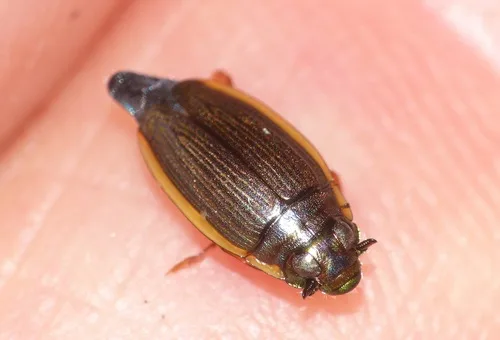
Smaller roach go with whirligig beetles (Gyrinidae), cryptomonads (Cryptomonadaceae), the diatom Gyrosigma acuminatum (Pleurosigmataceae), the water plant water-starwort (Plantaginaceae) and saucer bugs (Naucoridae). Bigger roach go with thread-like blue-green algae (Pseudanabaenaceae), green algae from the family Chlamydomonadaceae, water mites (Hydrodromidae) — and zander.
That roach are bigger where the water is rich fits this fish. FishBase calls roach most abundant in nutrient-rich lakes.
Zander is the odd name in this model. Zander eat roach, so you would expect smaller roach instead. The perch page carries the same name in the same place: there too, zander goes with BIGGER fish. Two prey species, two separate models, the same direction. Perhaps the small ones go first, perhaps these are simply big rich waters that suit everything. We have not measured it.


