Identification
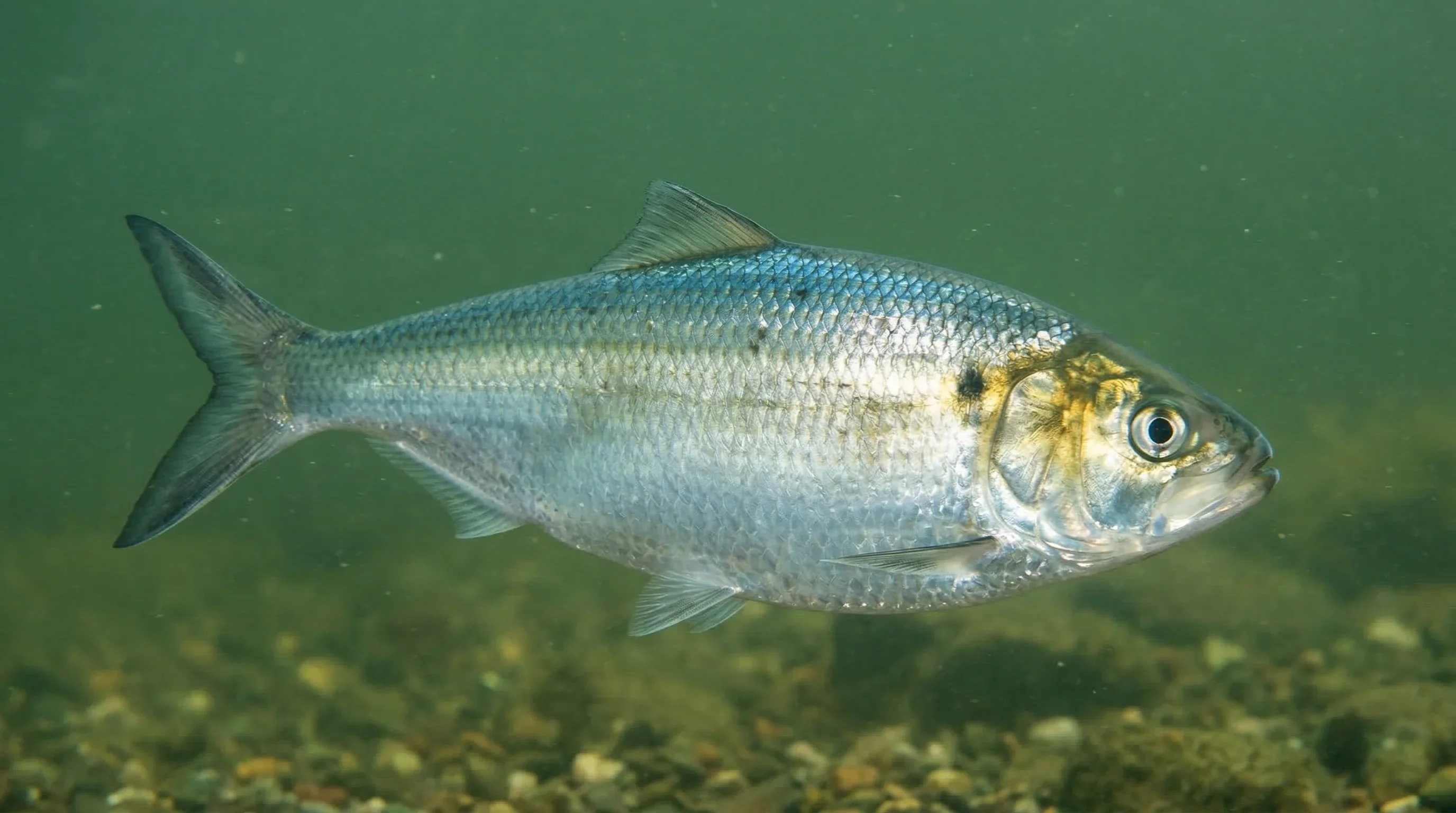
The common sole is an elongated flatfish of 20 to 35 cm (up to 60 cm maximum) with a characteristic oval, tongue-shaped body — slimmer and more elongated than plaice or dab. Both eyes are on the right side. The upper surface is dark brown to olive-brown, sometimes with faint spots. The underside is white. The pectoral fin on the eyed side has a conspicuous dark spot at the tip. The mouth is small and crescent-shaped, curved downward — typical of a worm-feeder. The skin feels smooth, unlike the rough dab. The dorsal fin starts near the eye and runs almost to the tail.
Behavior & ecology
The sole is a nocturnal bottom fish that spends the day buried in sand or fine mud. Only after sunset does it become active, hunting polychaete worms, small shrimp, and bivalves that it detects with its sensitive underside. The species is a warm-water lover: in spring and summer, sole moves to shallow coastal water, estuaries, and canals connected to the sea. In winter, it retreats to deeper water. Sole spawns from April to June in coastal waters at temperatures above 10°C. It is the most valuable flatfish of the North Sea.
Fishing techniques
Sole fishing is quintessentially a nighttime activity. The most effective method is a simple bottom rig with one or two hooks (size 4–8) and a small lead weight on sandy bottom. Lugworm is by far the best bait — the scent attracts sole from a distance. Ragworm and shrimp also work. Fish from the beach, breakwaters, or harbor walls at sunset and through the first hours of night. The best periods are June to August, in warm weather and calm water. A light rod with a sensitive tip helps — sole take the bait eagerly but don't pull explosively.
In the Netherlands
Sole is economically the most important flatfish of the North Sea and an icon of the Dutch beam trawl fishery. The species occurs along the entire coast and penetrates far into canals and estuaries — the North Sea Canal, Western Scheldt, and Wadden Sea are key areas. For sport fishers, sole is a prized catch, especially during warm summer evenings. North Sea sole stocks are managed through EU quotas. The Dutch beam trawl fleet has historically been Europe's largest sole fishery, although the fleet has shrunk considerably in recent decades.
What our models found for Common sole
Below is what our models see in the data. These are links: where one thing occurs, the other occurs more often. That is not a cause. Each model answers one question and may not say more than it measured. The label by the heading tells you which question — and how sure the answer is.
Where this species lives Strong model
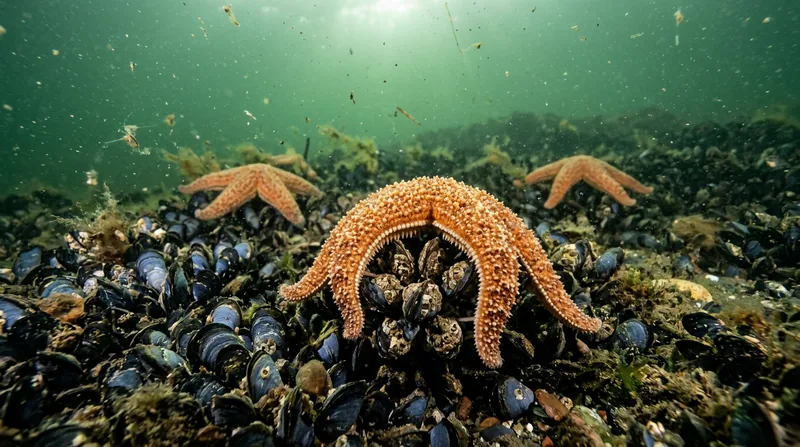 Common starfish (Asteriidae)
Everything that predicts sole lives on or in the bottom: crabs, starfish, brittle stars and small bottom fish. Not one name comes from open water.
The harbour crab (Polybiidae) comes first, then starfish (Asteriidae) and hermit crabs (Paguridae). Then follow the tub gurnard, dragonets (Callionymidae), hooknose (Agonidae) and brittle stars (Ophiuridae). At the bottom, gobies and the brown shrimp (Crangonidae).
That fits exactly how the sole lives. FishBase says it burrows into sandy and muddy bottoms and eats worms, molluscs and small crustaceans at night. The model knows the ground it lies in.
Where there are many A set, not a ranking Strong model
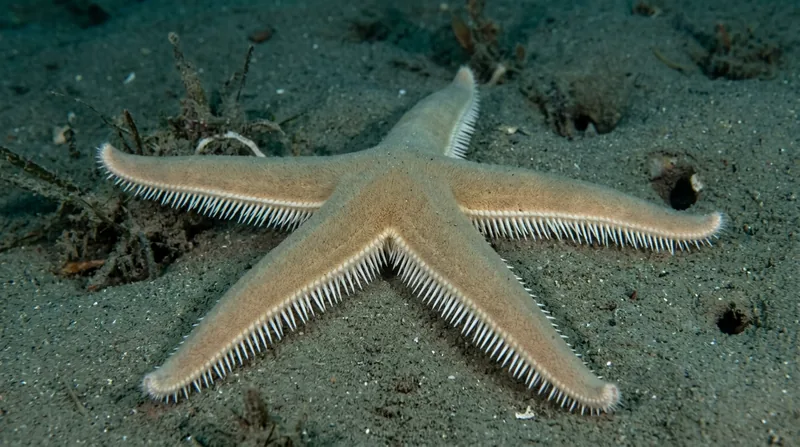 Sand stars (Luidiidae)
For the sole, shallower water goes with MORE fish. That is not a given: for plaice, dab and whiting depth points the other way. Turbot and brill behave like the sole again. So the flatfish of the North Sea do not all sit at the same depth, and our models pull them apart.
The swimming crab and a burrowing crab of the family Goneplacidae also go with more sole. We count fewer sole with two burrowing starfish, the sand star (Astropectinidae) and a starfish of the family Luidiidae, and with the small hermit crab (Diogenidae).
Those two starfish bury themselves in the sand and hunt what lies buried there — the same worms and shellfish the sole goes after at night. Whether that is why they exclude each other, we do not know. All we counted is that they do not show up together.