Identification
The spined loach is a slender, elongated bottom-dwelling fish of 6 to 10 cm. The body is slightly laterally compressed with a row of prominent dark spots along the flank. Distinctive is the small, foldable spine below each eye — a defense mechanism unique to the loach family. Around the mouth are six short barbels (three pairs). The color is light brown to sandy with dark marbling. The difference from the stone loach: the spined loach is flatter, has the eye spine, and shows more regular spots along the lateral line.
Behavior & ecology
The spined loach lives buried in sandy or muddy substrate — only the head protrudes above the sediment. During the day it is virtually invisible; only at dusk does it emerge to forage on small worms, midge larvae, and organic material in the substrate. The species prefers still or slow-flowing water with a soft bottom and rich aquatic vegetation. When disturbed, it burrows with remarkable speed. Spawning occurs in May–June, with eggs deposited on water plants.
In the Netherlands
The spined loach is protected under the European Habitats Directive (Annex II) and Dutch nature conservation law. In the Netherlands, it occurs scattered across ditches, polder waters, ponds, and slow-flowing streams, particularly in peat bog areas and river clay landscapes. The species is an indicator for waters with a natural, undisturbed bottom and rich underwater vegetation. It also lives in large, plant-rich lakes: in the Zwarte Meer near Kampen it turned up in most of the nets during fish surveys in 2008 and 2011. Populations are under pressure from dredging, bank hardening, and water pollution. The spined loach has no significance for sport fishing and is too small and rare to disturb.
What our models found for Spined loach
Below is what our models see in the data. These are links: where one thing occurs, the other occurs more often. That is not a cause. Each model answers one question and may not say more than it measured. The label by the heading tells you which question — and how sure the answer is.
Where this species lives A set, not a ranking Strong model
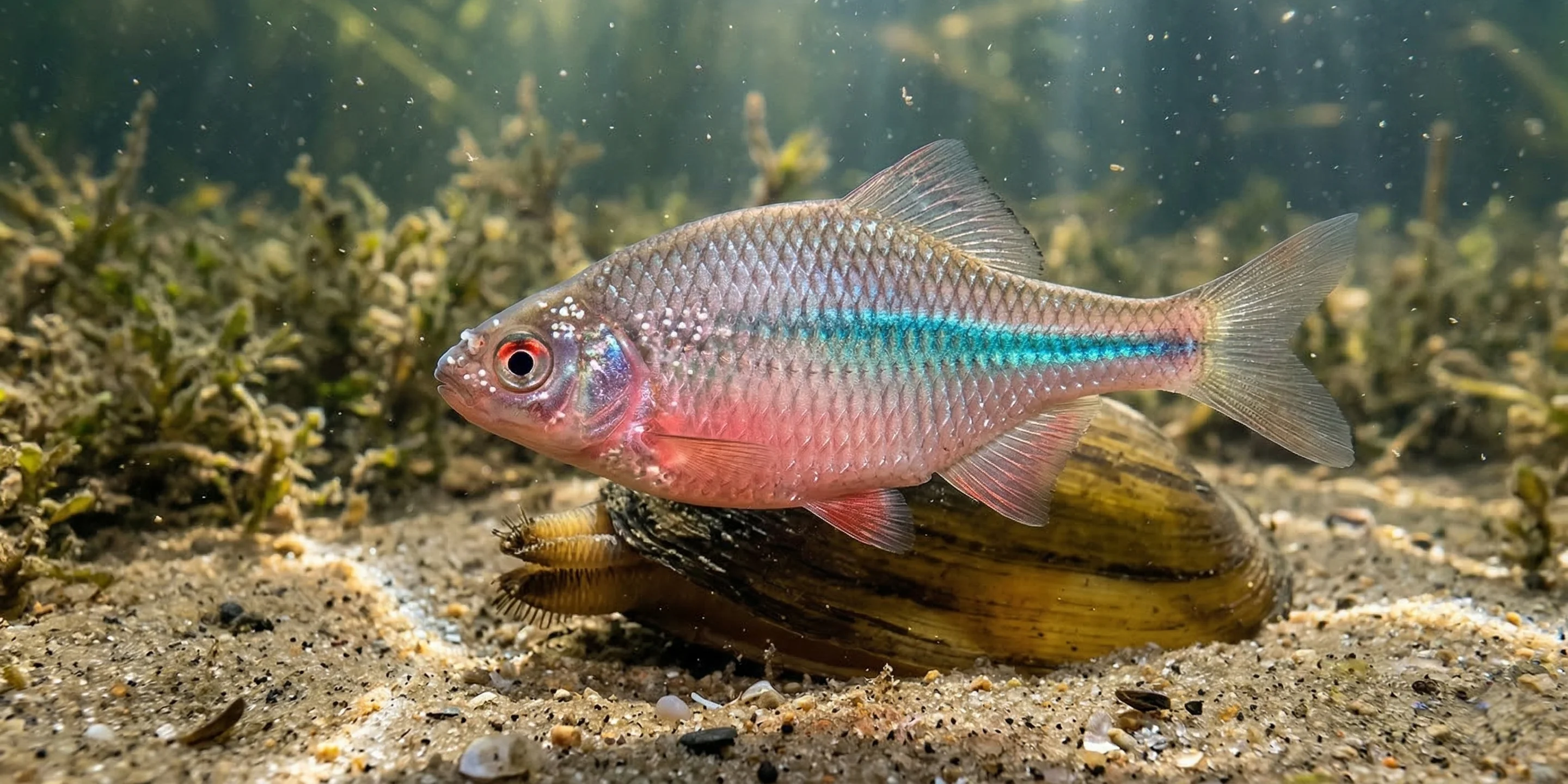 Bitterling (Rhodeus amarus)
The top names here sit so close together that no winner can be picked. The company is clear enough: tench, bitterling, tubenose goby, pike, rudd and sunbleak.
That is small, still, weedy water. Plants and small animals that belong to it are in the list too: duckweed (Araceae), arrowhead and water plantain (Alismataceae), mayflies (Caenidae), pygmy water boatmen (Micronectidae) and water mites of the family Arrenuridae.
FishBase puts the spined loach in slow-flowing and still waters with fine sandy substrate, where it buries itself by day and filters sand through its gills at night to take food particles out of it.
That the bitterling sits high here is no accident: on the bitterling page the spined loach is right at the top. Two small fish looking for the same kind of water.
Where there are many A set, not a ranking Weak model
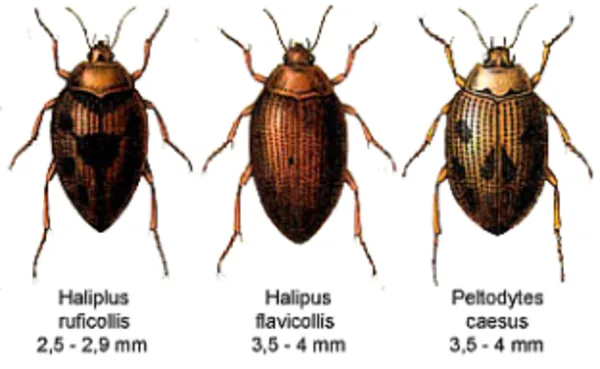 Crawling water beetles (Haliplidae)
This model is weak. Plenty of spined loach goes with water scavenger beetles (Hydrophilidae), ramshorn snails (Planorbidae), valve snails (Valvatidae), saucer bugs (Naucoridae), the freshwater shrimp (Atyidae) and greater bladderwort (Lentibulariaceae).
We count fewer with crawling water beetles (Haliplidae), limoniid craneflies (Limoniidae) and phantom midges (Chaoboridae).


