Skip to content
LAKE

Zwarte Meer

Lake·52.63471, 5.95418·15.6 km²

On average 1.7 m deep and 11 m at the deepest point (bed below NAP, surveyed by Rijkswaterstaat in 2012).

21
Fish species recorded
78% of NL
More diverse than
cm
Biggest catch
Surveyed
Depth data
Map layers Specialist

This lake has a surveyed depth map, with bottom structure and edges.

Free example: IJsselmeer
What do Common / Notable / Rare / Mythic mean?

The label says how widespread a species is: the share of Dutch survey areas that have ever recorded it. It does not say how many live here. A species found in only a few areas can still be abundant in them. The records come from surveys of the water. A plant of the bank or of dry land, such as bracken, rarely turns up in them, so it can be labelled “rare” or “mythic” even where it is common on land. Freshwater species are compared with freshwater areas and sea species with salt ones. Over half of all survey areas are at sea: measured against the whole country, no freshwater fish could ever count as “common”.

Common≥30%Notable10–30%Rare3–10%Mythic<3%
Bream
abramis brama
Commonin 82.3% of fresh NL
Fish recorded500
biggest cm
suitable100%
Ruffe
gymnocephalus cernuus
Commonin 67.5% of fresh NL
Fish recorded
biggest cm
suitable100%
Perch
perca fluviatilis
Commonin 91.9% of fresh NL
Fish recorded157
biggest cm
suitable100%
Roach
rutilus rutilus
Commonin 91.9% of fresh NL
Fish recorded135
biggest cm
suitable100%
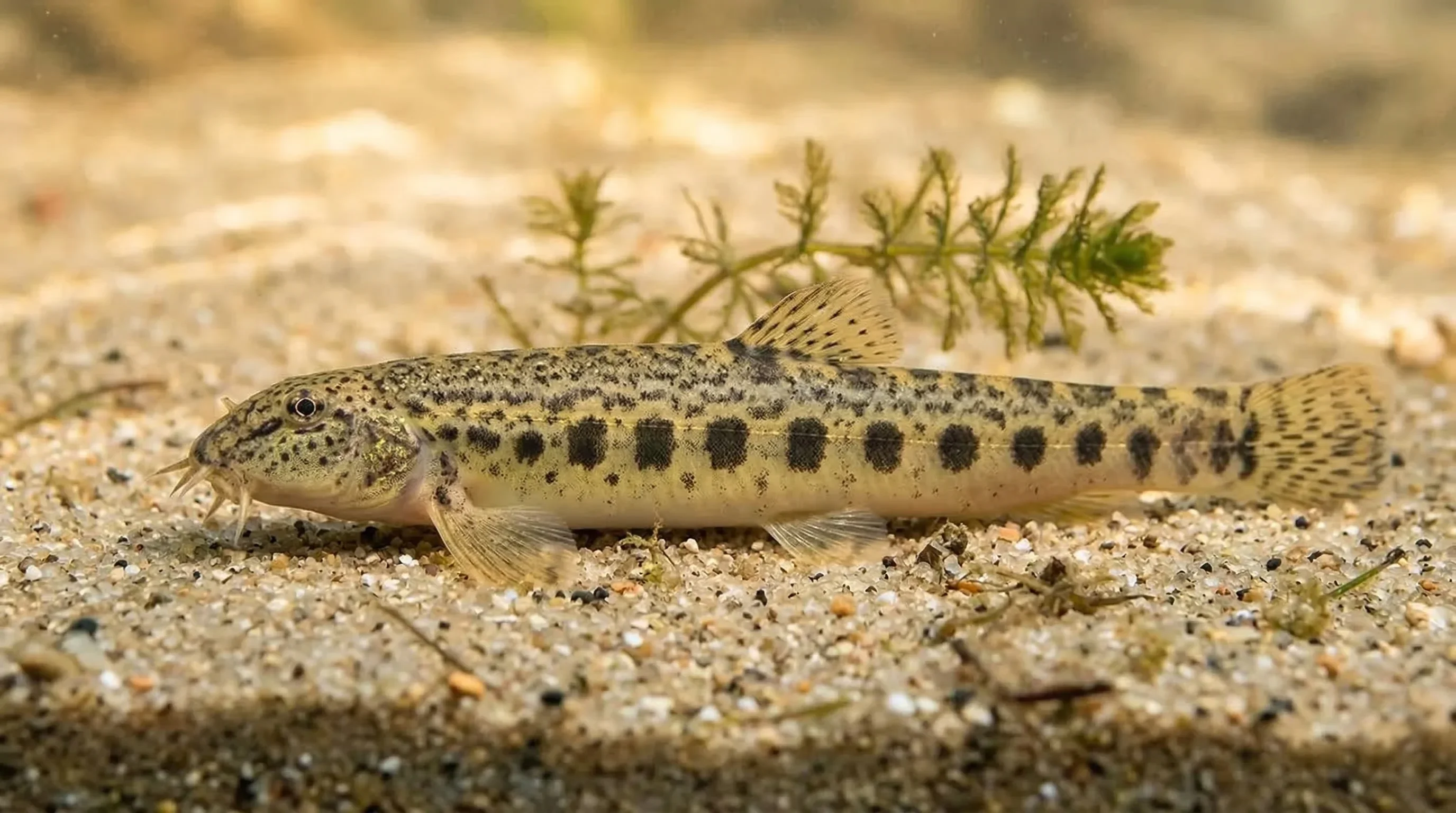
Spined loach
cobitis taenia
Commonin 51.5% of fresh NL
Fish recorded
biggest cm
suitable91%
Zander
sander lucioperca
Commonin 55.2% of fresh NL
Fish recorded
biggest cm
suitable97%
Tubenose goby
proterorhinus marmoratus
Notablein 12.4% of fresh NL
Fish recorded
biggest cm
suitable86%
Eel
anguilla anguilla
Commonin 70.7% of fresh NL
Fish recorded
biggest cm
suitable96%
European smelt
osmerus eperlanus
Notablein 11.8% of NL
Fish recorded
biggest cm
suitable88%
Three-spined stickleback
gasterosteus aculeatus
Commonin 56% of fresh NL
Fish recorded
biggest cm
suitable80%
Tench
tinca tinca
Commonin 76.1% of fresh NL
Fish recorded
biggest cm
suitable99%
Carp
cyprinus carpio
Commonin 53.7% of fresh NL
Fish recorded
biggest cm
suitable81%
Monkey goby
neogobius fluviatilis
Rarein 7.5% of fresh NL
Fish recorded
biggest cm
suitable68%
Ide
leuciscus idus
Commonin 44.6% of fresh NL
Fish recorded
biggest cm
suitable97%
European Flounder
platichthys flesus
Commonin 46.4% of salt NL
Fish recorded
biggest cm
Bullhead
cottus gobio
Notablein 12.7% of fresh NL
Fish recorded
biggest cm
suitable90%
European Whitefish
coregonus lavaretus
Mythicin 1.1% of fresh NL
Fish recorded
biggest cm
Pike
esox lucius
Commonin 88.8% of fresh NL
Fish recorded
biggest cm
suitable100%
Bleak
alburnus alburnus
Commonin 36.9% of fresh NL
Fish recorded
biggest cm
suitable81%
White Bream
blicca bjoerkna
Commonin 69.5% of fresh NL
Fish recorded
biggest cm
suitable94%
Rudd
scardinius erythrophthalmus
Commonin 81.6% of fresh NL
Fish recorded
biggest cm
suitable98%
Food web

The food chain of the Zwarte Meer

The Zwarte Meer is full of water plants, mostly under water. One plant stands out in the samples: the fringed water-lily. It has floating, almost round leaves and, in summer, yellow flowers above the water. It is not rare in the Netherlands, but you seldom find it in plant samples from other lakes. Here it was in 91 of 1,283 plant samples from 2005 to 2012. In comparable samples from other freshwater lakes you would expect it in about one of those 1,283.

The fish of plant-rich water stand out too. Tench live in shallow water with plenty of plants. The spined loach finds its food in fine sand and lays its eggs among plants. In trawl surveys in 2008 and 2011, tench were in 7 of the 16 catches and spined loach in 13. In comparable surveys of other freshwater lakes you would expect tench in fewer than one of the 16 catches, and spined loach in one.

Tench and zander both live here, and that stands out. Tench are fish of shallow water with plenty of plants. Zander are fish of large, murky water. In fish surveys of other freshwater lakes the two are caught together less often than you would expect by chance. Here both were in 6 of the 16 catches. We think the lake gives each of them a place: shallow water full of plants, and the deep shipping channels. We have not measured that. That is why there are two food chains below: one through the tench and one through the ruffe.
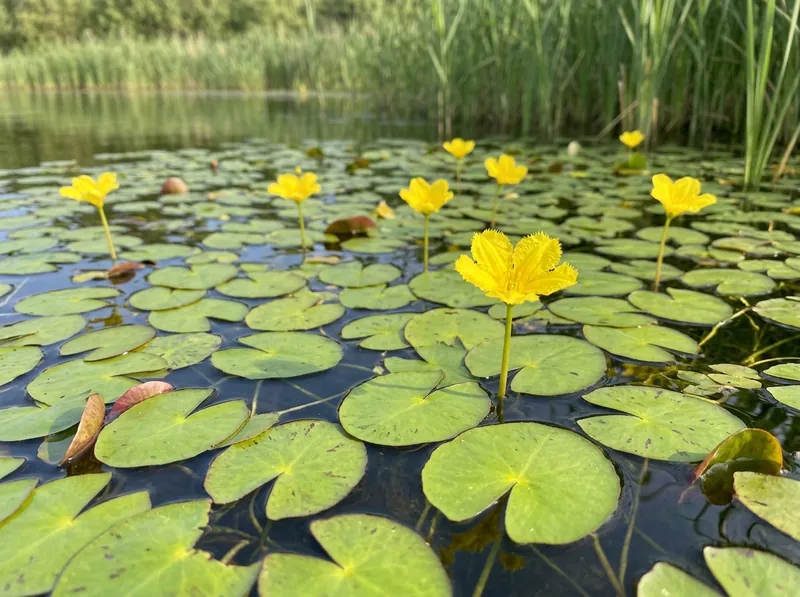
Fringed water-lily: small, round floating leaves and yellow, fringed flowers
Food chains from this lake
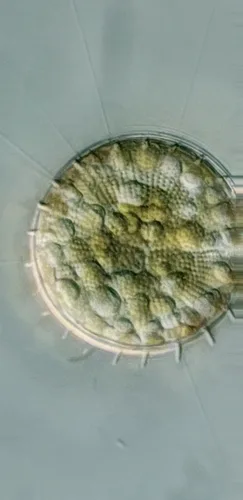
MicroorganismsDiatomsin 22 of 27 samples1992–2007
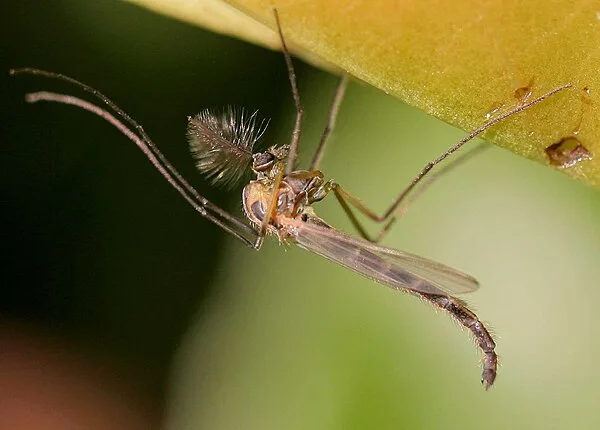
InvertebratesMidge larvaein 34 of 34 samples1993–2012
FishTenchin 7 of 16 catches2008–2011
PredatorPikein 1 of 16 catches2008–2011
FishRuffein 16 of 16 catches2008–2011
PredatorZanderin 12 of 16 catches2008–2011

What lives here comes from samples and catches in the lake itself. Each arrow points to what eats it. That comes from studies elsewhere, listed below. A dashed line holds for part of the group only.

Water plants

The water plants of the Zwarte Meer

The water of the Zwarte Meer has not always been this clear. Soon after the lake formed, in the 1940s, it held six kinds of pondweed and wide meadows of stoneworts, large algae that look like water plants. Too many nutrients in the water made the stoneworts disappear in the late 1950s. A few years later most of the pondweeds were gone too. The zebra mussels were also gone for a long time. They came back in the first half of the 1990s. They filter the water, and so it became clearer again. After 2008 stoneworts became more and more common, and now they rule under water. An evaluation from 2025 for Rijkswaterstaat, the Dutch national water authority, gives no explanation for that growth. The water stayed just as clear between 2010 and 2023.

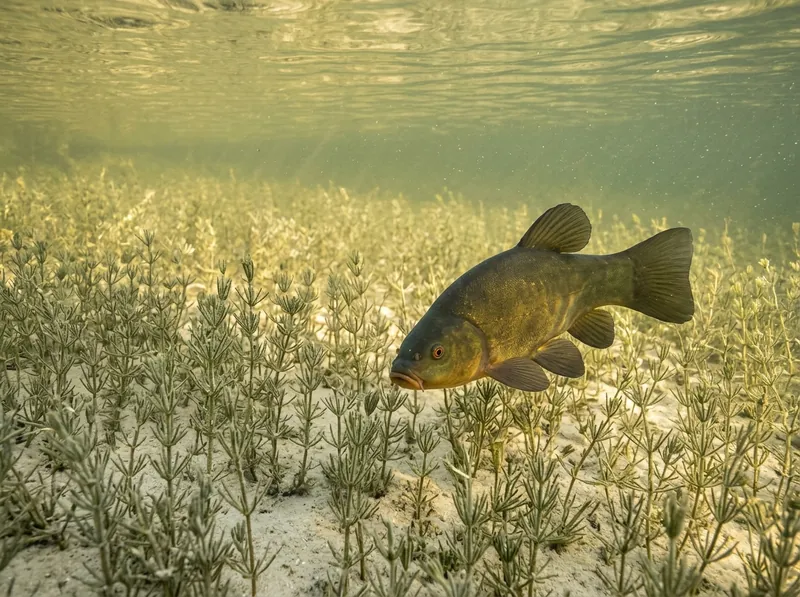
A stonewort meadow on a sandy bottom, with a tench above it
Invertebrates

Newcomers on the bottom

Four small water animals were not yet in the samples in 1993 and 1997. Three of them turned up from 2001: the Asian clam, a mysid shrimp (Limnomysis benedeni) and a bristle worm (Hypania invalida). The fourth, a tiny crustacean related to the woodlouse (Jaera istri), was first found in 2005. After that, all four were in more than half of the samples. The Asian clam comes from Southeast Asia. Of all new species of small water animals in the Rhine, the largest group comes from the region around the Black Sea and the Caspian Sea. Their spread grew sharply after the Main-Danube Canal opened in 1992.

You see the same among the fish. The tubenose goby, a small goby from the Black Sea region, was in 9 of the 16 trawl catches. In comparable surveys of other freshwater lakes you would expect it in fewer than one of the 16. In 2011 the monkey goby was in the net too, two years after the first confirmed find in the Netherlands.

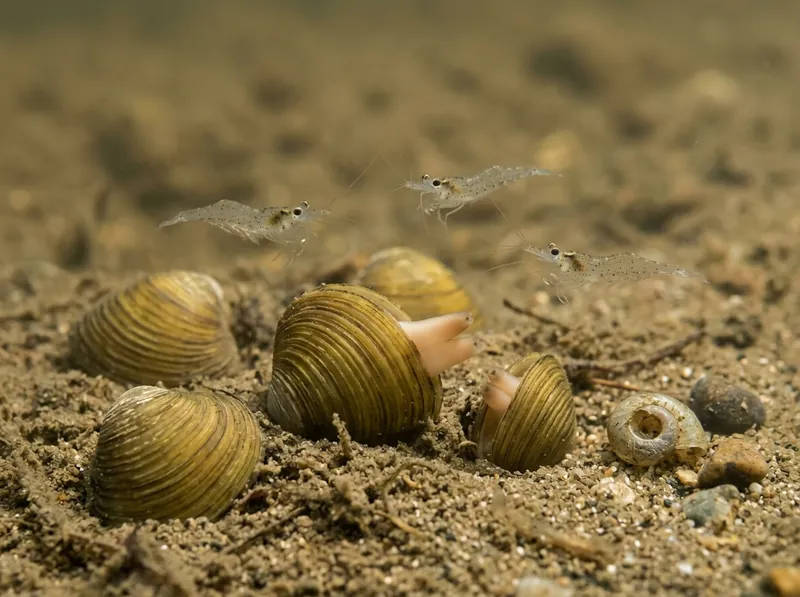
Asian clams in the sand, with small mysid shrimps above them
The water

About this water

The Zwarte Meer was formed in 1942, when the dikes of the Noordoostpolder were built. It lies between Kampen, Genemuiden and Vollenhove. Note: this is not the village of Zwartemeer near Emmen in Drenthe. The lake is large, but shallow everywhere outside the shipping channels. The bottom is mostly sand. Along the polder dike runs a dead-straight, deep shipping channel: the waterway from Meppel to the Ketelmeer. In the east lies the Vogeleiland, an island built in 1942 from the soil dug out of the channels.

The water comes mainly from the Zwarte Water and the Vecht. On the west side it flows through the Ramsdiep to the Ketelmeer, and on to the IJsselmeer. In the Ramsdiep lies the Ramspol storm surge barrier: a rubber dam that normally lies flat on the bottom. In a heavy north-westerly storm the wind pushes water from the IJsselmeer up into the Ketelmeer. The dam then inflates by itself and closes off the Zwarte Meer. According to Rijkswaterstaat it is the largest inflatable dam in the world. The depth on the map above was measured, not estimated by a model.

History

Origin and history

Before the Zwarte Meer existed, this was the delta of the IJssel and the Vecht. Club-rushes grew naturally only around the mouth of the Zwarte Water. People in the region grew club-rushes and wove mats from them. When an offshore wind left the shallows dry, the town crier of Genemuiden called up day labourers, who then planted club-rushes. In the end the whole area between Vollenhove and Kampen was planted with them. Remains of those club-rush fields are still there. Club-rushes belong to the sedge family. In the plant samples from 2005 to 2012, plants of this family were almost three times as common as in comparable samples from other freshwater lakes. Here they were almost always club-rushes.

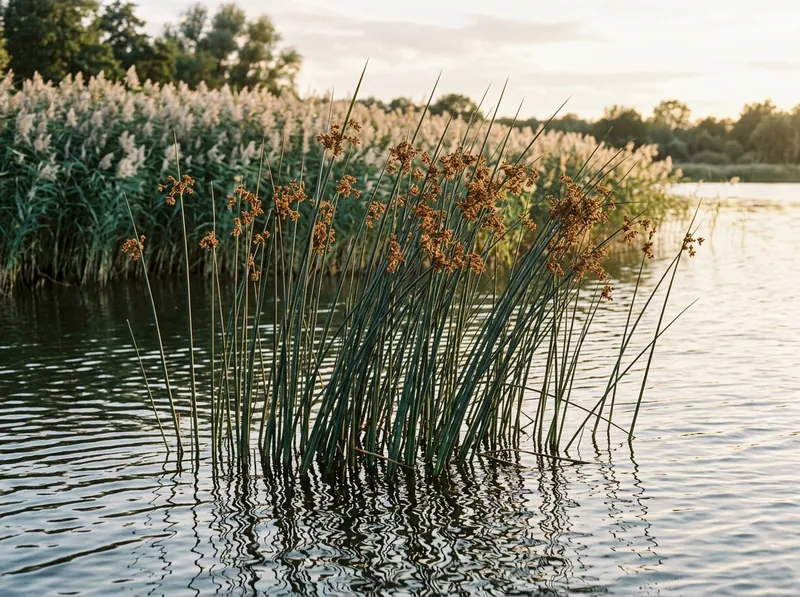
Common club-rush in shallow water, in front of a reed bed
Fishing

Fishing the Zwarte Meer

Always check the VISplanner, Sportvisunie’s map of Dutch fishing waters, to see whether and where you may fish on the Zwarte Meer.

The trawl surveys of 2008 and 2011 caught bream, ruffe, perch, roach, zander and eel, among others. According to the evaluation for Rijkswaterstaat, the fish surveys now mainly catch two non-native gobies: the round goby and the bighead goby, also called Kessler’s goby.

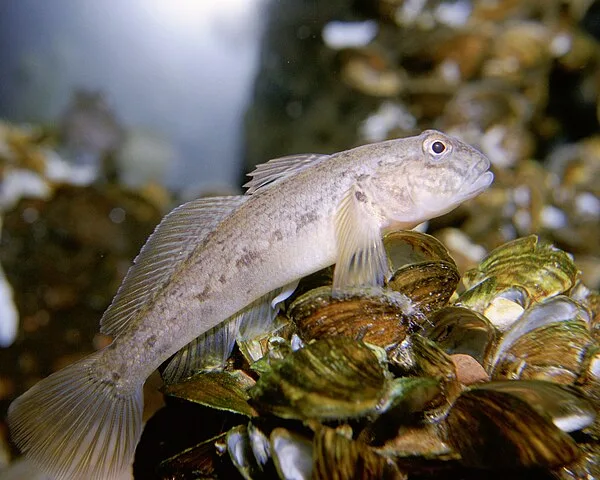
Round goby
Notable

Notable species

The Zwarte Meer is a Natura 2000 site, partly for three fish that live on the bottom: the spined loach, the weatherfish and the bullhead. In 2022 the bitterling was added to that list. The bullhead has not been found in the lake since 2011. The evaluation for Rijkswaterstaat names the round goby and the bighead goby as one possible cause. Round gobies and bighead gobies push the bullhead out of its place on the bottom.

Spined loach

Water composition
Oxygen saturation
80.1%
Total phosphorus
0.121mg/l
Total nitrogen
3.27mg/l
Ammonium
0.581mg/l
Chlorophyll-a
17.2ug/l
Chloride
87.3mg/l
Zinc
8.63ug/l
Lead
0.585ug/l
Blue-green algae in past surveys
found sometimes
not a current measurement
vs all monitored NL waters since 2015 · 70 sample point(s)
Over the years
Total phosphorus0.12 mg/l
Ammonium0.7 mg/l
Total nitrogen2.33 mg/l
2009percentile vs all NL waters — lower is cleaner2025