Identification
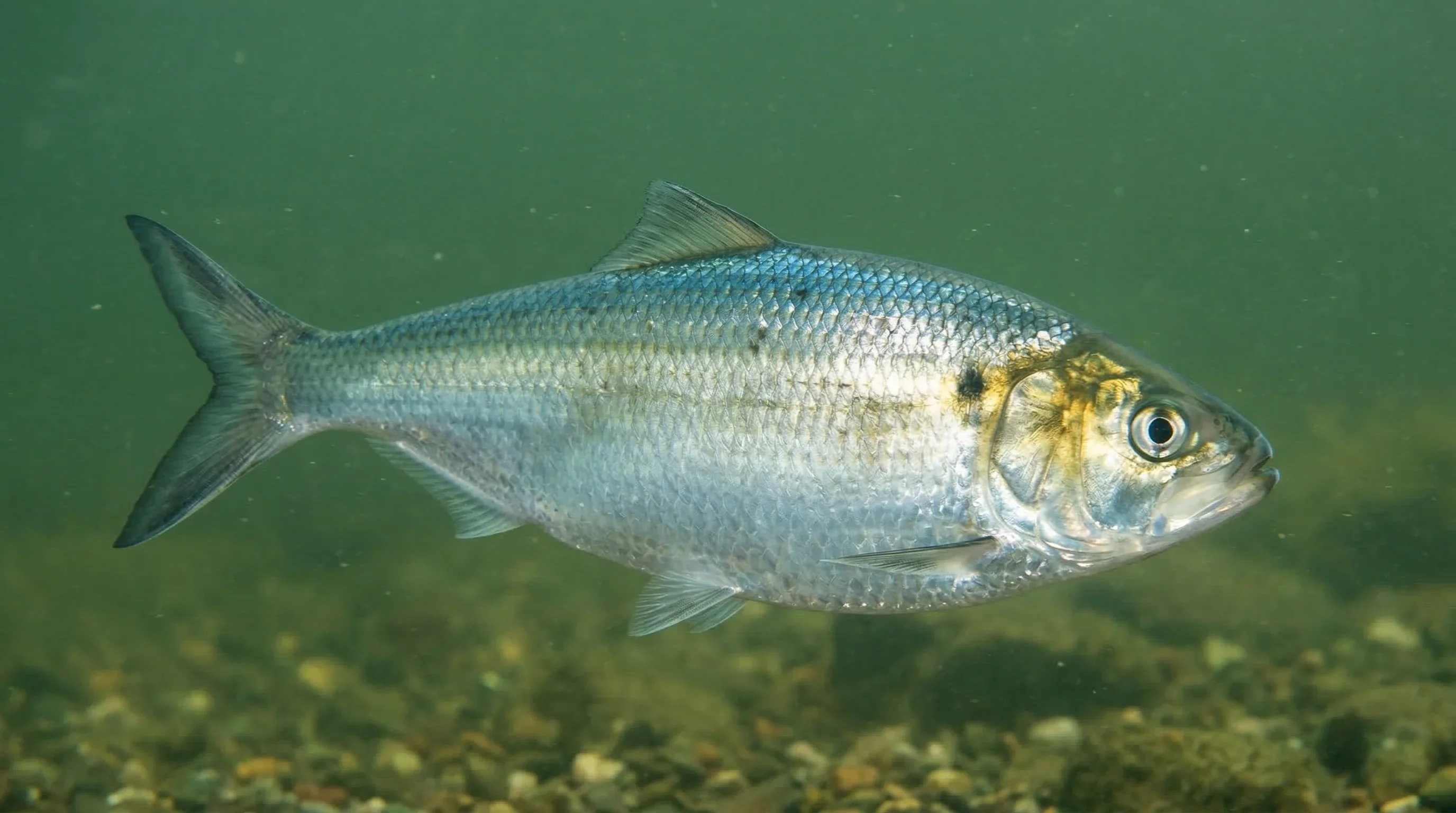
The three-spined stickleback is one of the smallest fish in Dutch waters — adults average just 5 to 8 cm. Its defining features are three sharp dorsal spines and bony lateral plates that armor the body. Outside breeding season, the fish is silvery-grey with a lighter belly. In spring, males transform dramatically: a bright red throat and belly, blue-green eyes, and a silvery back. Not to be confused with the nine-spined stickleback, which is even smaller and has more (smaller) spines.
Behavior & ecology
The stickleback feeds on small invertebrates: midge larvae, aquatic worms, water fleas, and daphnia. It hunts by sight and is most active during daylight. Famous for its spawning behavior: in spring, males build a small nest from plant material on the bottom, court females with a zigzag dance, and aggressively guard the eggs — even against much larger fish. Many adults die after breeding. The stickleback is a key prey species for virtually all predatory fish in the Netherlands: pike, perch, and pikeperch hunt them intensively.
In the Netherlands
The three-spined stickleback is the most widespread fish in the Netherlands. It occurs in literally every water type: ditches, ponds, canals, harbors, streams, rivers, polder waters, and even brackish water. With tens of thousands of monitoring records, it serves as an indicator for overall water health. The stickleback has no closed season and no minimum size — it is not a target species for anglers but plays a crucial role in the food web as the primary prey fish for predators.
What our models found for Three-spined stickleback
Below is what our models see in the data. These are links: where one thing occurs, the other occurs more often. That is not a cause. Each model answers one question and may not say more than it measured. The label by the heading tells you which question — and how sure the answer is.
Where this species lives A set, not a ranking Strong model
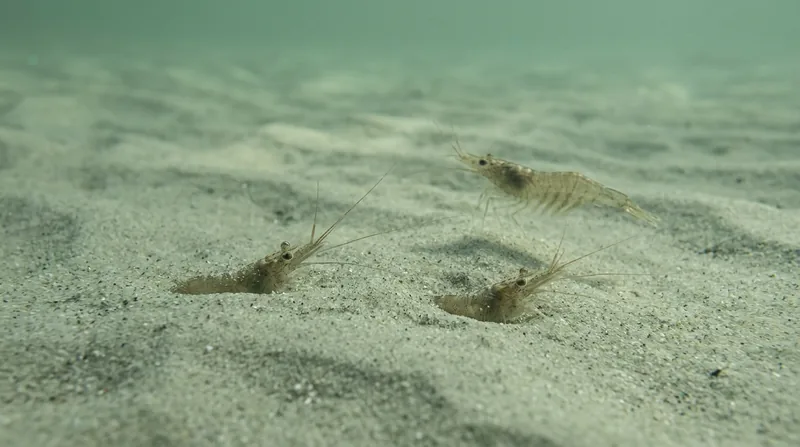 Brown shrimp (Crangonidae)
Two kinds of water sit side by side in this list. On the fresh side: the gudgeon, the stone loach, the carp and freshwater shrimps (Gammaridae). On the salt side: the brown shrimp (Crangonidae), the bull-rout, the dab, the grey gurnard, pipefish (Syngnathidae) and the flounder.
And salinity itself is in there too. Here that is not an oddity but the biography of the fish. FishBase calls the three-spined stickleback a migratory fish of salt, fresh and brackish water, with many populations that stay in fresh or brackish water all their lives, and places the adults in fresh water, estuaries AND the coastal sea.
That is why this model trains on both. Only three of our models do: the trout, the smelt and this one. Heavy metals and organic matter are in the list as well, plus sludge worms (Naididae) and midge larvae (Chironomidae) — and the nine-spined stickleback.
Where there are many A set, not a ranking Strong model
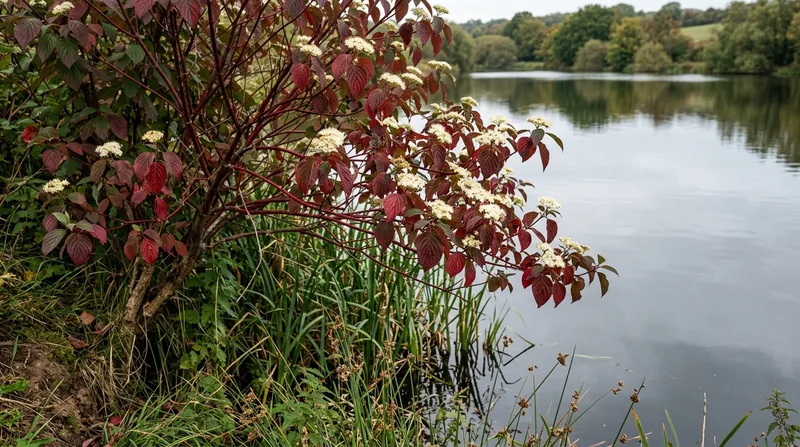 Dogwood (Cornaceae)
Plenty of three-spined stickleback goes with the dogwood (Cornaceae) on the bank, great pond snails (Lymnaeidae), water mites of the family Oxidae and diatoms of the family Stauroneidaceae.
We count fewer with water mites of the family Pionidae, caddisflies of the family Hydropsychidae — which need current — with sedges (Cyperaceae), the lake limpet (Acroloxidae) and the diving bell spider (Dictynidae), the only spider that lives under water. On the nine-spined stickleback page that spider sits on the same side.