Identification
The European bitterling is one of the smallest fish species in Dutch waters — with an average length of just 5-7 cm. The body is deep and strongly laterally compressed, with conspicuously large scales for such a small fish. Normally the fish is silvery-grey with a blue-green iridescent stripe along the rear flank. During spawning season, males color spectacularly: the flanks turn pink to purple, the belly orange-red and the eyes bright red. Females develop a long ovipositor tube used to deposit their eggs inside freshwater mussels.
Behavior & ecology
The bitterling has one of the most remarkable reproductive strategies of any Dutch fish. The female lays her eggs via the ovipositor into the gill cavity of large freshwater mussels (Unionidae). There, the eggs develop protected from predators. In return, bitterlings transport the mussel larvae (glochidia) that temporarily attach to the fish's gills — a perfect symbiosis.
Bitterlings live in small groups in shallow, still or slow-flowing waters with soft, muddy bottoms. They feed on algae, plant material and small invertebrates. The presence of bitterling is a strong indicator of healthy waters with living freshwater mussel populations.
In the Netherlands
The bitterling is native and protected under the European Habitats Directive (Annex II). The species occurs scattered across lowland waters throughout the Netherlands, but depends on the presence of freshwater mussels. Due to declining mussel populations (water pollution, dredging, loss of suitable substrates), the bitterling has become rare in some regions. Stream restoration and water quality improvements benefit both the mussel and the bitterling. The bitterling is not a sport fish — its angling significance is nil, but its ecological importance is great.
What our models found for European bitterling
Below is what our models see in the data. These are links: where one thing occurs, the other occurs more often. That is not a cause. Each model answers one question and may not say more than it measured. The label by the heading tells you which question — and how sure the answer is.
Where this species lives Strong model
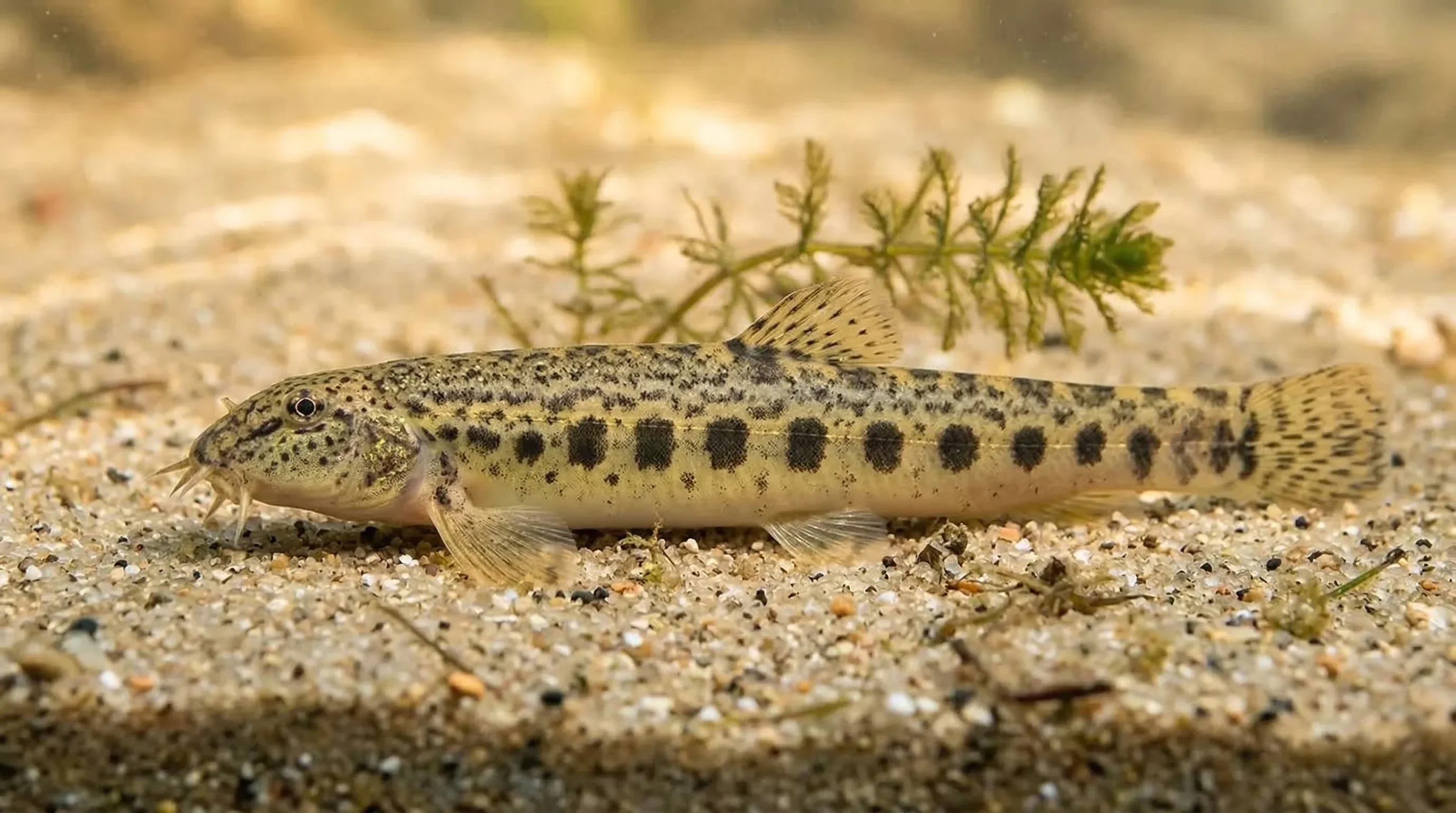 Spined loach (Cobitis taenia)
The spined loach comes first, as a species AND as a family: together a good twenty per cent of the model. Then rudd, tench, American crayfish (Cambaridae), the tubenose goby and sunbleak. All inhabitants of small, still, weedy water.
But the most interesting names sit lower. At number eleven the freshwater mussels (Unionidae) — here mainly the painter's mussel and the duck mussel — and directly below them the water mites of the family Unionicolidae, which LIVE inside those mussels.
That is no coincidence. The bitterling can only breed inside a living freshwater mussel. FishBase describes it like this: the female deposits her eggs within the valves of the mussel, the male sheds sperm into the inhalent current of the respiring mussel, and the young stay inside until they no longer need the protection.
So why is that mussel not at the top? Because we do not look for mussels everywhere. Where we do find them, more than half the cells also hold bitterling; where we do not, still almost a quarter do. That difference is large but not absolute — and it says more about our bottom surveys than about the fish.
Where there are many A set, not a ranking Strong model
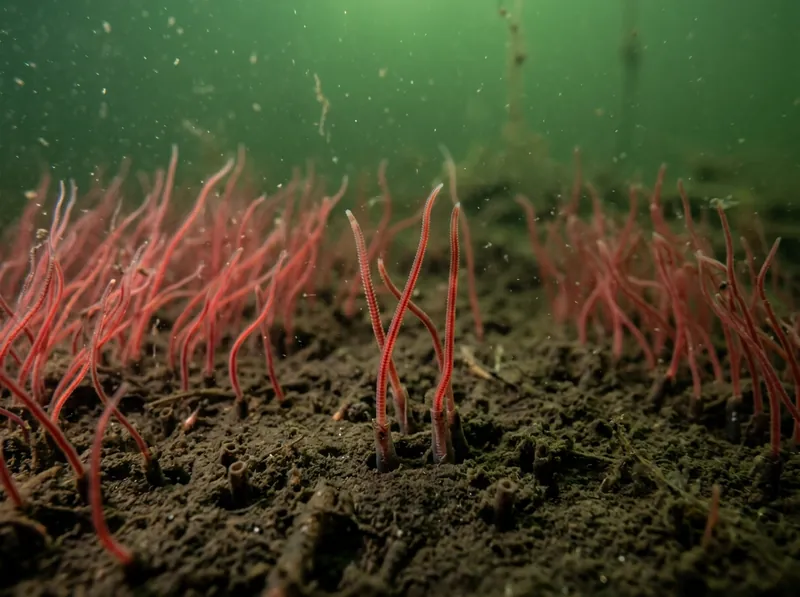 Sludge worms (Naididae)
Plenty of bitterling goes with fringed water lily (Menyanthaceae), stoneworts (Characeae), water forget-me-not (Boraginaceae), pygmy water boatmen (Micronectidae) and caddisflies of the family Hydropsychidae.
That is the picture of clear, weedy water — and it fits where FishBase places the bitterling: still or slow-flowing water with dense vegetation and a sand-silt bottom. We count fewer bitterling with sludge worms (Naididae), riffle beetles (Elmidae), fish leeches (Piscicolidae) and crawling water beetles (Haliplidae).


