Identification
The round goby is a stocky, bottom-dwelling fish with a large, broad head and thick lips. The body is brown-grey to olive-brown with dark marble-like blotches. The most striking feature: a distinct black spot on the first dorsal fin, absent in any other goby species in Dutch waters. Males turn almost entirely black during spawning season. Like all gobies, the pelvic fins are fused into a suction disc that allows them to cling to hard substrates. Most specimens are 8-12 cm, but the round goby can reach up to 25 cm.
Behavior & ecology
The round goby originates from the Ponto-Caspian region (Black Sea, Caspian Sea) and was first recorded in the Netherlands around 2004. The species has since spread explosively through the major rivers and is now one of the most common fish in the Waal, Meuse, Rhine and IJssel. They are aggressive nest guarders and territorial bottom fish that displace native species through competition for food and shelter. Round gobies feed on mussels (especially dreissenid mussels), amphipods, insect larvae and eggs of other fish species. At the same time, they have become an important new food source for pikeperch, perch and cormorants.
Fishing techniques
The round goby is usually caught by accident, but can be targeted:
- Dropshotting — small shad or worm on a dropshot rig just above the bottom; effective along rocky banks
- Light float fishing — piece of worm or maggot right on the bottom; in harbors and along stone quays they bite almost instantly
Round gobies bite aggressively and eagerly — they take virtually anything offered on the bottom. They may be taken without limit; many anglers discourage catch-and-release due to their invasive nature.
In the Netherlands
The round goby is the most successful fish invader in recent Dutch history. Via ballast water from ships from the Black Sea region, the species reached the major rivers and has since spread to canals, harbors and even streams. The ecological impact is considerable: the species competes with native bottom fish like stone loach and gudgeon, and actively eats eggs and fry of other fish species. There is no protected status, no closed season and no minimum size. Many anglers consider the round goby a pest, but the fish has enriched the diet of pikeperch and perch.
What our models found for Round goby
Below is what our models see in the data. These are links: where one thing occurs, the other occurs more often. That is not a cause. Each model answers one question and may not say more than it measured. The label by the heading tells you which question — and how sure the answer is.
Where this species lives A set, not a ranking Strong model
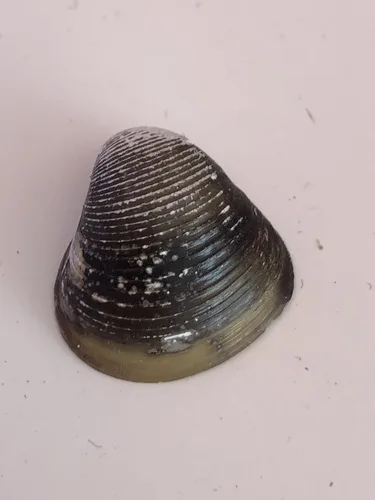 Asian clam (Cyrenidae)
The striking thing about this list is who is in it: almost all newcomers, just like the round goby itself.
Two other gobies are in it, the tubenose goby and the monkey goby. Then the Asian clam (Cyrenidae), the Caspian mud shrimp (Corophiidae) and the New Zealand mud snail (Tateidae). Every one of them a species that did not start out here.
FishBase says the round goby comes originally from the Sea of Azov, the Black Sea and the Caspian basins, and that its egg clutches sometimes travel attached to ships' hulls. It lives mostly on well vegetated or rocky bottom and feeds mostly on molluscs — and two of the names above are molluscs.
The rest of the list is big-river company: the ide, the asp, the zander, the eel, the bleak, the perch and the bream. Organic matter, common reed (Poaceae) and soft rush (Juncaceae) count too.
Where there are many A set, not a ranking Weak model
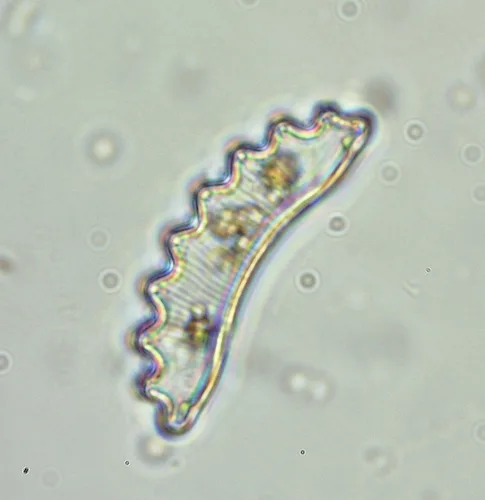 Diatoms (Eunotiaceae)
This model is weak. Plenty of round goby goes with diatoms of the families Eunotiaceae and Pinnulariaceae, mayflies (Caenidae), burrowing water beetles (Noteridae) and the Danube isopod (Janiridae) — another newcomer from the same region as the goby.
We count fewer round goby with water mites of the family Oxidae, caddisflies of the family Limnephilidae and stoneflies (Nemouridae).


