Identification
The tubenose goby is the smallest of the three Ponto-Caspian gobies in the Netherlands, reaching 8 to 12 cm. The body is slender and light brown with a characteristic marbled pattern of dark spots — hence the Dutch name "marmergrondel." The most distinctive feature is the tubular nostrils that protrude above the upper lip like small tentacles. The head is relatively small and rounded. Like all gobies, it has fused pelvic fins forming a sucker disc. The difference from the other gobies: the tubenose is smaller, slimmer, and has the conspicuous tube-shaped nostrils.
Behavior & ecology
The tubenose goby is a bottom fish that lives among stones, riprap, and bank vegetation in both flowing and still water. It feeds on small invertebrates: worms, midge larvae, amphipods, and snails. The species is less tied to hard substrate than the round goby and is also found in softer habitat — transition zones between river and polder. During spawning, the female attaches eggs under stones, which the male guards. The tubenose goby originally comes from the lower reaches of rivers around the Black Sea.
In the Netherlands
The tubenose goby is the third Ponto-Caspian goby species in the Netherlands, alongside the round goby and the monkey goby. It was first recorded around 2002 and occurs in the major rivers and their branches. It also lives in lakes connected to the rivers: in the Zwarte Meer near Kampen it was caught as early as 2008. Of the three invasive gobies, the tubenose is the least abundant and least aggressive. Its impact on native bottom fish is likely smaller than that of the round goby, but the species does occupy the same hiding spots as the protected bullhead.
What our models found for Tubenose goby
Below is what our models see in the data. These are links: where one thing occurs, the other occurs more often. That is not a cause. Each model answers one question and may not say more than it measured. The label by the heading tells you which question — and how sure the answer is.
Where this species lives A set, not a ranking Strong model
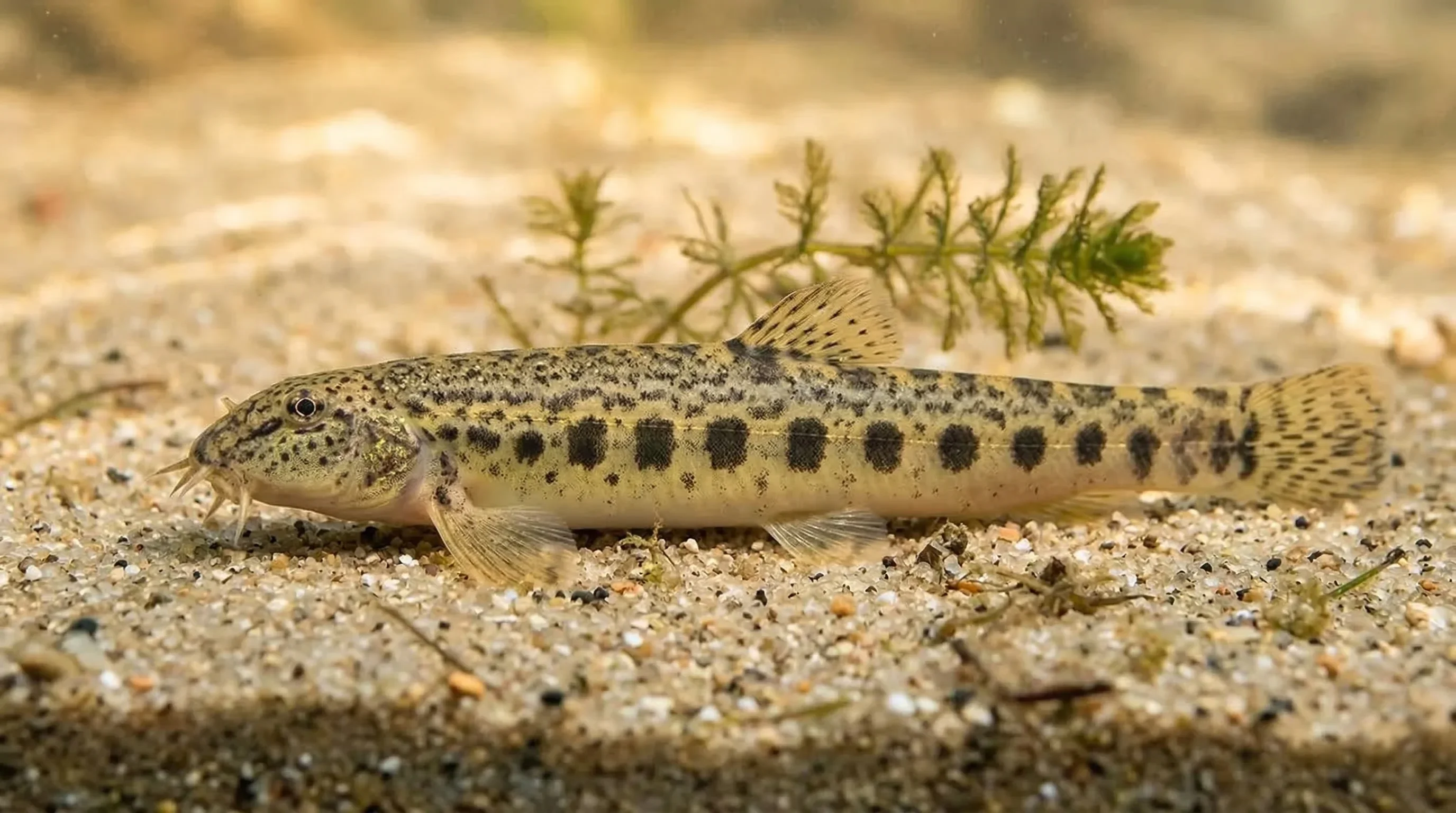 Spined loach (Cobitis taenia)
This goby is the odd one out, and that is what makes it interesting. The other gobies belong to the big rivers; this list describes small, still, weedy water.
The company is spined loaches, the bleak, the bitterling, the three-spined stickleback, tench, pike and rudd. Only the round goby still recalls the river. Heavy metals count too.
One warning about this page. We hold TWO tubenose gobies in our data — Proterorhinus semilunaris and Proterorhinus marmoratus — and in Dutch, English and German they carry the same name. On other species' pages those two columns are added together under one name. That is a fault in our naming, not in the fish.
Where there are many Strong model
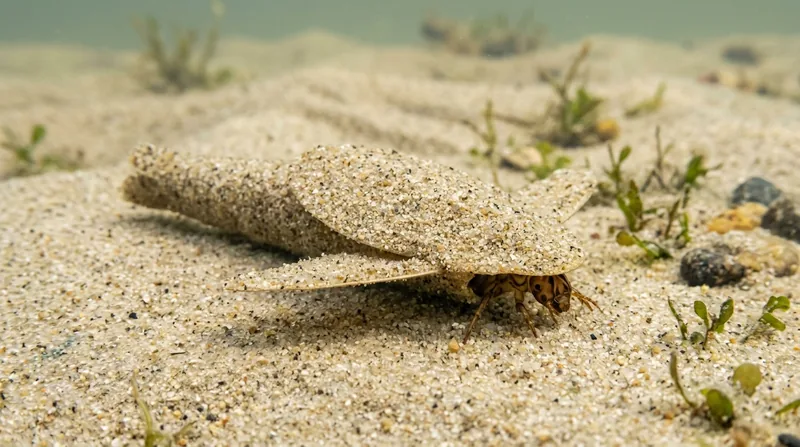 Caddisflies (Molannidae)
Where there are more caddisflies of the family Molannidae, we count more tubenose goby. The same goes for the large burrowing mayflies (Ephemeridae) and for yellow iris (Iridaceae).
We count fewer tubenose goby where the water louse (Asellidae) sits, with whirligig beetles (Gyrinidae), with the diving bell spider (Dictynidae) and with emerald damselflies (Lestidae).


