Identification
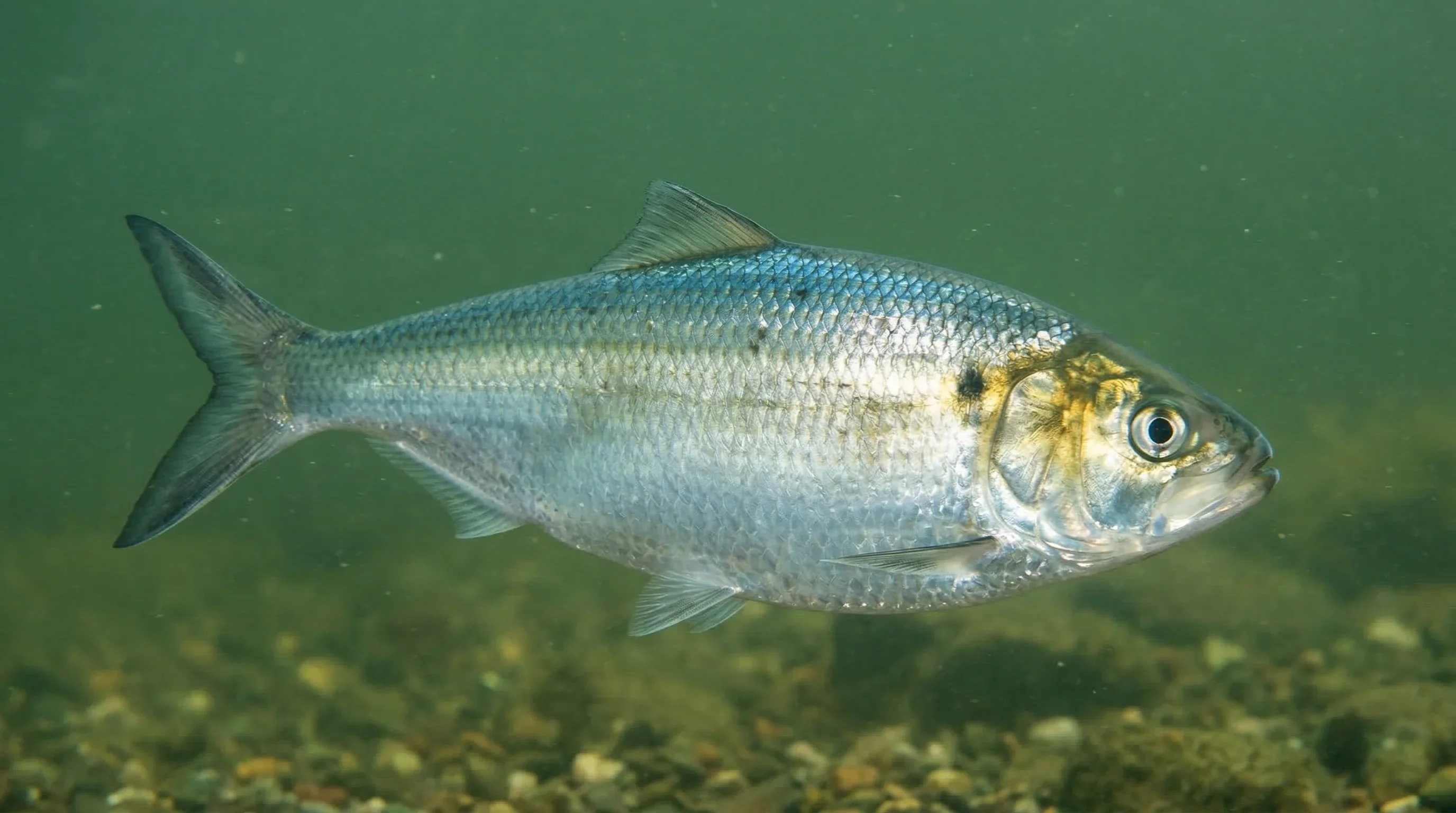
The flounder is a flatfish and the only flatfish species that regularly enters fresh water. The body is flattened and oval, with both eyes on the upper side (usually the right). The upper side is olive-brown to grey-brown with an irregularly mottled pattern providing perfect camouflage on sandy and muddy bottoms. The underside is white. Along the base of the dorsal and anal fins are rough, knobby bony plates that distinguish the flounder from other flatfish species. The mouth is small and asymmetrical. Flounder in Dutch waters typically reach 20-30 cm, but specimens up to 40 cm occur.
Behavior & ecology
The flounder is a bottom-dweller that partially buries itself in sand or mud, becoming virtually invisible through camouflage. It is an opportunistic predator that waits for prey to pass: worms, small shrimp, crustaceans, mollusks, and insect larvae. What makes the flounder unique is its ability to live in salt, brackish, and fresh water alike — you can catch flounder in the North Sea but also dozens of kilometers inland in canals.
Spawning takes place in winter and early spring (January-April) at sea. Adult flounder migrate to deeper sea water to spawn. Young flounder drift with tidal currents into estuaries and rivers, growing up in brackish and fresh water — some travel surprisingly far inland. This migration makes the flounder a remarkable boundary-crosser between sea and fresh water.
Fishing techniques
Flounder fishing is straightforward but requires patience and the right location:
- Bottom fishing with worm: The classic and most effective method. A lugworm, ragworm, or common earthworm on a simple bottom rig with a flatfish hook (size 2-6). Cast out and wait — flounder slowly suck in the bait.
- Shrimp or fish strips: Small shrimp or strips of fresh fish (mackerel, herring) on the bottom. Particularly effective in brackish water and harbors.
- Light spinning: Small jigging shads or drop-shot with a small worm. Less traditional but surprisingly effective in canals where flounder are present.
Use a medium rod (2.70-3.30m) with a sensitive tip. The flounder bite is subtle — a slow pulling sensation rather than a sharp tap. Give the fish time to take the bait before striking.
In the Netherlands
The flounder is a common species in coastal waters, the Wadden Sea area, IJsselmeer, Nieuwe Waterweg, and the Delta region. But what makes it special is that flounder are also caught far inland: in the Amsterdam-Rhine Canal, North Sea Canal, Hollandse IJssel, and other connected waters. There is no closed season. Flounder is valued culinarily and may be kept in many waters, though more and more anglers are switching to catch-and-release. The species is living proof of how connected the Dutch water system is to the sea.
What our models found for European Flounder
Below is what our models see in the data. These are links: where one thing occurs, the other occurs more often. That is not a cause. Each model answers one question and may not say more than it measured. The label by the heading tells you which question — and how sure the answer is.
Where this species lives Strong model
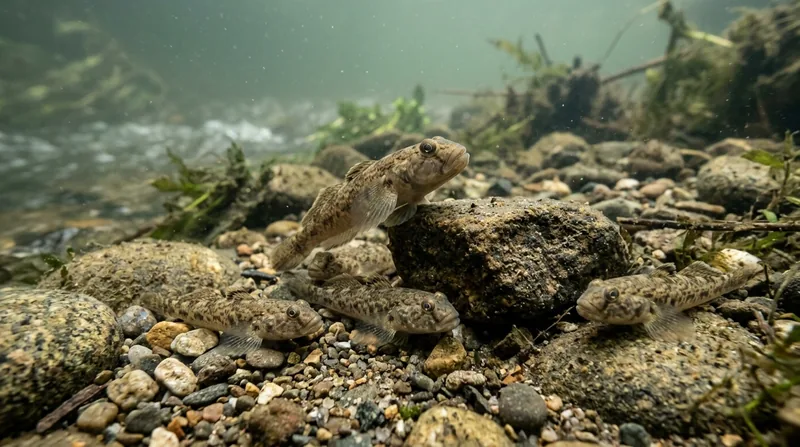 Gobies (Gobiidae)
This is a coastal model. Gobies come first, then bullheads and sand gobies. Further down come herring, pipefish, gurnards, sprat, lesser weever, sole, pouting and cod. The brown shrimp (Crangonidae) and mean temperature count too.
One thing you need to know about that list. Six of those animals are in it twice: once as a species and once as a family. Bullhead, herring, gurnard, pipefish, weever and goby — all double-counted. It looks like twelve names; it is six.
What is NOT in it matters more. FishBase says the flounder often enters fresh water and spends most of the year in estuaries. We sort fish into salt or fresh, and the flounder falls under salt. Its records in rivers and canals were therefore left out of this comparison. This list describes the flounder at sea, not the flounder in the river.
Even so, the list points back at the transition water itself. The gobies in this model are mainly the round goby and the tubenose goby: two species that pushed in from the rivers and are common in brackish water. The sand gobies (Pomatoschistus) sit separately alongside them.