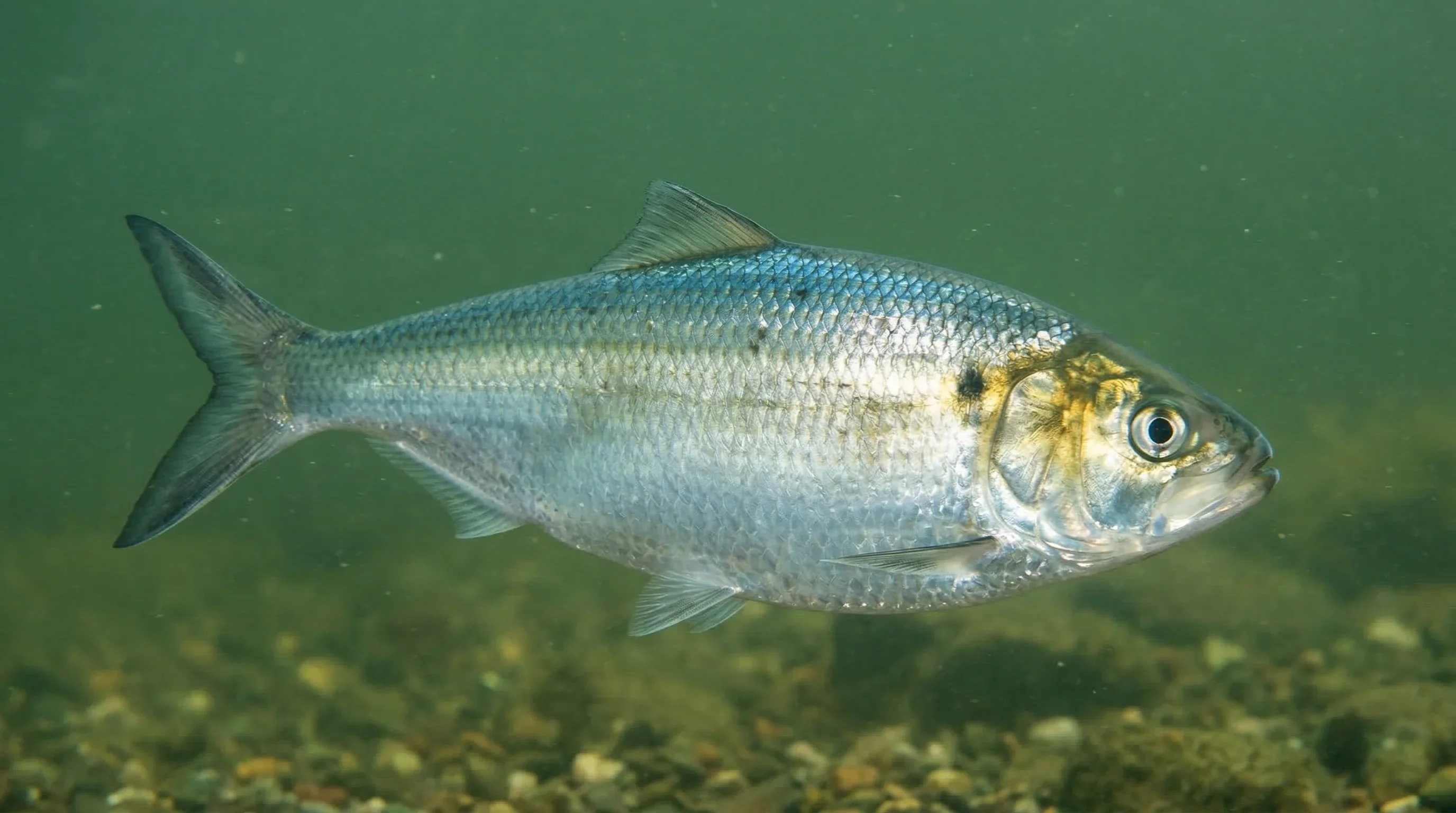
Identification
Plaice is the best-known flatfish of the North Sea, reaching 20 to 40 cm (up to 100 cm maximum). The body is oval and strongly flattened, with both eyes on the right side. The most distinctive feature is the orange to red spots on the brown upper surface — no other North Sea flatfish has this pattern. The underside is pearl white. The skin is smooth with small scales. The head is relatively small with a curved lateral line making a sharp curve above the pectoral fin. Not to be confused with dab (rougher skin, no orange spots) or flounder (spiny scales along the lateral line).
Behavior & ecology
Plaice is a bottom fish that lives on sandy and fine-gravel seabeds in the North Sea, from shallow coastal water to 200 meters depth. It feeds on polychaete worms, thin-shelled bivalves, small shrimp, and mysid shrimp — food it extracts from the sand. Plaice is a master of camouflage: it adjusts its color to the substrate and buries itself. The species makes seasonal migrations: to shallow coastal water in spring to forage, to deeper spawning grounds in winter. Plaice spawns from January to March in the central North Sea at 30 to 50 meters depth. Young plaice grow up in the shallow Wadden Sea and along the coast.
Fishing techniques
Plaice is a popular target for sea anglers, especially when beach fishing. The most effective method is a bottom rig with one or two hooks (size 2–6) with lugworm or ragworm as bait. Plaice take the bait eagerly — the hook is often swallowed deep. The best periods are spring and summer (April–August), when plaice forages in shallow coastal water. Fish on sandy beach sections, sandbanks, and from breakwaters. Groundbait with pieces of shrimp can add extra attraction. Larger specimens are also caught from boats on the North Sea.
In the Netherlands
Plaice is culturally and economically one of the most important North Sea fish — "kibbeling" (battered fried fish) from plaice is a Dutch icon. The North Sea plaice population is one of Europe's best-managed fish stocks, with a healthy biomass after decades of quota policy. The Wadden Sea is a crucial nursery: young plaice grow up in its shallow, nutrient-rich waters. For sport fishers, plaice is a reliable and tasty catch. A minimum landing size of 27 cm applies in commercial fishing. The Dutch beam trawl fleet catches thousands of tons of plaice annually.
What our models found for European plaice
Below is what our models see in the data. These are links: where one thing occurs, the other occurs more often. That is not a cause. Each model answers one question and may not say more than it measured. The label by the heading tells you which question — and how sure the answer is.
Where there are many A set, not a ranking Strong model
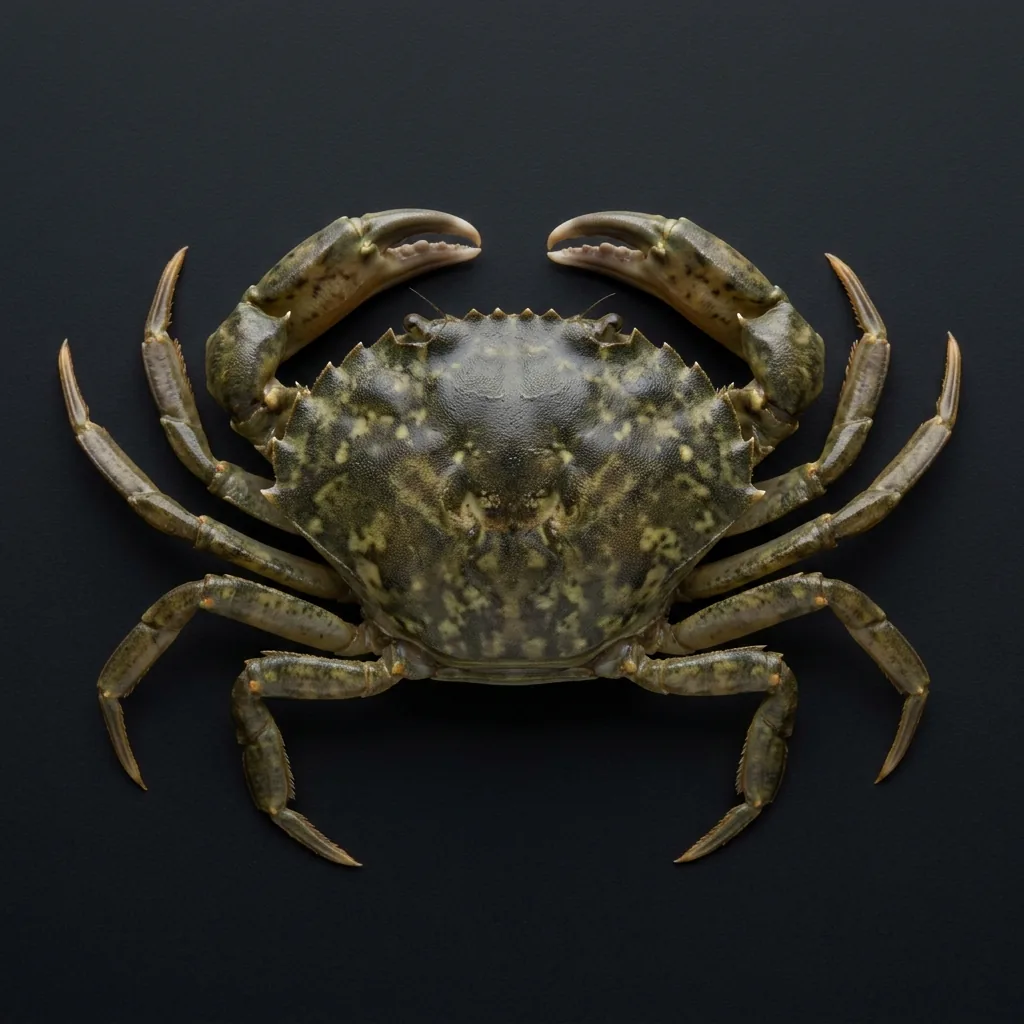 Shore crab (Carcinidae)
Plenty of plaice goes with the shore crab (Carcinidae), the common starfish (Asteriidae) and depth. We count fewer plaice with hermit crabs (Paguridae) and the sea mouse (Aphroditidae), a thick bristle worm of the sea floor.
Depth is the easiest to check, and it holds. FishBase writes that adult plaice live on mixed bottoms and that the older the fish, the deeper it sits — the small ones are on the bathing beaches. Our model measures the same thing: deeper water, more plaice.
The sea mouse is the odd one out. According to FishBase plaice feed mainly on thin-shelled molluscs and bristle worms — and the only bristle worm in this model goes with FEWER plaice. Perhaps that is because the sea mouse is a large, spiny worm and not prey. But that is our idea, not our measurement.
There is one more thing we cannot explain: two crab groups point opposite ways. The shore crab goes with more plaice, the hermit crab with fewer. Why, we do not know.