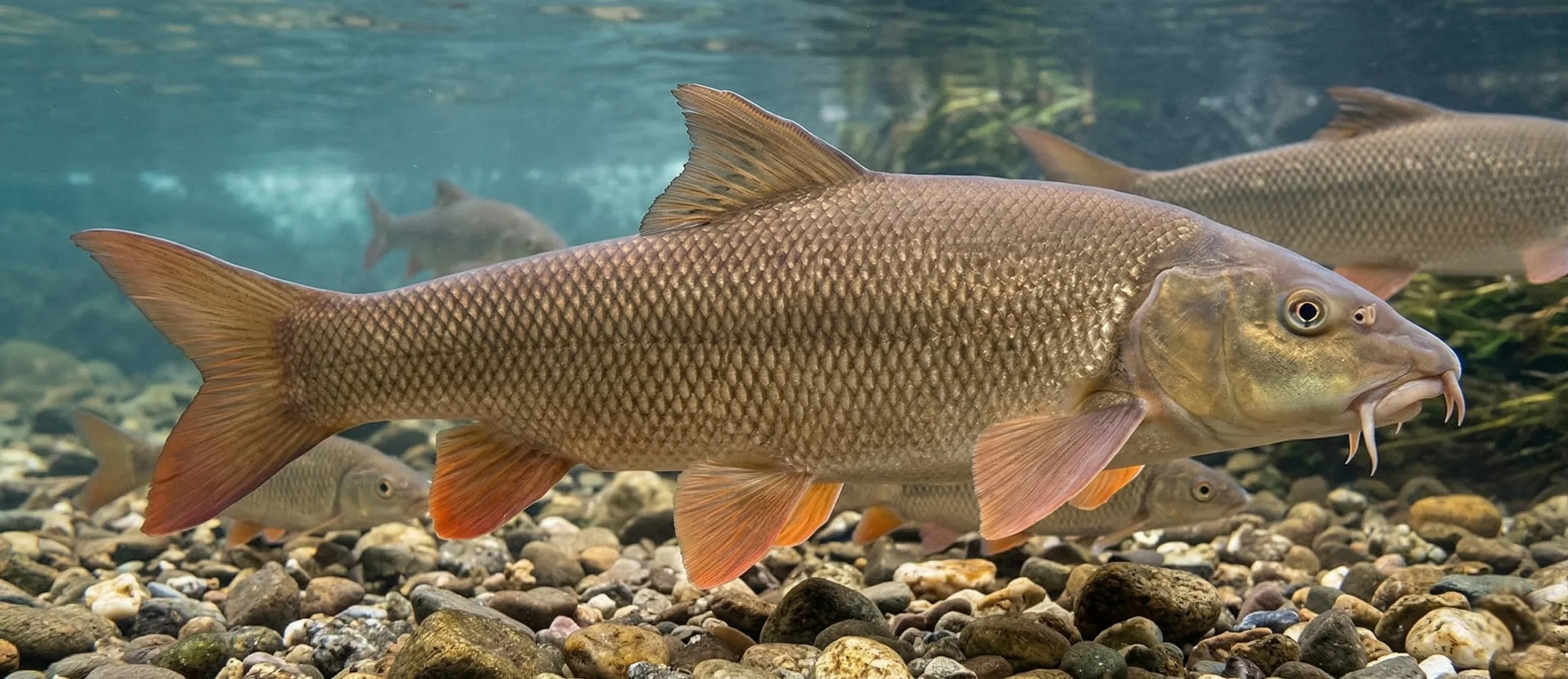
The tench is a carp-like fish that lives in still water full of plants: ditches, canals, ponds and shallow lakes. Tench fishing means fishing on the bottom, close to the water plants. You can use a method feeder, a pole or a quill float. On this page you can read how to recognise a tench and how it differs from carp and crucian carp. You can also read where and when to catch it, which baits work, which rules apply and how big it can grow.
Recognising a tench
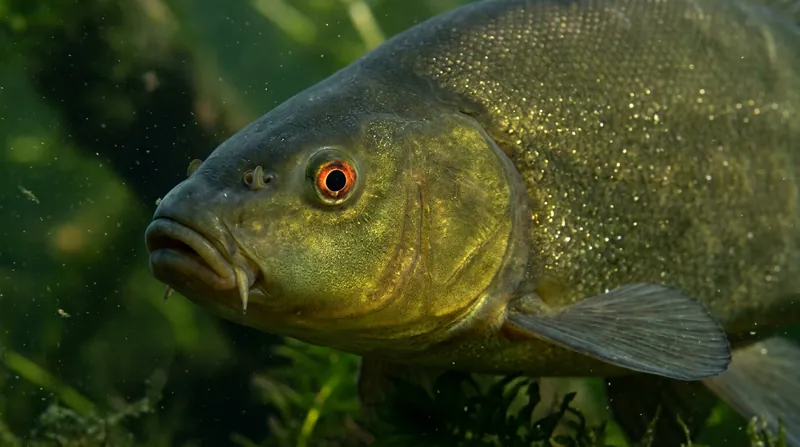 The orange eye, the short barbel at the corner of the mouth and the tiny scales under the slime
The clearest mark of a tench is its eye, which is a striking orange. Next, look at the fins: on a tench they are rounded. Close up you also see one pair of short barbels, at the corners of the mouth (Kennisdocument zeelt). You cannot always see the barbels well (RAVON). The body is only slightly flattened from side to side. The part just in front of the tail fin is strikingly deep. The eyes are small, and the short mouth sits at the front of the head (Kennisdocument zeelt).
The colour differs from fish to fish. The back is dark olive to brownish. The flanks are only a little lighter, and the belly is pale yellowish green to almost white. The small scales have a golden sheen (Kennisdocument zeelt). RAVON is a Dutch research organisation for reptiles, amphibians and fish. It describes the flanks as olive green to golden (RAVON). Sportvisunie, the Dutch angling federation, describes them as brown to almost black, with an olive-green sheen (Sportvisunie).
The scales are very small and sit deep in the skin, under a thick layer of slime (Kennisdocument zeelt). Along the lateral line, the line along the middle of the flank, there are 95 to 100 of them (Sportvisunie). The Dutch angling federation's knowledge document on the tench gives 95 to 120 (Kennisdocument zeelt). It is a 2008 summary of what is known about the tench. The fins are dark and strongly rounded. The tail fin is not V-shaped: its edge is slightly concave, almost straight (Kennisdocument zeelt; Sportvisunie). The dorsal fin is short, with 12 to 13 rays: the thin rods inside a fin (Kennisdocument zeelt).
Male or female?
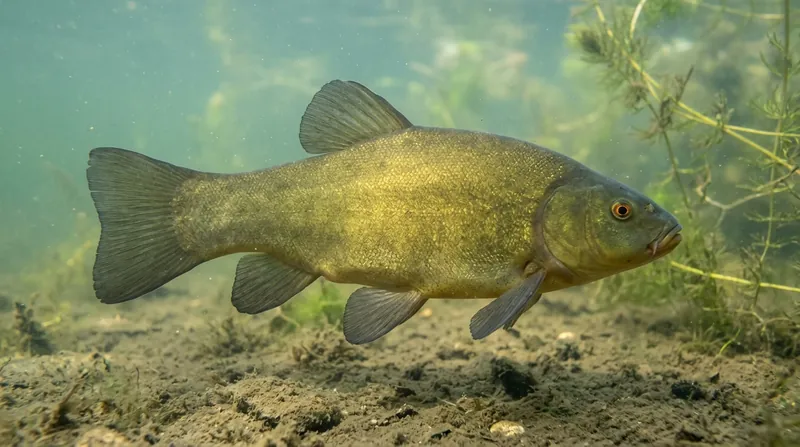 A male: the pelvic fins are large and reach back past the vent
In a tench you can see it in the pelvic fins: the two fins on the underside of the belly. In the male they are much bigger. They reach back past the vent, and the second ray is thickened (Kennisdocument zeelt). At spawning time the male also gets small bumps, mainly on the head and the back (Kennisdocument zeelt). Do females grow faster? In pond trials the females weighed twice as much as the males after three to four summers (Kennisdocument zeelt). But in two English gravel pits, males and females grew at the same rate (Wright & Giles 1991).
Where does the name come from?
As a name for a fish, the word zeelt exists only in Dutch. Nobody knows for sure where it comes from. It is an old word: in 1420 it was already written as 'zielt'. It may be related to the Scandinavian words for herring, such as Norwegian and Danish 'sild', but that is uncertain. Another explanation traces zeelt to a very old root meaning 'marsh', because the tench lives mainly in shallow, muddy water. If so, the word is related to Helinium. That is the Latin name for the great river delta in the south-west of the Netherlands (Etymologiebank). In some regions the tench also goes by other Dutch names: louw or lauw in Gelderland, muidhond in Friesland and slei in Groningen. An outdated name is schoenmaker, 'shoemaker', because of its thick skin (Woordenboek der Nederlandsche Taal). In 1803 the French naturalist Lacepède even gave the tench the Dutch word as its scientific name: Cyprinus zeelt. Scientists no longer use that name (IUCN).
How big does a tench get?
According to the knowledge document, a tench is usually 20 to 30 centimetres long (Kennisdocument zeelt). According to RAVON it can grow to about 65 centimetres (RAVON). Compared with other carp-like fish the tench grows slowly, especially in its first year. It grows mainly in the warm months, and hardly at all in winter. It does keep growing, though more slowly with age (Kennisdocument zeelt). A tench can live a long time: 15 to 20 years according to the knowledge document (Kennisdocument zeelt). The IUCN, an international nature conservation organisation, says at least 20 years (IUCN).
In fish surveys, researchers count and measure the fish in a water. In this way they have measured more than 52,000 tench. More than 9,700 of them were 25 centimetres or longer: the minimum size. Put those in a row from short to long, and the one in the middle is 41 centimetres. More than half of those 9,700 were 40 centimetres or longer. About 1 in 12 reached 50 centimetres. Twelve were 60 centimetres or longer. The longest was 66 centimetres, longer than the Dutch record. For the biggest tench ever caught, see the records.
Tench, carp or crucian carp?
 A crucian carp, for comparison: large scales, a long dorsal fin and no barbels
You are unlikely to mistake an adult tench for anything else (Kennisdocument zeelt). But a young tench does look like a young carp or a young crucian carp. Then look at the scales and the dorsal fin. A tench has small, barely visible scales and a short dorsal fin with 12 to 13 rays (RAVON). A dark spot just in front of the tail fin does not help. Young tench, young carp and young crucian carp often all have one (Kennisdocument zeelt; RAVON; RAVON). Young Prussian carp do not (RAVON).
- Carp. A carp has four barbels: two short ones on the upper lip and two longer ones at the corners of the mouth (RAVON). A tench has two, and you cannot always see them well (RAVON). A wild carp is fully scaled. But some farmed carp have only a few scales or none at all: the mirror carp and the leather carp (RAVON).
- Crucian carp. A crucian carp has no barbels and a convex dorsal fin. Along the lateral line, the line along the middle of the flank, there are 33 to 36 scales (RAVON).
- Prussian carp. A Prussian carp has no barbels either. Its dorsal fin is concave, and it has 27 to 32 scales along the lateral line (RAVON).
- Goldfish. A goldfish has a long, concave dorsal fin. Farmed goldfish are orange to yellow. In the wild they get their brownish colour back after a few generations (RAVON). If an orange fish has a short, rounded dorsal fin and two small barbels, it is not a goldfish. It may be a golden tench. See what is a golden tench?
Life and spawning
The tench is a shy fish. By day it usually hides among water plants (Kennisdocument zeelt). In a shallow English lake, researchers followed tench fitted with small radio tags. By day the fish lay almost still in favourite spots, together among lesser bulrush. This is a plant that grows up out of the water along the bank. Only at night did they go looking for food on the bottom, mainly midge larvae. They searched for a long time and swam quite far, but ate only a few prey animals a night (Perrow et al. 1996). In laboratory tests, too, the tench was active only at night (Herrero et al. 2003). RAVON says it is active at night (RAVON). Young tench often swim in shoals. Adult tench often live alone or in small groups (Kennisdocument zeelt).
What does a tench eat? Almost anything it finds among the water plants and on the bottom. An adult tench eats small snails, small mussels, worms, insect larvae and zooplankton: tiny animals that drift in the water. But it also eats plants and dead plant remains. What it eats exactly differs from water to water. Often it eats mainly whatever is most common at the time (Kennisdocument zeelt). In Dutch the faucet snail (Bithynia tentaculata) is also called zeeltslakje, the tench snail. As the name suggests, tench are very fond of it (Kennisdocument zeelt). With its sturdy, paddle-like fins the tench more or less rows through the plants. Its thick slime protects it from damage as it does so (Kennisdocument zeelt).
A tench feeds differently from a bream. A bream first searches the bottom, then feeds heavily where the food is densest. A tench swims around a lot and eats a little here and there (Kennisdocument zeelt). It can also go a very long time without food. A healthy tench can even last a year without eating. By then it weighs only two fifths of its starting weight. In winter it eats almost nothing. But it is also not very active then, so it loses only about 6 percent of its weight (Kennisdocument zeelt).
Coping with little oxygen. In plant-rich water there is often little oxygen at night. A tench copes well with that, as long as the oxygen level falls slowly. It can come to the surface to gulp air, and it takes in part of its oxygen through its skin. French researchers found that this can be up to 23 percent of what it needs. Its muscles can also work for a while without oxygen. That is how a tench survives at 0.4 milligrams of oxygen per litre (Kennisdocument zeelt). A sudden drop in oxygen harms a tench just as much as other fish (Kennisdocument zeelt).
When the water gets colder than 4 degrees, the tench goes into a kind of resting state. In winter, and in summer when it is very hot, it hides in the mud. Not every tench digs itself in. Some lie motionless on the bottom with their fins spread. They can even tip over and stay lying on their side (Kennisdocument zeelt).
Spawning. Tench spawn from May to August, depending on the water temperature, which must be at least about 19 degrees (Kennisdocument zeelt). Calm, sultry days help. In a long spell of bad weather a tench can even put off spawning until September (Kennisdocument zeelt). For spawning it needs water plants, such as Canadian waterweed, broad-leaved pondweed, rigid hornwort, spiked water-milfoil, water soldier or thread-leaved water-crowfoot. Eggs that fall to the bottom almost always die, so tench often spawn above dense plants along the bank (Kennisdocument zeelt). At spawning time tench lose their shyness. They swim in small groups, side by side and one behind the other. They zigzag past each other and even make little jumps out of the water (Kennisdocument zeelt).
A female does not lay all her eggs at once. She lays them in three or more batches, several days apart. A tench of 40 centimetres can lay more than 850,000 eggs. The eggs are green and very sticky, so they stay stuck to the plants (Kennisdocument zeelt). At a water temperature of 20 degrees they hatch within a week (Kennisdocument zeelt; FishBase). The young fish then hang on the plants for another 6 to 10 days. During that time they live on their yolk sac: a small store of food from the egg. After that they still stay among the plants (Kennisdocument zeelt). In two English gravel pits, more young tench joined the population in years with warm summers than in other years (Wright & Giles 1991).
Males mature earlier than females. According to the knowledge document, males mature after 2 to 3 years, at a length of 11 to 20 centimetres. Females mature after 3 to 4 years, at 18 to 30 centimetres (Kennisdocument zeelt). The IUCN gives 2 to 5 years for males and 4 to 7 years for females. Tench in the north mature later (IUCN).
What eats tench? Mainly predatory fish of plant-rich water, such as pike and perch. The wels catfish and the cormorant can also be a threat on some waters (Kennisdocument zeelt). Swedish researchers looked at more than 600 lakes and ponds. In waters with predatory fish, nearly all the tench were large. Waters without predators held many more tench, but mainly small ones (Brönmark et al. 1995). The tench is not a strong competitor. In water with many other fish species it is often scarce. Yet it never lives as the only fish species in a water, as the crucian carp sometimes does. The tench copes less well than the crucian carp with water drying out or freezing over. It usually lives alongside at least three other species (Kennisdocument zeelt).
Where to find tench
The tench lives mainly in smaller waters with plenty of plants under the surface. Think of lakes and ponds, polder waters, cut-off river arms and sand pits laid out as fishing waters. It likes still or slow-flowing water (Kennisdocument zeelt) with a muddy bottom (RAVON). It avoids hard, sandy or stony bottoms (Kennisdocument zeelt). Many tench waters are no more than 2 to 3 metres deep. But there are also reports of tench in deep gravel pits (Kennisdocument zeelt).
In the Netherlands the tench lives in almost every kind of water (RAVON). But its favourites are polder waters and lakes with a soft bottom in Noord-Holland, Zuid-Holland and Utrecht. The lakes and heathland pools of Friesland are favourites too. It also lives in small rivers such as the Overijsselse Vecht, the Oude IJssel and the Kromme Rijn. It avoids salt water and big rivers (Kennisdocument zeelt). On the IJsselmeer it lives mainly along the shores. Researchers hardly ever caught a tench in the open water (RIVO 1997). But they did catch them along reed-lined shores and on a muddy stretch of bank (IMARES 2009).
Water full of plants. For a tench, a water can never have too many plants, the knowledge document says. As typical plants of a true tench water it names water soldier, spiked water-milfoil, water-crowfoot, hornwort, pondweed and Canadian waterweed (Kennisdocument zeelt). In the Netherlands, researchers also group waters by the fish that live in them: fish-water types. One of these types, for shallow still water, was once even named after the tench: the pike-tench type. Later it got a new name: the rudd-pike type. Such water is clear all year: you can see more than a metre deep. Plants usually cover more than 60 percent of the water. The fish that belong to it are pike, rudd and tench. Alongside them live roach, perch, crucian carp, weatherfish, spined loach and eel (Kennisdocument zeelt).
A study of two English gravel pits shows the difference. Nobody had ever stocked tench there. The clear, densely overgrown pit held 176 tench per hectare. The murky pit with far fewer plants held 0.3 per hectare (Kennisdocument zeelt; Wright & Giles 1991).
The Zwarte Meer near Kampen is a lake full of water plants. Our data hold 16 catches made with a trawl net there in 2008 and 2011, and 7 of them contained tench. In comparable surveys of other freshwater lakes you would expect it in fewer than one of those 16. European nature law (Natura 2000) sorts nature into habitat types. One of them is 'lakes with water soldier and pondweeds'. On the Zwarte Meer this habitat type grew from 31 hectares in 2009 to 211 hectares on the maps of around 2021. The tench is one of the typical fish species of that habitat type, and it lives there too (Zwarte Meer Natura 2000 evaluation). On the Veluwe border lakes, such as the Veluwemeer, the tench belongs with the fish of the plant-rich parts. So do rudd and pike. Tench were also stocked there for angling (WMR 2018).
Where should you look? Sportvisunie advises looking for tench in clear, weedy waters. Good tench waters are park ponds, ditches and canals with plenty of water plants. In them, find a spot among or just beside the plants where the bottom is clear. There your groundbait sinks well to the bottom, and that is where tench pass by (Sportvisunie). Tench like to look for food in small hollows in the bottom. These are often just beside a reed bed or at the foot of the slope along the bank (Sportvisunie). By day, lesser bulrush can make a good hiding place (Kennisdocument zeelt). In an English lake, tench liked to lie up there during the day. This plant often grows in somewhat deeper water, with stems far enough apart for a large fish to push in (Perrow et al. 1996). On the Eem, do not skip the shallow stretches with water lilies, Sportvisunie advises. That is where you have a chance of fine tench (Sportvisunie). In the moats of Naarden-Vesting, tench like to root about in the shallow arms among the water plants. They look for small snails and midge larvae there (Sportvisunie).
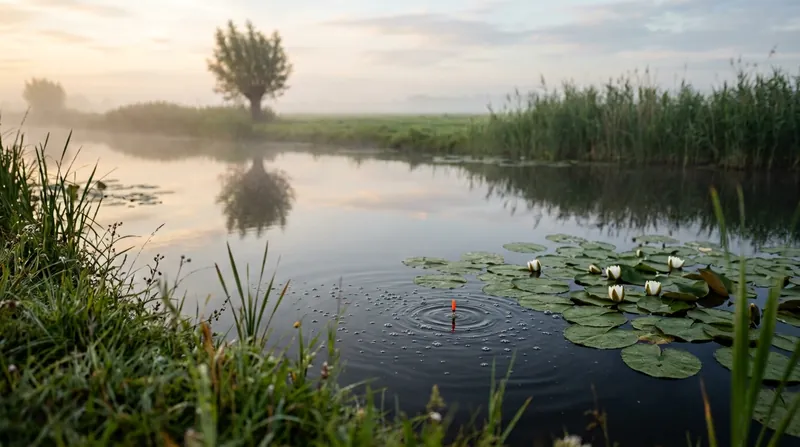 A float by the lilies, with fine bubbles beside it: sometimes a sign that a tench is feeding on the bottom
Tiny bubbles. In an episode of VIS TV in the Biesbosch, small trails of bubbles appeared around the floats: 'often a good sign'. Not long after, presenter Marco Kraal hooked an exceptionally big tench (Sportvisunie). Inland Fisheries Ireland also says that a trail of bubbles on still water can mean tench are feeding on the bottom (Inland Fisheries Ireland).
Waters with tench. Sportvisunie names a number of waters where you can catch tench. The moats around Naarden-Vesting are known for tench. The Buitengracht, the outer moat, holds fine fish of 50 to 55 centimetres (Sportvisunie). The narrow, shallow and clear Apeldoorns Kanaal holds a good number of tench, up to more than 50 centimetres and sometimes bigger (Sportvisunie). On the Eem and the Urkervaart, anglers catch tench more and more often (Sportvisunie; Sportvisunie). You can also catch tench in these waters:
- the Damsterdiep in Groningen (Sportvisunie);
- the Helenavaart in Limburg and Noord-Brabant (Sportvisunie);
- the Alde Feanen in Friesland (Sportvisunie);
- the Oude IJssel (Sportvisunie);
- the fortress moats of Heusden (Sportvisunie).
Tench fishing through the year
Further down this page is the chart of seasonal patterns. It shows, month by month, how often a catch reported on mijnvismaat.nl is a tench, compared with the average for the year.
Watch the water temperature above all. Below 8 degrees a tench stops eating, and below 4 degrees it goes into a kind of resting state. An adult tench does best in water of 20 to 26 degrees (Kennisdocument zeelt).
Spring. In spring and summer the tench often swims close to the bank (Sportvisunie). How Remco Hoegen fishes for tench in spring with the method feeder is under techniques. The Dutch record holder, Ruud Berkhuizen, finds that in early spring the males are usually active first. Males do not grow as big as females (Beet).
Spawning. From May to August the tench spawns, when the water is at least about 19 degrees. At spawning time it loses its shyness (Kennisdocument zeelt). How spawning goes is under life and spawning. After spawning, tench are hard to catch on most waters, Berkhuizen writes (Beet).
Summer. By day the tench usually stays among the water plants, and it often becomes active only at dusk (Kennisdocument zeelt). It searches for food mainly at night. There is more about this under life and spawning. Sportvisunie names early morning and dusk as the best times to catch tench (Sportvisunie). If you want to fish in the dark, read the rules first. Until an hour before sunrise, the VISpas still counts it as night. When it is very hot, a tench can also go into a resting state in summer. It then hides in the mud (Kennisdocument zeelt).
Autumn and winter. According to Berkhuizen, autumn brings few tench too, unlike bream and carp (Beet). In winter the tench eats almost nothing, and it is not very active then. It hides in the mud (Kennisdocument zeelt).
Techniques and tackle
You catch tench on the bottom, close to water plants. Many anglers use the method feeder for them. But the pole works well too, especially in spring and summer, when tench often swim close to the bank (Sportvisunie). A tench is a strong fish (Sportvisunie), and you often fish right next to plants (Sportvisunie). So choose tackle that suits a tench, and keep the fight as short as possible (Sportvisunie).
With the method feeder. A tench finds most of its food on the bottom. Its mouth is at the front of its head, so to feed it stands head down. With a method feeder you press groundbait around a small frame and put the hookbait on top. The hooklength, the piece of line that carries the hook, is very short. So when a tench picks up the bait, it hooks itself. As hookbait, use a mini boilie: a small, hard ball of bait. A pop-up, a boilie that floats, also works, or simply a grain of sweetcorn (Sportvisunie). The bait does not sit on the hook but on a hair. That is a short loop of line that sticks out below the hook. The carp fishing page explains how that works.
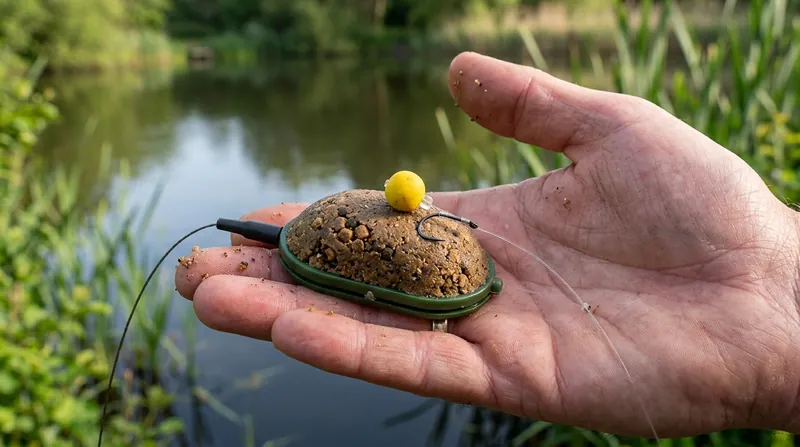 A loaded method feeder, with a mini boilie on the hair below the hook
Tench take boilies too. Are there lots of small fish, such as gobies and young roach? Then a mini boilie can help you pick out the bigger fish, tench among them (Sportvisunie). Carp anglers catch tench on their boilies as well: they even caught most of the ten heaviest tench in Britain, on boilies meant for carp (Advnture).
Sportvisunie recommends a light feeder rod with a casting weight of about 50 grams. The reel holds 0.25 millimetre nylon, with the method feeder at the end. To that you tie a hooklength of 10 centimetres and about 0.20 millimetres thick. At the end goes a size 12 or 14 hook (Sportvisunie). The higher the number, the smaller the hook (Sportvisunie).
Cast the feeder to the same spot every time. Tench are curious. Once they have found your baited spot, bites often come quickly. And because they often swim in small groups, you can then catch several in a short time (Sportvisunie).
Remco Hoegen from Vriezenveen catches his tench in spring with the method feeder, on the Lateraalkanaal in the Twente region (Sportvisunie). Is the bottom soft? It is in the Alde Feanen in Friesland, where you also catch tench. For the coarse fish there, Sportvisunie recommends light feeders, for example plastic ones. It also recommends hookbaits that sink slowly, such as casters (maggots that have turned into pupae) and floating maggots. These sink into the mud less quickly (Sportvisunie).
With the pole. A pole is a long rod without a reel, used with a float close to the bank. Sportvisunie gives five tips for tench:
- Plumb your swim. Tench like to feed in small hollows and uneven patches on the bottom. These are often right next to a bed of reeds or at the foot of the slope along the bank. Find them with a plummet, a small weight for measuring the depth.
- Feed sparingly. Use a sweet groundbait with some mashed sweetcorn, and not too much. With too much feed a tench is soon full, and then it ignores your bait.
- Vary your bait. Try sweetcorn, a worm, a maggot, or a combination.
- Move your float. Now and then, lift your float a little. The bait moves, and that tempts a curious tench.
- Start close in. Fish close to the bank first, and then further out. That way you keep control of your baited spot and always have a fresh swim in reserve (Sportvisunie).
With a quill float. You also catch tench with a pen, the Dutch name for a long quill-type float. You can, for example, roam along the bank with it from swim to swim (Sportvisunie; Sportvisunie). To learn how to fish with one, see carp fishing with the pen. Anglers float-fishing for carp sometimes catch tench too (Sportvisunie). A classic float for carp and tench is the peacock quill. It is a 15 to 20 centimetre piece of the shaft of a peacock feather. Two small rings of valve tubing hold it on the line. Sportvisunie shows how to make one yourself (Sportvisunie). If you want to keep fishing after dark, read the rules first.
Bait. Maggots and brandling worms work well for tench, and so does sweetcorn (Sportvisunie). A popular combination for bream and tench is a worm with a single grain of sweetcorn behind it. The grain stops the worm sliding off the hook (Sportvisunie). Tench also like pellets: small, firm feed pellets. You usually fish them not on the hook but on a hair or in a bait band, a small rubber band (Sportvisunie). Under the VISpas you may not even have dyed maggots or worms with you (VISpas conditions).
Two examples from practice. Henk and Wim fish for rudd from a boat beside large beds of water lilies. They then aim one rod at tench: two worms and a grain of sweetcorn on the bottom (Sportvisunie). And in the moats of Naarden-Vesting you can catch tench in many ways. With a bright wafter, a light boilie, on the method feeder. With maggots and casters on an ordinary feeder rod. With the pole, or with a match rod: a long float rod with a reel. Roaming with a quill float. Or with boilies and mini boilies, the way carp anglers fish: with a rig that makes the fish hook itself (Sportvisunie).
Rules for tench fishing
Tench has no closed season in the Netherlands, but it does have a minimum size of 25 centimetres (Uitvoeringsregeling visserij, articles 5b and 5c). On a few waters you may not fish at all in April and May. You can read about this below. On most inland waters you need a VISpas, the Dutch angling permit. Together with the list of waters it covers, it is your licence. Its conditions add their own rules to the law.
How do you measure a tench?
Measure from the tip of the snout to the end of the tail fin. If a tench is shorter than 25 centimetres, put it straight back into the water you caught it in (Reglement minimummaten en gesloten tijden, article 1). You may not have an undersized tench with you either (Reglement minimummaten en gesloten tijden, article 3). And at or near the water, you may not fillet a fish that has a minimum size. Nor may you change it in a way that makes its size hard or impossible to check (Gezamenlijke Lijst; Reglement minimummaten en gesloten tijden, article 5).
Can you take tench home?
The law lets you keep a tench of 25 centimetres or more. But under the VISpas you may keep a fish for only three reasons. You eat it yourself, you use it as bait, or you keep it alive for a while. Selling is never allowed. The conditions add that putting a fish back is the starting point. You may have at most 15 fish with you, of which at most 5 longer than 25 centimetres. That counts all species together, so a tench longer than 25 centimetres is one of those five. You may keep more alive for a while in a keepnet, as long as you follow the keepnet rules below. Kill a fish you are going to eat straight after catching it, with a firm tap on the head (VISpas conditions).
On some waters every tench must go back. HSV Almere and HV Lelystad-Dronten are angling clubs. On their waters you may not have a tench with you or use one as bait. On the waters of HSV Ons Stekkie in Zeewolde, you must put every tench back (Gezamenlijke Lijst). So always check the water in the VISplanner. Whether tench is good to eat is under In the Netherlands.
Can you keep tench in a keepnet?
Yes, but with the VISpas only like this:
- only from sunrise to sunset;
- in a keepnet of soft, knotless material, with a mesh of at most 6 millimetres;
- the net is at least 2.5 metres long, with a diameter of at least 40 centimetres;
- it lies as horizontally as possible in the water, at least three quarters under water;
- current and waves must not harm the fish, and the fish have enough room and oxygen;
- an injured or weakened fish does not belong in the keepnet;
- afterwards the fish go back alive into the same water.
You may keep a live fish longer than 30 centimetres only in a keepnet, a retaining sack or a sling. A retaining sack and a sling are soft bags for big fish. A bucket or tub is not allowed. If an enforcement officer or inspector asks, you put the fish back at once (VISpas conditions). Some waters ban keepnets. HSV Almere, for example, bans keepnets and retaining sacks for caught fish on all its waters (Gezamenlijke Lijst). How to use a keepnet well is under putting tench back.
Can you fish for tench in April and May?
Yes, on most waters. On a few waters the law bans all rod fishing from 1 April to 31 May. There are nine of these areas. Examples are De Deelen in Friesland, the Ilperveld, a large part of Waterland and part of the Nieuwkoopse plassen (Uitvoeringsregeling visserij, article 25 and annex 7). The list of waters also closes some waters in spring, such as the Purmerlander Polder near Purmerend (Gezamenlijke Lijst). So always check the water in the VISplanner.
On other waters, for a while you may not use every kind of bait. From 1 April to the last Saturday of May, you may not use some baits on most inland waters. These are artificial lures, a dead fish, a piece of fish and slaughter products such as meat. Of the artificial lures, only flies smaller than 2.5 centimetres are allowed (Gezamenlijke Lijst). In the law itself this ban runs to 31 May (Reglement voor de binnenvisserij, article 6). The exception from the last Saturday of May names only pike, zander and perch (Uitvoeringsregeling visserij, article 61). On the IJsselmeer, the Markermeer, the IJmeer and the Oostvaardersdiepen it lasts longer under the VISpas. There it runs from 16 March to 30 June (Gezamenlijke Lijst). You may fish with maggots, worms and bloodworms (Gezamenlijke Lijst), and the ban does not cover sweetcorn and bread. The VISpas has one more rule from 1 April to the last Saturday of May. You may not fish in a way that is likely to catch zander. Think of actively fishing a drop-shot rig or a jig head with worms. Fishing for coarse fish with a bait that lies still is fine, the notes to the conditions say (VISpas conditions).
Can you fish for tench at night?
Only with permission from whoever holds the fishing rights. Do you have the national NachtVIStoestemming, the night-fishing permit, on your VISpas? Then you may fish at night on the waters marked with a moon symbol in the list. Under the VISpas, night runs from two hours after sunset to one hour before sunrise (VISpas conditions). So if you start earlier than an hour before sunrise, you are still fishing at night. On a few waters the law bans night fishing altogether, even with permission. The IJsselmeer is one of them (Uitvoeringsregeling visserij, article 24 and annex 2). For that rule, the Markermeer and the IJmeer count as part of the IJsselmeer (Reglement voor de binnenvisserij, article 1). And after sunset you may not keep fish in a keepnet under the VISpas.
Can you clear a swim?
Tench often live among water plants and reeds. See where to find tench. Even so, under the VISpas you may not do anything that disturbs, destroys or damages nature. The notes give an example. Do not just saw down trees or cut reeds to clear a swim. And certainly do not do it in the breeding season, from 15 March to 15 July (VISpas conditions). So look for a spot where the bottom is already free of plants. See techniques for how to fish there.
Is the tench protected?
No. The tench is not on the list of protected fish species you may not fish for (Gezamenlijke Lijst).
Unhooking and returning tench
Land a big tench with a landing net. Always have a landing net with you, and a disgorger and unhooking pliers to free the hook (Sportvisunie). Only touch a fish with wet hands, and keep your fingers away from its gills and eyes. Unhook it in the water if you can, and keep it out of the water as briefly as possible (Sportvisunie). Is the hook deep? Then cut the line as close to the hook as you can. Put the fish back if you expect it to survive (Sportvisunie).
A tench has a thick layer of slime. So do not lay it on grass, sand or stones. If you have to put it down, use an unhooking mat: a thick, soft mat. Sportvisunie names the tench among the fish that really need one, together with carp, bream, barbel and pike. On a hard surface a struggling fish can hurt itself, and grass, leaves or soil stick to its slime (Sportvisunie).
Taking a photo. Unhooking a fish and taking a few photos is fine, as long as it does not take too long. Keep the fish wet, for example with a small bucket of water. Hold a big fish with two hands: one under the head, the other under the belly or the tail (Sportvisunie). Do not squeeze it (Sportvisunie).
Using a keepnet well. Research shows that a keepnet is not necessarily bad for fish. But the less you handle a fish, the smaller the chance of harm. So only use a keepnet when you really need one. Lay as much of it as you can under water, stretched out flat rather than upright. Do not let the waves get hold of it. Keep fish in it as briefly as possible, do not put too many in, and empty it gently (Sportvisunie). What the VISpas says about keepnets is under the rules.
Only put a fish back into the water where you caught it. A caught fish, dead or alive, can spread dangerous fish diseases (Sportvisunie).
The biggest tench ever caught
The Dutch tench record is 65 centimetres. Ruud Berkhuizen caught it in June 2010 and put it back. The IGFA world record is a tench of 4.64 kilograms, caught by Dan Dellerfjord in Sweden in 1985. National lists hold heavier tench: the British record weighs 6.899 kilograms. The Austrian list also holds a tench of 65 centimetres, from 2012. We found no longer tench on any national list.
25 cm Minimum size: you may not keep a smaller tench
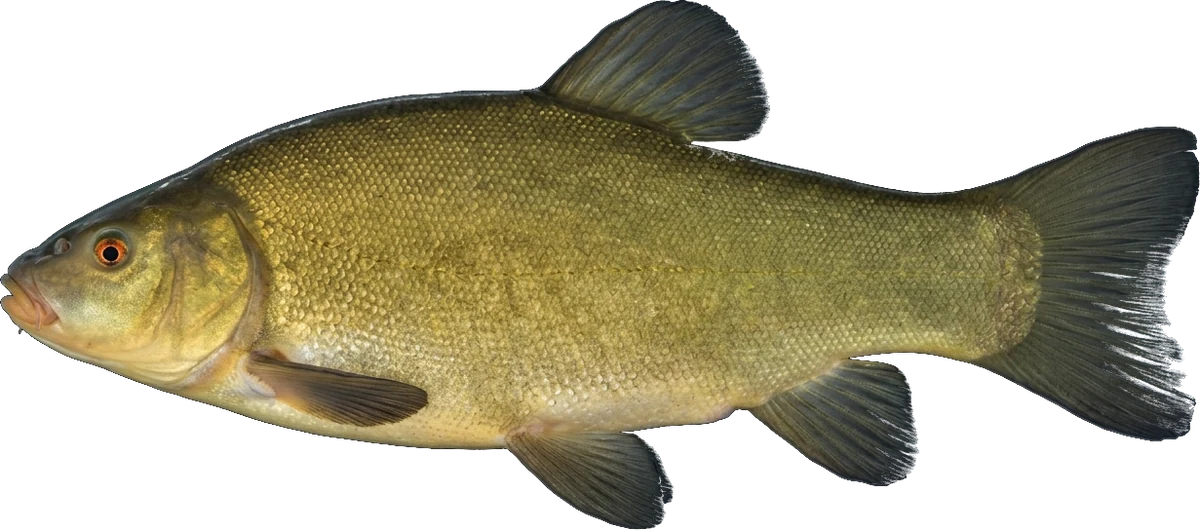
41 cm A typical tench: the middle one of more than 9,700 tench of 25 cm or more (the minimum size) measured in fish surveys
65 cm Dutch record (2010)
66 cm The longest of more than 52,000 tench measured in fish surveys
Dutch record
65 cm
Ruud Berkhuizen caught this tench on 4 June 2010 (Sportvisunie; Beet). He had fished for big tench and bream for years. On his home water, nobody caught tench bigger than about 58 centimetres and 3.8 kilograms. Then he heard a rumour about a water with very big tench. It was a fairly deep lake, far from home, where a lot of people fished for carp. He had caught his earlier tench from that lake on maggots. The tench there would not take boilies (Beet).
On the morning of the record, nothing happened for hours. Towards the end of the morning, he was already thinking of packing up. Then line began to run off one of his rods. After a hard ten-minute fight he still thought it was a carp. Only when the fish came closer did he see that it was a tench: 65 centimetres long and 5.1 kilograms in weight. He took a few photos and carefully put the fish back. He did not say which bait it took. Later, a fish kill and building work ruined the lake, and he never fished there again (Beet).
The Dutch list goes by length only and rounds down to whole centimetres (Sportvisunie). We found no longer tench on any national list. You can read more about this below. In early 2017, the Dutch angling magazine Beet still listed a tench of 61 centimetres as the Dutch record. Herman Peters-Rit caught it in April 2007 (Beet).
Fish surveys have measured one tench that was longer than the record: 66 centimetres. See how big tench grow. Researchers caught it by electrofishing in November 2008, in a pond in The Hague near Kijkduin. Three more tench of 60 centimetres or longer were in the same pond.
World record
4.64 kg
The IGFA, the international body for angling records, keeps the world record. Dan Dellerfjord caught the tench of 4.64 kilograms on 2 July 1985 in Sweden. For the tench, IGFA keeps only a weight record, no length record.
National lists hold much heavier tench. The heaviest we found is the British record: 6.899 kilograms, or 15 lb 3 oz 6 dr (BRFC). Darren Ward caught it in June 2001 at Sheepwalk, a club lake near Shepperton in England (Advnture). The British list calls it a private fishery near Staines. He was fishing for carp, and the tench took a 14 mm pop-up boilie. The fish was full of spawn (FishingMagic). The records of Germany, Sweden, Denmark, the Netherlands and Poland are heavier than the world record too. Such fish are not on IGFA's list. A fish only goes on it if someone submits it and IGFA approves it.
Carp anglers caught most of the tench in the British top 10, on boilies meant for carp (Advnture). In 2023 David Pratt caught a tench of 15 lb (6.8 kilograms). According to Angling Times, it is the biggest tench ever caught in Britain by someone really fishing for tench (Angling Times).
In Sweden the record tench even had a name: Bubblan, “the bubble”. According to the Swedish record list, this one fish raised the record several times, caught by different anglers. Rickard Linderot caught the current record in June 2006, in the lake Antorpa sjö near Laholm. It weighed 5.46 kilograms and was 63 centimetres long (Sportfiskarna).
Longest on a national list
65 cm
The longest tench on the Austrian list is also 65 centimetres. The list does not say how it measures length. Timo Teisel caught the fish in 2012 in the Alter Rhein, an old arm of the Rhine in Vorarlberg (Rekordfische Österreich). The list gives its weight as about 4.70 kilograms. But that weight is an estimate, because the scales were not accurate (Rekordfische Österreich). We found no tench longer than 65 centimetres on any national list.
Even so, you often read bigger figures. At the top of this page, 70 centimetres and 7.5 kilograms are shown as the greatest length and weight. Those figures come from FishBase, a large database of fish. The 70 centimetres comes from a field guide to the freshwater fishes of Australia. That length is measured without the tail fin. The 7.5 kilograms comes from a field guide from 1968 (FishBase). Tench were introduced to Australia (IGFA). We found no such tench on any national list: the heaviest record is the British one, at 6.899 kilograms (BRFC).
Records by country
Every country keeps its own list, with its own rules. Some lists count length, others weight, so the numbers cannot always be compared.
| Country | Record | Angler | Where caught | Date | List |
|---|---|---|---|---|---|
| Netherlands | 5.10 kg · 65 cm | Ruud Berkhuizen | — | Jun 4, 2010 | Sportvisunie |
| Austria | 4.70 kg · 65 cm | Timo Teisel | Alter Rhein (Vorarlberg) | 2012 | Rekordfische Österreich |
| Denmark | 5.25 kg | Jakob Andersen | a lake in central Jutland | Jun 18, 2013 | Danske Fiskerekorder |
| Denmark | 63.5 cm | Jakob Andersen | central Jutland | Jun 18, 2013 | Danske Fiskerekorder |
| Finland | 2.50 kg · 51 cm | Veikko Tolkki | the Gulf of Finland at Sipoo | Aug 29, 2015 | Ennätyskalarekisteri |
| Germany | 5.60 kg | A. Rich | gravel pit at Teningen | Jul 14, 2001 | Fisch & Fang |
| Hungary | 3.60 kg | Csont Dávid | Ráckeve (Soroksár) arm of the Danube | Jun 8, 2024 | MOHOSZ |
| Ireland | 3.697 kg | Nick Parry | Ballyeighter Lake (County Clare) | Jun 20, 1995 | ISFC |
| Latvia | 3.325 kg | E. Gredzens | the Lielupe | 2016 | LMSF |
| Norway | 3.96 kg | Flemming Fredriksen | Østeråa (Telemark) | Jun 9, 2011 | Villmarksliv |
| Poland | 4.96 kg | Kacper Grzelczak | — | 2025 | Wiadomości Wędkarskie |
| Poland | 62 cm | Mateusz Dandik | — | 2022 | Wiadomości Wędkarskie |
| Sweden | 5.46 kg · 63 cm | Rickard Linderot | Antorpa sjö near Laholm (Halland) | Jun 9, 2006 | Sportfiskarna |
| Switzerland | 3.50 kg · 63 cm | Emil Leuthold | Lake Lugano | Jul 25, 1996 | Petri-Heil |
| United Kingdom | 6.899 kg (15 lb 3 oz 6 dr) | D Ward | a private fishery near Staines (Surrey) | 2001 | BRFC |
A dash means the list does not give it. Checked on October 19, 2026. A record can be broken at any time, so we check these lists at least once a year.
In the Netherlands
The tench is native to the Netherlands (Dutch Species Register). It is a fairly common species (RAVON). In the Netherlands the tench is not threatened: it is not on the Dutch Red List of threatened species (Dutch Species Register). Worldwide, too, it counts as not threatened: the IUCN lists it as Least Concern. According to the IUCN, the number of tench in the world is falling. But it is not falling fast enough to make the tench a threatened species. It has declined locally in places such as France, Poland, Czechia, Hungary and the Balkans. In Serbia, fishing for tench has even been banned since 2009 (IUCN).
More tench or fewer?
How the tench is doing in the Netherlands is hard to say. People also stock tench, so a decline often goes unnoticed (Kennisdocument zeelt). Around 1900 the Heidemaatschappij, a Dutch organisation that turned heathland into usable land, was already buying tench from German fish farms. In 1905 it brought in a fast-growing tench from Masuria, now in Poland: the Masurian tench. In Friesland, tench were being farmed as early as 1891 (Kennisdocument zeelt).
Researchers monitor the fish in the big rivers and lakes. In the Afgedamde Maas, tench seem to have turned up in the catches less often since 2016. In the Oude Maas, tench disappeared from the catches. Other fish of plant-rich water, such as the bitterling, declined in both places too. In other places there are plenty of tench. In the Zwarte Water the tench was one of the ten most common species from 2010 to 2022. And in the Hollandse IJssel, the catches of 2023 held more species of plant-rich water, the tench among them (WMR 2024).
What harms the tench is clear. It is sensitive to the loss of water plants. Plants disappear when the water turns murky, or when ditches are cleared and dredged too thoroughly (RAVON). Other things are bad for tench too: filling in ditches, lower water levels, too much fertiliser in the water, and straight, steep banks (Kennisdocument zeelt). In Noord-Holland the tench became more common between 1945 and 1960, as the water there became fresher. After that it declined in some places, perhaps because the water plants disappeared. Peat diggings are pools left behind where peat was dug out. In north-west Overijssel, the tench vanished between 1955 and 1970 from old peat diggings that became overgrown. In Zuid-Holland, tench numbers fell between 1950 and 1972 (Kennisdocument zeelt).
Clear water. What helps has mainly to do with water plants (Kennisdocument zeelt):
- nature-friendly banks: banks that slope gently, with plants;
- less fertiliser in the water;
- clearing ditches in sections rather than all at once.
Removing bream and carp can also be good for tench. The water then becomes clearer, and more plants grow (Kennisdocument zeelt). In a number of Dutch lakes where this was done, there were indeed more tench, perch, roach and rudd afterwards (Meijer 2000). But according to the knowledge document it is better to tackle the cause of the murky water (Kennisdocument zeelt). There is more about this on the bream page.
Under the European Water Framework Directive, EU countries must work towards clean and healthy water. To judge how a lake is doing, researchers also look at its fish. The tench counts twice: as a fish of plant-rich water and as a fish that can cope with little oxygen (Kennisdocument zeelt; STOWA 2012-31). An old target for the Volkerak-Zoommeer also shows that the tench belongs with clear water full of plants. In 1987 the aim was a clean freshwater lake by 2010, with plenty of water plants and 'a balanced pike-tench community'. It did not work out. From 1990 the water grew murkier every year, and in the 1990s blue-green algae often bloomed in late summer (Kantelpunten 2016).
Dutch tench abroad
According to the fish database FishBase, tench from the Netherlands were released in Norway (in 1820), Indonesia (1927) and Japan (1961) (FishBase). In Norway the tench is now the most widespread non-native freshwater fish (IUCN).
Tench against swimmer's itch?
Swimmer's itch is an itchy skin rash caused by the larvae of a flatworm. The larvae grow up in pond snails, and the adult worms live in waterbirds. According to the knowledge document, you can fight swimmer's itch by stocking coarse fish such as roach and tench. It takes a few years, though, because the fish mainly eat small snails. The flatworms are mainly in the bigger ones (Kennisdocument zeelt). In 2008 the knowledge document wrote that recent tench stockings had mostly been for angling, or against swimmer's itch (Kennisdocument zeelt).
What is a golden tench?
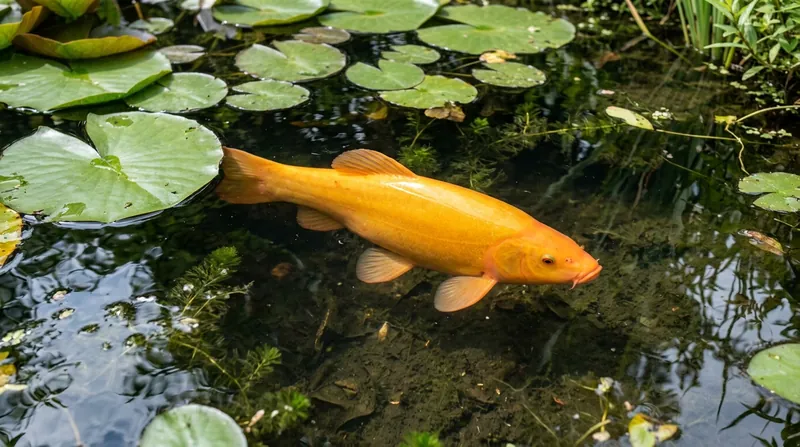 A golden tench: the same species, only in gold
A gold-coloured tench. It is just a tench of a different colour, not a separate species or subspecies (Kennisdocument zeelt). As early as 1782 the Berlin physician Marcus Elieser Bloch described a golden tench from the pond of Schönhausen castle. Those fish came from Silesia, now in Poland (Catalog of Fishes). Today there are farmed golden and blue tench. According to the IUCN these come from the Czech Republic and are popular as ornamental fish (IUCN). You recognise a golden tench just like an ordinary one: by the short, rounded dorsal fin, the barbels at the corners of the mouth and the tiny scales. See recognising a tench.
Tench in a garden pond?
Tench are often on sale as 'clean-up fish' to keep a pond clean. According to the knowledge document that is wrong: a tench does it no better than a goldfish (Kennisdocument zeelt). Tench can even lead to more algae on the water plants. In a trial with cages in a pond in southern Sweden, tench left far fewer snails and small mussels. As a result, more algae grew on the plants, and the Canadian waterweed grew less well. The algae probably took its light (Brönmark 1994). A tench needs water plants to spawn and to hide in (Kennisdocument zeelt).
Do you want to move a tench from your pond into a ditch or canal? Does someone else hold the fishing rights to that water? Then you may only release fish there with written permission from whoever holds those rights. That applies to every fish, so also to a golden tench (Visserijwet 1963, article 17).
The doctor fish
People used to believe that the tench could heal other fish. A Dutch text from 1634 already calls it 'aller Visschen Medecijn-meester': the doctor of all fishes (Woordenboek der Nederlandsche Taal). The English writer Izaak Walton called it 'the physician of fishes' in his well-known angling book The Compleat Angler. A sick or injured pike would heal by touching a tench. So the pike would never eat a tench, however hungry it was (The Compleat Angler). That is a myth. The IUCN calls it a false historical belief (IUCN), and the knowledge document calls the name doctor fish undeserved (Kennisdocument zeelt). Pike certainly do eat tench. See what eats tench? What is true: tench slime contains proteins that kill bacteria in the lab. But researchers found the same in the slime of eel and rainbow trout (Ebran et al. 2000). We found no study showing that a tench heals other fish.
Can you eat tench?
You can. In central and eastern Europe, people have farmed tench in ponds for food since the Middle Ages. In Italy, a tench from Piedmont even has a protected designation of origin from the EU. This is an EU label for a regional product. It is the only fish product in Italy with this label (IUCN). In 2008 the knowledge document wrote that tench is hardly eaten in the Netherlands, and that anglers almost always put it back. Smoked or fried, it is said to taste sweetish. At that time, commercial fishermen who were allowed to catch tench sold some of their tench to angling clubs. The rest went abroad, as food fish (Kennisdocument zeelt). The Netherlands Nutrition Centre (Voedingscentrum) advises against regularly eating freshwater fish you caught yourself in Dutch waters. Fatty fish such as eel in particular can be polluted (Voedingscentrum). What you may keep under the VISpas is under the rules.
What our models found for Tench
Below is what our models see in the data. These are links: where one thing occurs, the other occurs more often. That is not a cause. Each model answers one question and may not say more than it measured. The label by the heading tells you which question — and how sure the answer is.
Where this species lives Strong model
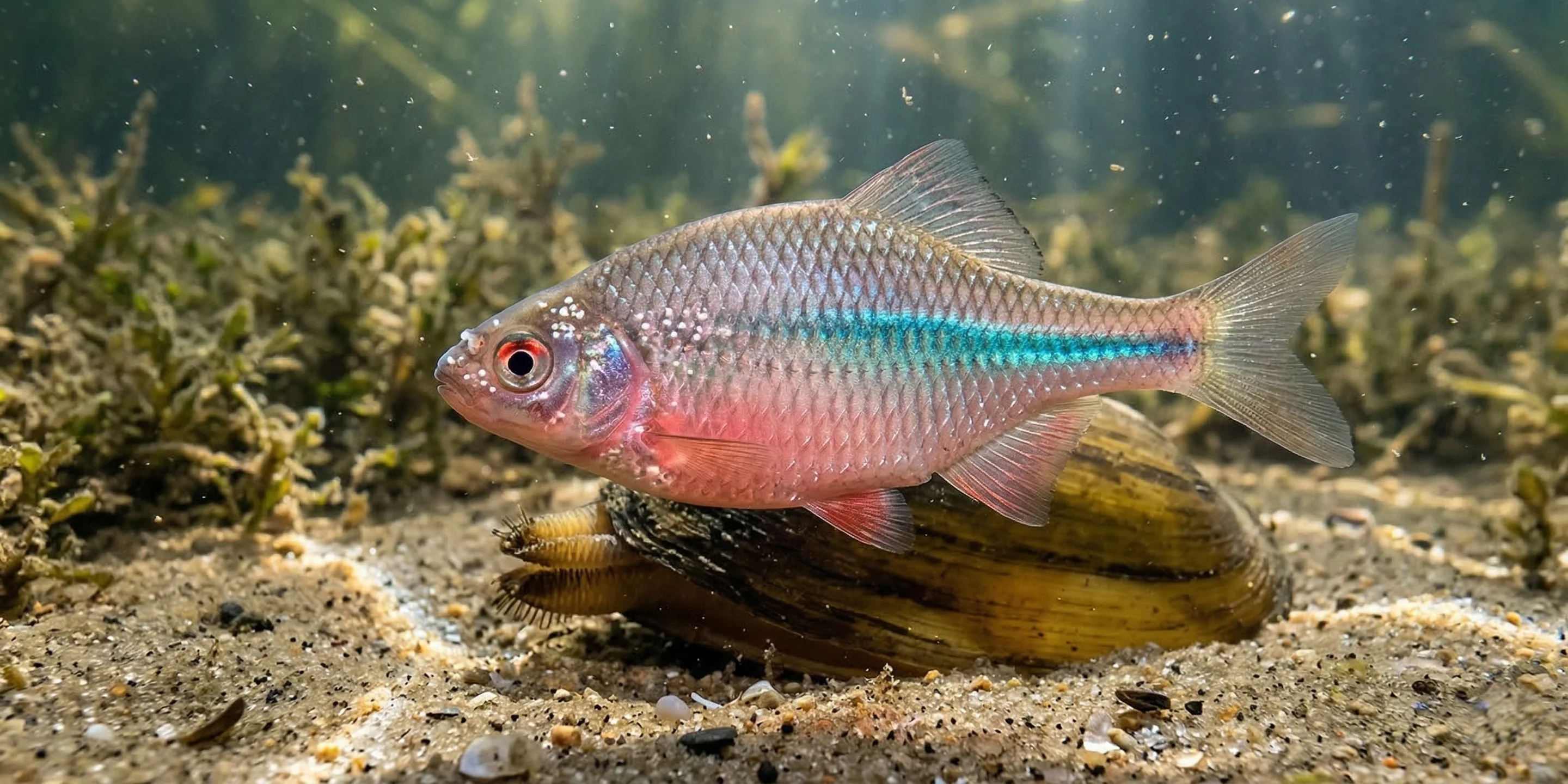 Bitterling (Rhodeus amarus)
This model names plenty of fish that live alongside tench: rudd, pike, sunbleak, loaches. But one name really separates tench water from other water, and that is the bitterling. The rest live in almost every Dutch ditch and pool, so they separate nothing.
The bitterling is a striking choice, because that fish depends on one thing. The female lays her eggs inside a living freshwater mussel. And the tench? Adults prey mainly on molluscs.
Two fish, the same animal, two very different reasons. For the bitterling a mussel bed is a nursery; for the tench it is a dinner table. That is our reading, not a measurement: this model only counts who occurs where, together.
Where there are many A set, not a ranking Weak model
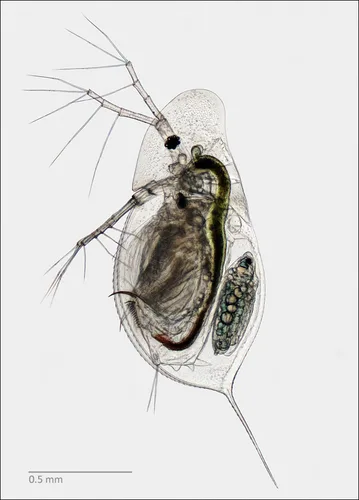 Water fleas (Daphniidae)
Two features here stand out. Where salinity is higher we count fewer tench. The same goes for Chelicorophium curvispinum (Corophiidae), a small crustacean that arrived with shipping and lives mostly in rivers and canals.
Salt at one end, flowing water at the other. In between lies exactly what FishBase gives the tench: shallow, densely vegetated lakes and backwaters. Salt is not a wall — tench take some brackish water — but it marks the edge.
Plenty of tench goes with water fleas of the family Daphniidae, flat leeches (Glossiphoniidae) and green algae from the family Oocystaceae. We count fewer tench where water mites of the family Hygrobatidae live — and where water fleas of the family Chydoridae live.
That last pair is the interesting one. Daphniidae and Chydoridae are both water fleas, and they point opposite ways: one family goes with plenty of tench, the other with few. Why, we do not know.
Where they grow big A set, not a ranking Weak model
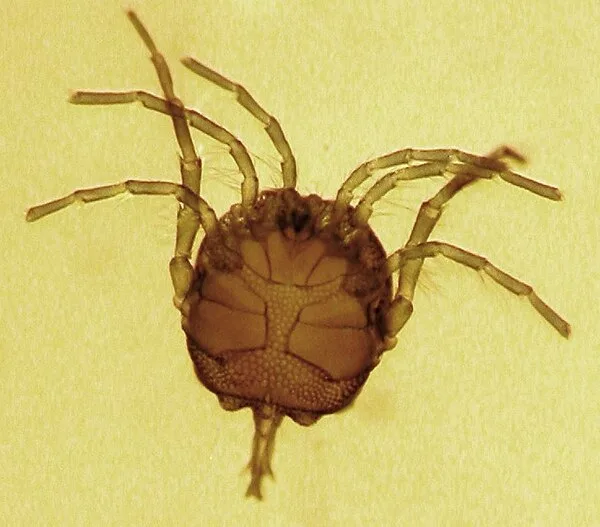 Water mites (Arrenuridae)
Bigger tench go with water mites (Arrenuridae), fish leeches (Piscicolidae) and caddisflies from the families Polycentropodidae and Psychomyiidae.
Smaller tench go with a different set: the ten-spined stickleback, copepods (Cyclopidae), crawling water beetles (Haliplidae), the New Zealand mud snail (Tateidae) and the topmouth gudgeon, a small carp-family fish.
It is tempting to turn that into 'small, crowded water'. We will not. Three of the five are introduced species, and where they live is mostly a history of introductions rather than a property of the water. We measure nothing about crowding here.