Skip to content
LAKE

Veluwemeer

Lake·52.40846, 5.71805·30.2 km²

On average 1.9 m deep and 10 m at the deepest point (bed below NAP, surveyed by Rijkswaterstaat in 2012).

21
Fish species recorded
83% of NL
More diverse than
cm
Biggest catch
Surveyed
Depth data
Map layers Specialist

This lake has a surveyed depth map, with bottom structure and edges.

Free example: IJsselmeer
What do Common / Notable / Rare / Mythic mean?

The label says how widespread a species is: the share of Dutch survey areas that have ever recorded it. It does not say how many live here. A species found in only a few areas can still be abundant in them. The records come from surveys of the water. A plant of the bank or of dry land, such as bracken, rarely turns up in them, so it can be labelled “rare” or “mythic” even where it is common on land. Freshwater species are compared with freshwater areas and sea species with salt ones. Over half of all survey areas are at sea: measured against the whole country, no freshwater fish could ever count as “common”.

Common≥30%Notable10–30%Rare3–10%Mythic<3%
Roach
rutilus rutilus
Commonin 91.9% of fresh NL
Fish recorded2,935
biggest cm
suitable100%
Tench
tinca tinca
Commonin 76.1% of fresh NL
Fish recorded
biggest cm
suitable99%
Perch
perca fluviatilis
Commonin 91.9% of fresh NL
Fish recorded393
biggest cm
suitable100%
Ruffe
gymnocephalus cernuus
Commonin 67.5% of fresh NL
Fish recorded
biggest cm
suitable98%
Spined loach
cobitis taenia
Commonin 51.5% of fresh NL
Fish recorded
biggest cm
suitable94%
Bream
abramis brama
Commonin 82.3% of fresh NL
Fish recorded108
biggest cm
suitable100%
Nine-spined stickleback
pungitius pungitius
Commonin 47.2% of fresh NL
Fish recorded
biggest cm
suitable82%
Three-spined stickleback
gasterosteus aculeatus
Commonin 56% of fresh NL
Fish recorded
biggest cm
suitable70%
White Bream
blicca bjoerkna
Commonin 69.5% of fresh NL
Fish recorded
biggest cm
suitable95%
Zander
sander lucioperca
Commonin 55.2% of fresh NL
Fish recorded
biggest cm
suitable88%
Stone loach
barbatula barbatula
Commonin 36.3% of fresh NL
Fish recorded
biggest cm
suitable81%
Pike
esox lucius
Commonin 88.8% of fresh NL
Fish recorded
biggest cm
suitable100%
Rudd
scardinius erythrophthalmus
Commonin 81.6% of fresh NL
Fish recorded
biggest cm
suitable99%
Carp
cyprinus carpio
Commonin 53.7% of fresh NL
Fish recorded
biggest cm
suitable73%
Eel
anguilla anguilla
Commonin 70.7% of fresh NL
Fish recorded
biggest cm
suitable96%
Bleak
alburnus alburnus
Commonin 36.9% of fresh NL
Fish recorded
biggest cm
suitable61%
Prussian carp
carassius gibelio
Notablein 20% of fresh NL
Fish recorded
biggest cm
suitable75%
Bullhead
cottus gobio
Notablein 12.7% of fresh NL
Fish recorded
biggest cm
suitable70%
Ide
leuciscus idus
Commonin 44.6% of fresh NL
Fish recorded
biggest cm
suitable91%
European smelt
osmerus eperlanus
Notablein 11.8% of NL
Fish recorded
biggest cm
suitable79%
Asp
aspius aspius
Notablein 27.8% of fresh NL
Fish recorded
biggest cm
suitable94%
Food web

The food chain of the Veluwemeer

Small fish of plant-rich water turn up unusually often in the Veluwemeer. In fish surveys between 2004 and 2013, the nine-spined stickleback turned up in 13 of 35 catches. In comparable surveys of other freshwater lakes you would expect it in fewer than one of the 35. The spined loach was in 15 of the 35 catches, against about three elsewhere, and the three-spined stickleback in 18, against four or five. Six of the 35 catches, from 2012 and 2013, held only tench; that is where the tench in the fish list come from.

The male nine-spined stickleback builds a nest from bits of plant. The spined loach lies buried in the sand by day and sifts sand for food: mostly tiny crustaceans and midge larvae, according to a study in Poland. Of 1,442 plant samples from 2003 to 2012, 1,336 held stoneworts: large algae that look like water plants, with whorls of thin branches around the stem. Rijkswaterstaat, the Dutch national water authority, published a PhD thesis in 1999 with results from this lake: the stonewort meadows hold mainly spined loach and three-spined sticklebacks.

Below are two food chains from this lake. The first runs through the stonewort meadows: sticklebacks eat midge larvae, among other things, and zander eat three-spined sticklebacks. The second runs through the zebra mussels: they filter algae from the water, roach eat the mussels, and pike eat roach. Below the figure, each arrow is listed with its source.
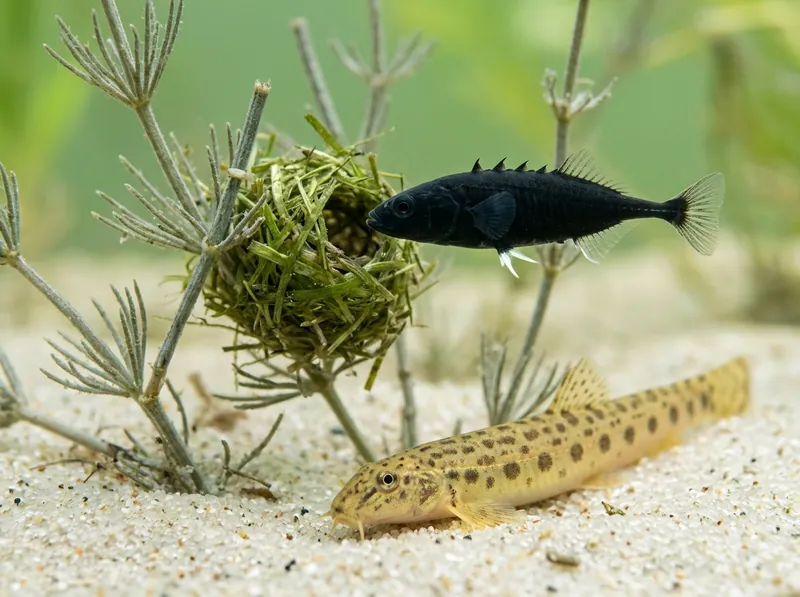
A male nine-spined stickleback at its nest, with a spined loach on the sand
Food chains from this lake
MicroorganismsDiatomsin 68 of 117 samples1992–2003
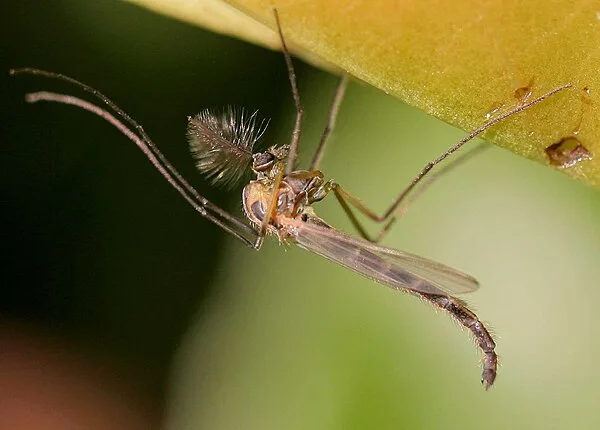
InvertebratesMidge larvaein 34 of 36 samples1987–2010
FishThree-spined stickle­backin 18 of 35 catches2004–2013
PredatorZanderin 13 of 35 catches2004–2013
MicroorganismsAlgaein 117 of 117 samples1992–2003
InvertebratesZebra musselsin 22 of 36 samples1987–2010
FishRoachin 28 of 35 catches2004–2013
PredatorPikein 18 of 35 catches2004–2013

What lives here comes from samples and catches in the lake itself. Each arrow points to what eats it. That comes from studies elsewhere, listed below. A dashed line holds for part of the group only.

Water plants

The water plants of the Veluwemeer

Under water, the Veluwemeer is mostly one large stonewort meadow. Together, the Veluwerandmeren (the border lakes along the Veluwe) hold by far the most stonewort in the Netherlands: several thousand hectares. This comes from the decree that designates them as a Natura 2000 site, part of Europe’s network of protected nature areas. The water above the stoneworts is clearer. In the summer of 1995, researchers measured water about ten times clearer above a dense stonewort meadow than above bare bottom. They think the stoneworts catch floating silt and hold the bottom in place.

Stoneworts are normally pioneers that later make way for other plants. Here they have held on for decades, perhaps because of the hard, calcium-rich water, Rijkswaterstaat wrote in 2008.

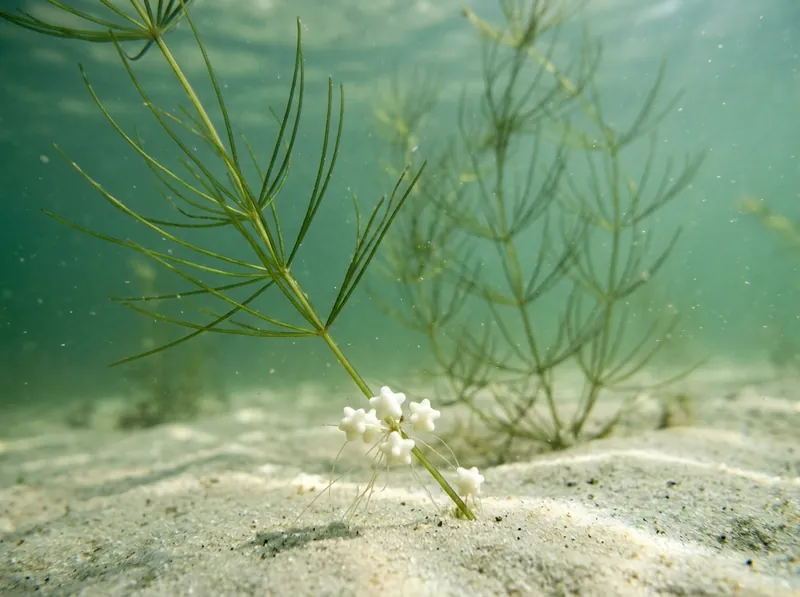
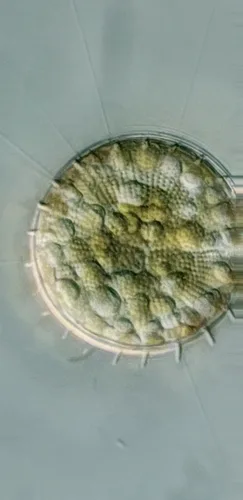
One stonewort stands out: starry stonewort, with white, star-shaped bulbils at the base of the plant. It has kept the same form since the start of the ice ages, which is why experts sometimes call it a living fossil. Around 1940 it was the most common water plant in Dutch peat lakes with a sandy bottom. Later it also grew in the young Veluwemeer. After 1970 it vanished almost everywhere. In 1989 two stonewort experts wrote in the journal Gorteria that it might soon disappear from the Netherlands altogether. In the Veluwemeer it came back: in 2005 it was in none of 51 plant samples, in 2011 in four out of ten. Of all Dutch samples with starry stonewort in our data, 17 percent come from this lake. Only the Gouwzee has more.

Starry stonewort, with the white, star-shaped bulbils at the base of the plant
Invertebrates

Mussels and newcomers

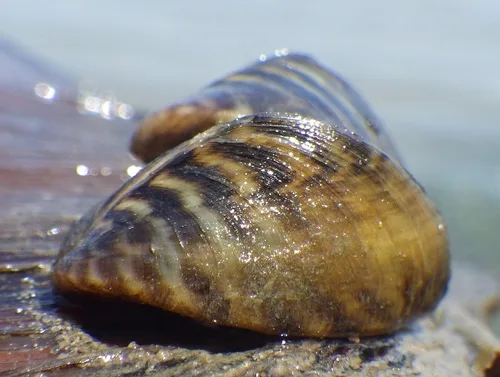
From 1966 the zebra mussel disappeared from the lake. A trial in 1989 with mussels from the IJsselmeer produced many young that year. But in 1990 not a single young mussel settled anywhere, the Dutch nature journal De Levende Natuur reported in 1992. Around 1996 the mussels came back after all. Researchers worked this out from the number of tufted ducks, which feed on mussels. In 2000 the mussels together could filter almost a third of all the water in the lake every day, Rijkswaterstaat calculated. Over the same years the water also became much clearer outside the stonewort meadows.

Since the water became clean again, newly arrived non-native species mostly shape what lives on the bottom, Rijkswaterstaat wrote in 2008. Among the water plants there are now huge numbers of the mysid shrimp Limnomysis benedeni, a small shrimp-like animal. According to Rijkswaterstaat that may be good for fish, especially perch. In our samples it was in 15 of 17 in 2001 and 2005.

Zebra mussels
The water

About this water

The Veluwemeer was formed in the late 1950s, when the Eastern Flevoland polder was drained. It lies between the old coast of the Veluwe, with the towns of Harderwijk and Elburg, and the polder dike. It keeps the groundwater of the old land from dropping. The lake is long and mostly shallow, with a shipping channel about 100 metres wide along its whole length. Near Harderwijk, boats have sailed over the road since 2002, through the Veluwemeer aqueduct. The depth on the map above was measured, not estimated by a model.

History

Origin and history

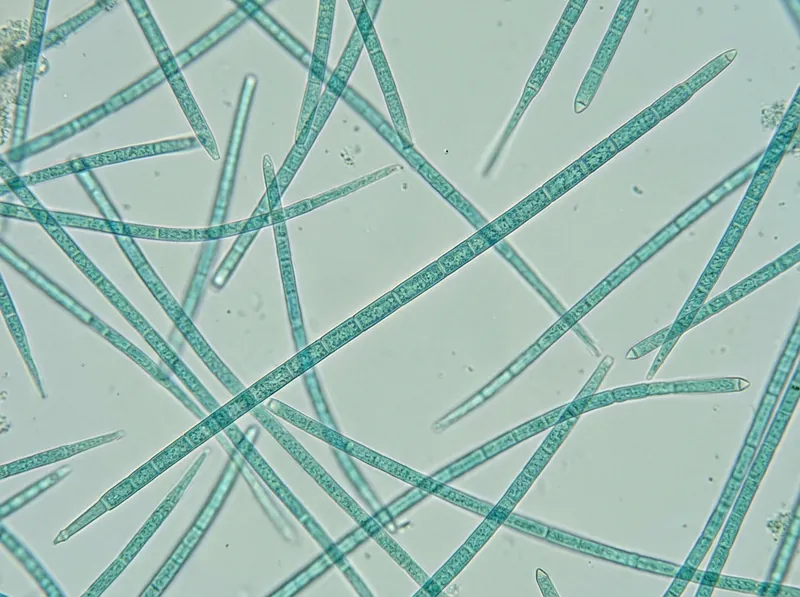
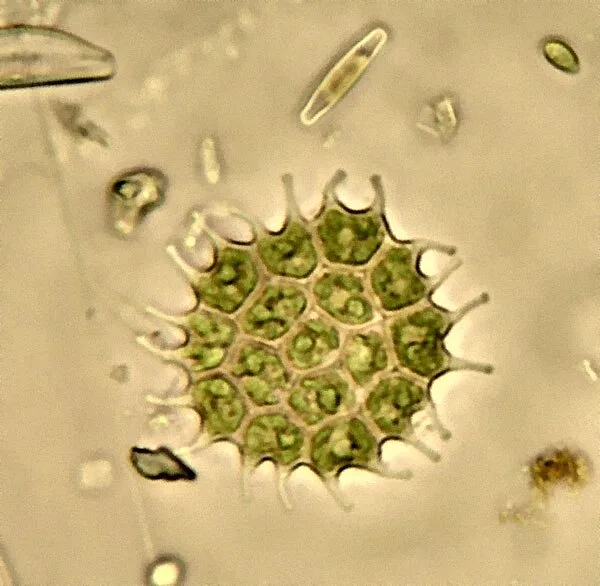
In its first years the Veluwemeer was clear, with large stonewort meadows. Then the towns along the lake let more and more wastewater into it. By the late 1960s the stoneworts were almost gone. From 1971 the water was green all year from a single blue-green alga, Planktothrix agardhii. In summer you could see only 20 centimetres deep.

The lake’s water managers were pioneers. In 1972 the sewage works of Elburg became the first in the Netherlands with an installation that removes phosphorus from wastewater. Harderwijk followed in 1979. After that, the lake was flushed every winter with low-phosphorus water from the polder. After the cold winter of 1985 the blue-green alga lost ground, and after the cold winter of 1995 to 1996 it disappeared, writes Harry Hosper (1997). In our algae samples it no longer appeared after 1993. Blue-green algae have not gone entirely: the 2024 swimming season began with a blue-green algae warning at seven beaches on the Flevoland side.

Phosphorus fell quickly, but the water stayed murky for years. According to researchers, clear water and plants disappeared in the late 1960s above 0.20 milligrams of phosphorus per litre. Only below 0.10 did they come back everywhere, earlier in the shallow parts. Wind, and fish rooting in the bottom, probably kept the silt moving.

The blue-green alga Planktothrix agardhii under the microscope
Fishing

Fishing the Veluwemeer

Whether and where you may fish on the Veluwemeer is shown in the VISplanner, Sportvisunie’s map of Dutch fishing waters.

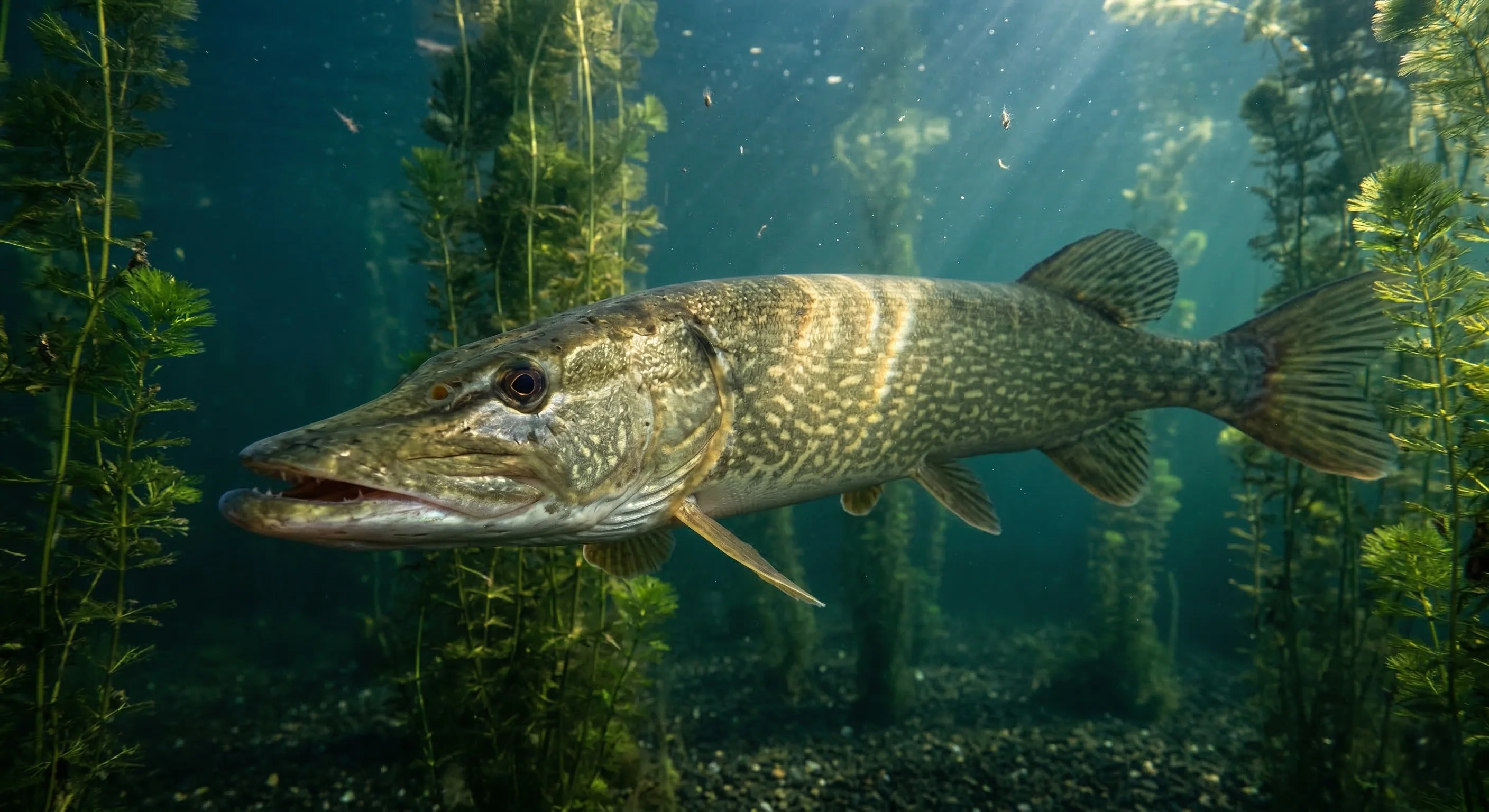
In the fish surveys from 2004 to 2011, perch, roach and ruffe were in almost every catch. Bream and pike were in almost two out of three catches, zander in almost half and eel in just over one in four. In the catch reports on mijnvismaat.nl (Sportvisunie), anglers here mostly name pike, perch, bream, carp and zander. This lake suits pike: according to FishBase, adult pike live in clear lakes with plenty of plants, among other waters.

The mix of fish has changed over a few decades. Until the late 1980s the Veluwemeer and the Wolderwijd together held mostly bream: 150 to 200 kilos per hectare. From 1993 commercial fishermen took out a lot of bream with large nets, until in 1999 it no longer paid. A 2001 report expected the fishery to keep bream in the Veluwerandmeren that low, as long as the price of bream did not drop. Young bream need murky water to survive well, Rijkswaterstaat wrote in 2008; young roach and perch do better in clear water. When the water was murkier for a while in 2002, bream and roach increased sharply. Rijkswaterstaat could not explain that.

When the stoneworts spread, fish of open water such as bream, ruffe and smelt got less room. Roach and perch can live in both habitats, Rijkswaterstaat wrote in 2001. Smelt, one of the most common fish in the IJsselmeer, was in 2 of the 35 catches here, where you would expect about 15. According to Rijkswaterstaat much less ruffe is left, although it is still in almost every catch.

Pike
Notable

Notable species

The Veluwemeer is part of the Natura 2000 site Veluwerandmeren, partly because of two small fish that live on the bottom. According to the decree, the spined loach is common throughout the area, especially in the shallow parts with stonewort. The bullhead lives mainly along the shores, among the stones of the polder dikes. In the fish surveys it was caught three times, each time by electric fishing, in 2004 and 2010.

The stone loach usually lives in flowing streams and rivers with a gravel or stony bottom, and sometimes along lake shores. Here it was in 3 of the 35 catches, between 2004 and 2007. In comparable surveys of other freshwater lakes you would hardly ever expect it.

Bullhead

Water composition
Oxygen saturation
80.9%
Total phosphorus
0.138mg/l
Total nitrogen
1.69mg/l
Ammonium
0.373mg/l
Chlorophyll-a
75.1ug/l
Chloride
68.5mg/l
Zinc
6.25ug/l
Lead
0.499ug/l
Blue-green algae in past surveys
found sometimes
not a current measurement
vs all monitored NL waters since 2015 · 118 sample point(s)
Over the years
Total phosphorus0.15 mg/l
Ammonium0.37 mg/l
Chlorophyll-a40.75 ug/l
2009percentile vs all NL waters — lower is cleaner2025