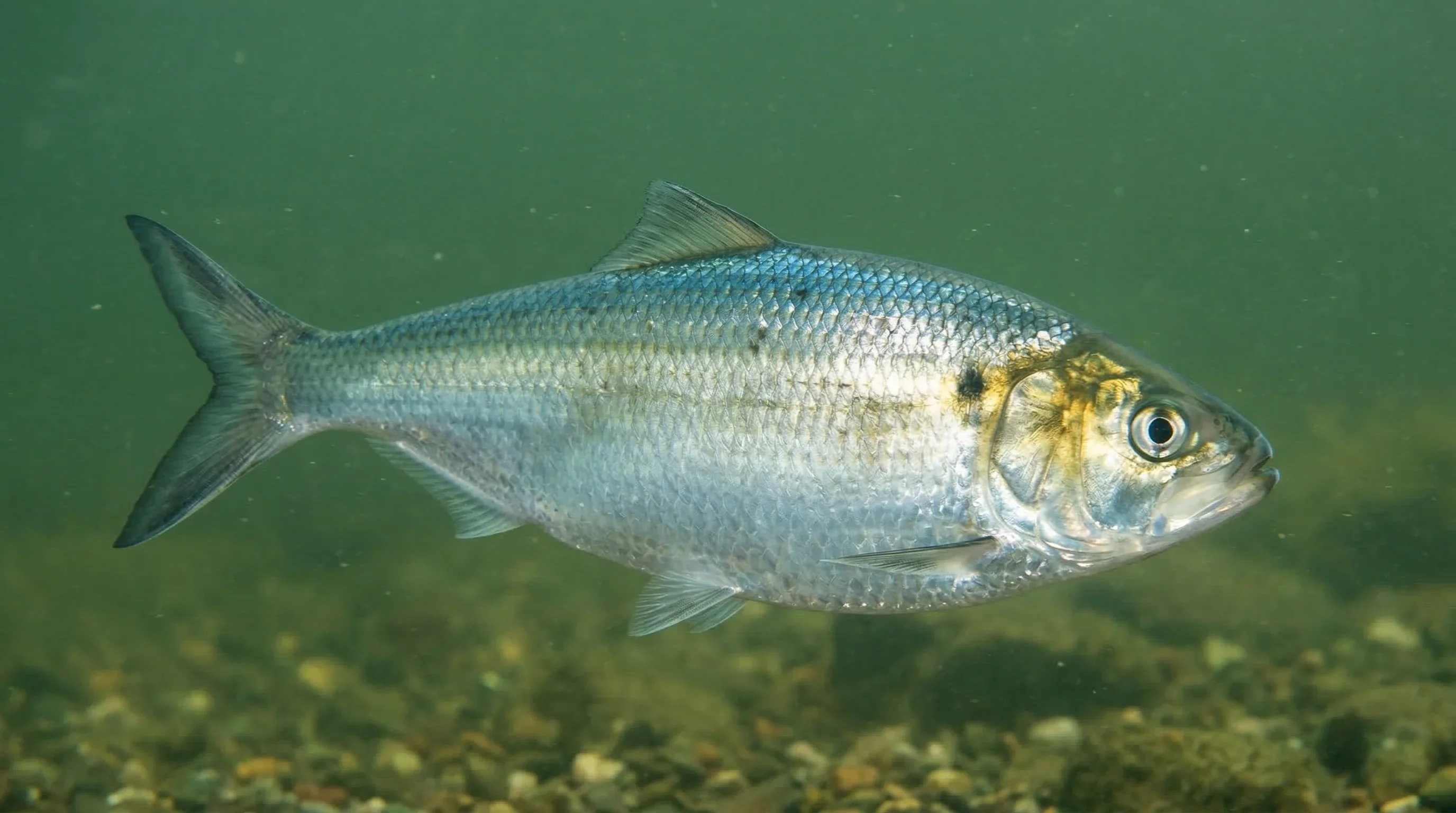
Identification
A slender, athletic shark reaching a metre and a half or more. The back is grey to bronze-grey, cleanly separated from a white belly. The snout is long, pointed and slightly flattened — a clear difference from the blunter smooth-hounds. Two features confirm it: the second dorsal fin is small and sits directly above an equally small anal fin, and the upper tail lobe carries a large, clearly notched terminal lobe at its tip, almost forming a second small fin. The eye is distinctive: a narrow white outer ring, an olive-green iris within it and a small black pupil at the centre.
Behaviour & ecology
A genuinely migratory shark that ranges over great distances; tagged animals have been recovered thousands of kilometres away. It hunts shoals of herring, sprat, mackerel and sandeel, and also takes squid and bottom fish. The species is long-lived — the maximum reported age is 55 years — and produces six to over fifty live young after a gestation of about a year.
In the Netherlands
The IUCN Red List assesses tope as Critically Endangered. In the Dutch North Sea it has declined sharply and is now a scarce visitor, usually in deeper water along channel edges and over rough ground. Under an EU rule, EU fishing vessels that use longlines (long lines with many hooks) may not fish for tope, keep it on board or land it. We found no rule that names tope for anglers. VisScanner still advises putting it back, because tope is critically endangered. Do it quickly and with as little harm as possible.