Identification
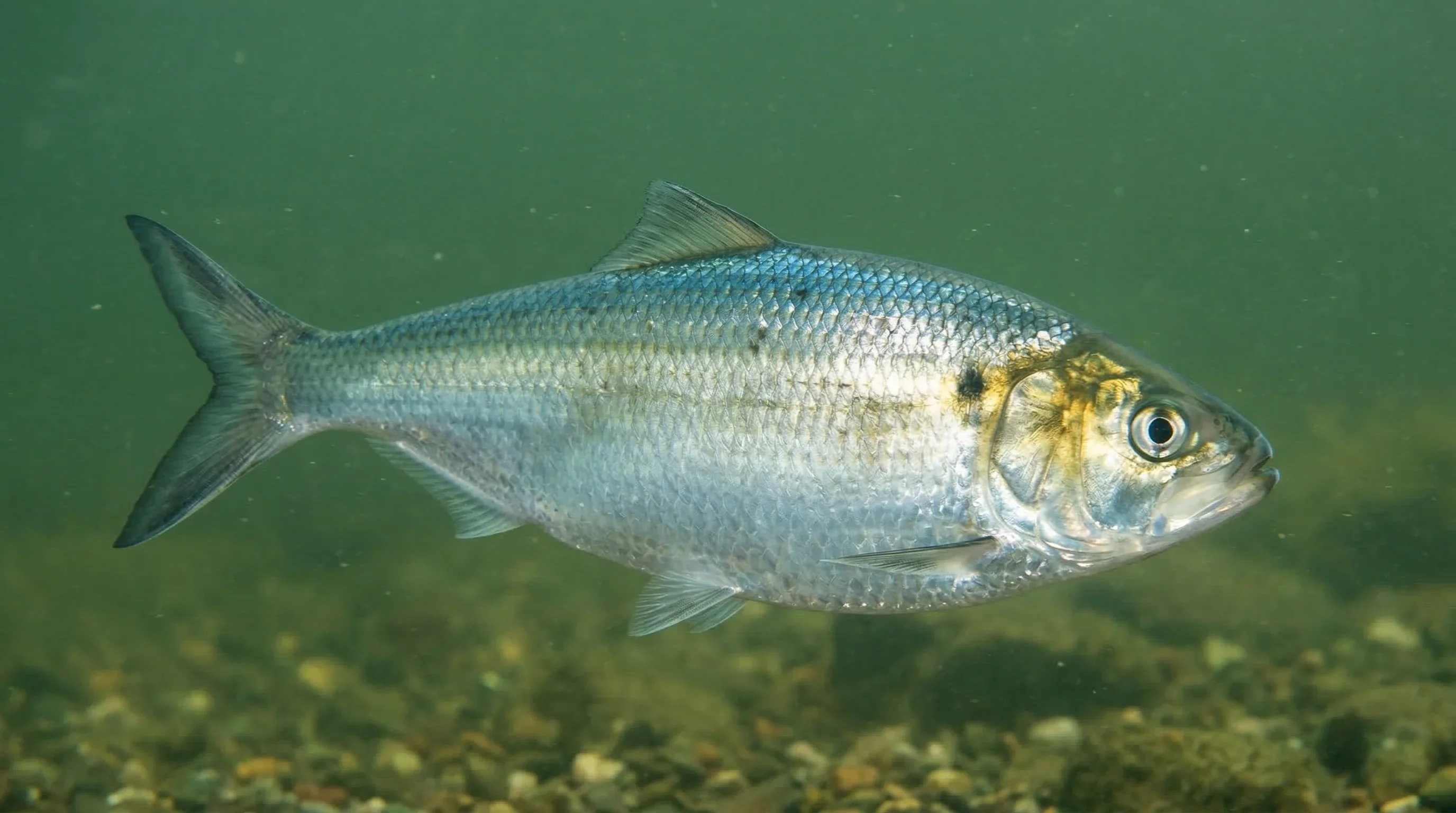
The eastern mudminnow is a small, stocky fish of 6 to 10 cm. The body is cylindrical with a rounded tail fin — unusual for Dutch freshwater fish. The color is dark brown to olive-green with an irregular dark lateral stripe along the flank. The head is broad and flattened with a relatively large mouth. A dark vertical bar runs through the eye. The mudminnow has a primitive appearance and belongs to an ancient fish order (Esociformes) related to pike.
Behavior & ecology
The eastern mudminnow is a sedentary bottom fish that inhabits shallow, still waters with a thick layer of leaf litter and mud on the bottom. The species is extremely tolerant of low-oxygen and acidic conditions — it can even survive brief periods out of water by breathing atmospheric air through its swim bladder. It feeds on small invertebrates, insect larvae, and worms. The mudminnow is territorial and lives solitarily or in small groups. It is predominantly nocturnal and hides in vegetation or leaf litter during the day.
In the Netherlands
The eastern mudminnow is an exotic species introduced from eastern North America to Europe in the early 20th century, likely through the aquarium trade. In the Netherlands, it occurs in moorland pools, peat lakes, marshy ditches, and acidic forest ponds, particularly on the sandy soils of Brabant, the Veluwe, and Drenthe. The species is considered an established exotic that fills niches not occupied by native fish — the most acidic, oxygen-poor waters. Its impact on native fauna is considered limited, although competition with spined loach is possible.
What our models found for Eastern mudminnow
Below is what our models see in the data. These are links: where one thing occurs, the other occurs more often. That is not a cause. Each model answers one question and may not say more than it measured. The label by the heading tells you which question — and how sure the answer is.
Where this species lives A set, not a ranking Strong model
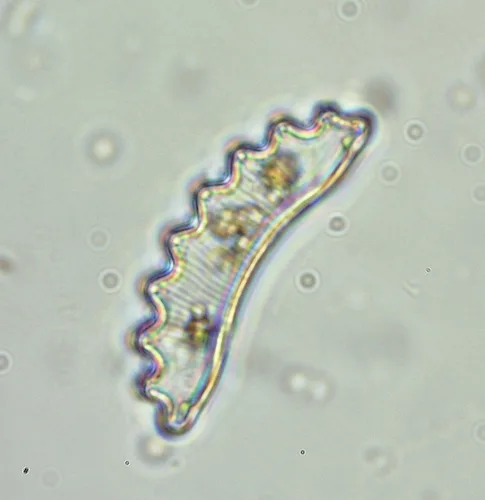 Diatoms (Eunotiaceae)
One name in this list fits this fish strikingly well: diatoms of the family Eunotiaceae. Those are algae of acidic, soft water — exactly the water the eastern mudminnow belongs in.
FishBase puts the mudminnow in water with a pH of 6.0 to 6.5 and reports that it survives pH 4 to 7 without mortality. In Europe it lives mainly in small isolated ponds and peat bogs. So our model found that acidity through the algae that go with it.
The rest of the company: the stone loach, the banded demoiselle (Calopterygidae), the gudgeon, caddisflies of the family Hydropsychidae and the white-legged damselfly (Platycnemididae). Oxygen and heavy metals count too.
And a countryman is in the list. The sunfishes (Centrarchidae), like the mudminnow, came to the Netherlands from North America. Two newcomers that ended up in the same ditches.