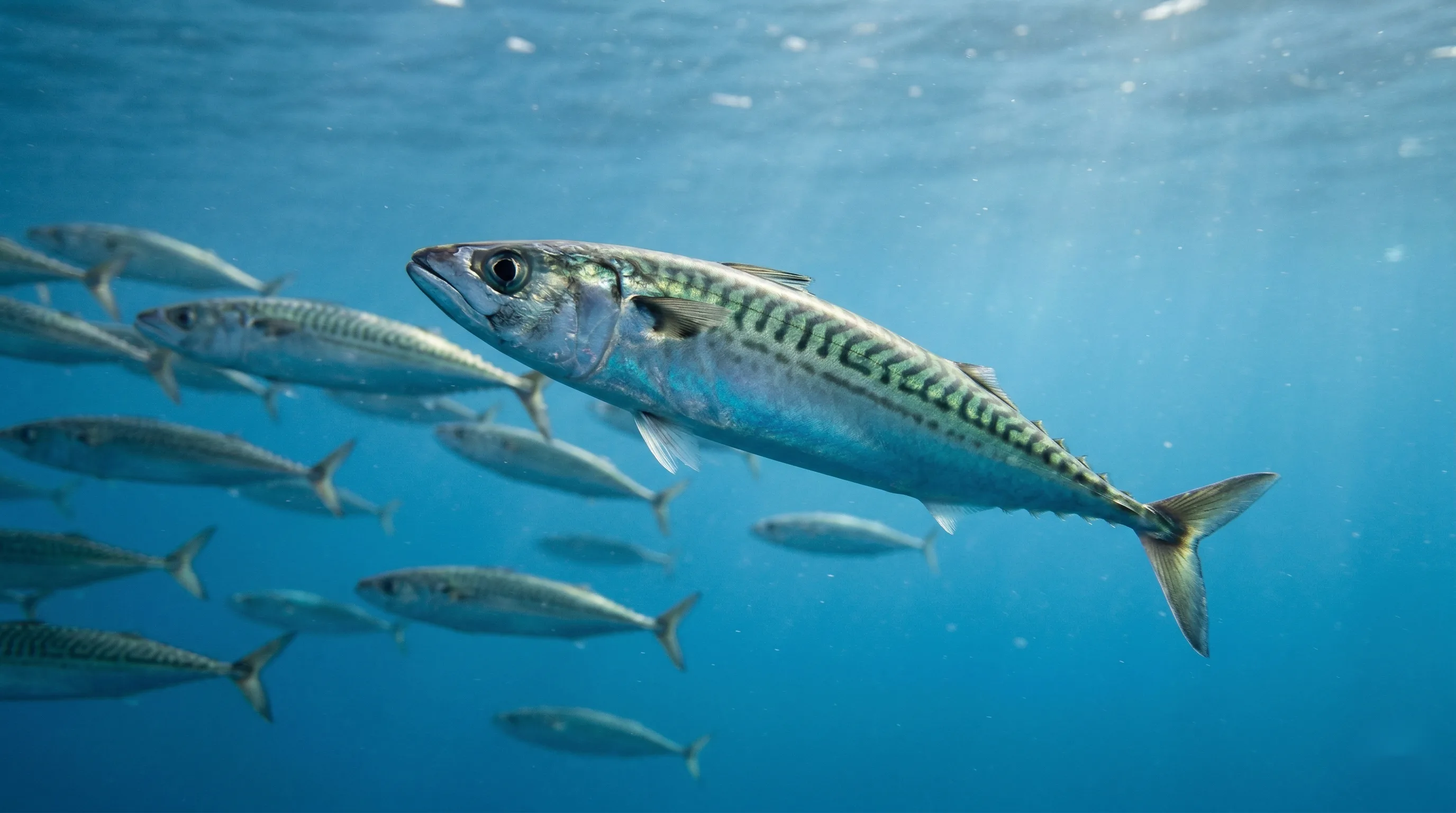
Identification
A slender shark, commonly around a metre and exceptionally reaching two. The back is slate grey with a mauve-pink cast along the flank, fading to a white belly, with a loose scatter of small white spots over the upper body. Two features make it unmistakable: a short sharp spine stands in front of each dorsal fin, and there is no anal fin at all between the second dorsal and the tail. The eye is large, round and almost entirely black with only a thin pale rim.
Behaviour & ecology
Spurdog travel in schools that can number hundreds, often sorted by age and sex. They hunt through the water column and just above the bottom for herring, sprat, sandeel, squid and crustaceans. The species is an extreme of slow living: it matures only after ten years or more, can live for decades, and carries its young for eighteen to twenty-four months — the longest gestation of any shark or ray. A depleted population therefore recovers extremely slowly.
In the Netherlands
The IUCN Red List assesses it as Vulnerable. Once numerous in the North Sea, the spurdog has declined sharply through fishing and is now much scarcer here. The rules around this species have changed in recent years and sources disagree — from a zero catch with no landings permitted at all, to a limited catch with a maximum size. Because that ambiguity falls against the fish, VisScanner takes the cautious line and treats it as a release species. Mind the dorsal spines when unhooking, and return it quickly.