Identification
The grass carp is a large, elongated cyprinid with a broad, slightly flattened head. The body is olive-green to yellow-brown on the back, with silvery flanks and a white belly. Characteristic are the large, dark-edged scales with a notably regular pattern. The mouth is terminal and relatively small for such a large fish — adapted to grazing on aquatic plants. Grass carp average 80 cm in length, but specimens over a meter are not unusual. It is one of the largest freshwater fish in the Netherlands.
Behavior & ecology
The grass carp is the only true herbivore among large cyprinids. Adults eat up to a quarter of their body weight in aquatic plants daily (juveniles up to 100%) — reeds, pondweed, waterweed and duckweed are favorites. This voracious appetite makes the grass carp both popular and controversial: water managers use them to keep overgrown waters clear, but too many grass carp can destroy all aquatic vegetation. The species is warmth-loving and becomes most active above 15°C. Spawning is virtually impossible in the Netherlands as the species requires flowing, warm water — all Dutch populations are stocked.
Fishing techniques
The grass carp is a challenging target that requires specific techniques. The herbivorous diet demands adapted bait. Boilies (especially fruity and sweet flavors) on a hair rig are standard. Corn, bread and tiger nuts are also effective.
- Bait: boilies (fruit flavors), corn, bread, tiger nuts, grass(!)
- Method: carp rod with hair rig, method feeder, float with bread crust
- Special: a blade of grass or piece of reed on the hook is a classic grass carp trick
Grass carp are extremely wary and light-sensitive. Fish in overcast conditions (median cloud cover 75%), early morning or late evening. Look for waters where you can see grass carp grazing at the surface.
In the Netherlands
The grass carp is a non-native species, originally from East Asia. In the Netherlands, the species has been stocked since the 1960s for biological control of aquatic plants. As natural reproduction does not occur in the Netherlands, all populations depend on stocking. The species is found scattered in ponds, lakes and polder waters throughout the country. Grass carp can live very long (30+ years) and continue growing, which is why they reach enormous sizes in some waters.
What our models found for Grass Carp
Below is what our models see in the data. These are links: where one thing occurs, the other occurs more often. That is not a cause. Each model answers one question and may not say more than it measured. The label by the heading tells you which question — and how sure the answer is.
Where this species lives Strong model
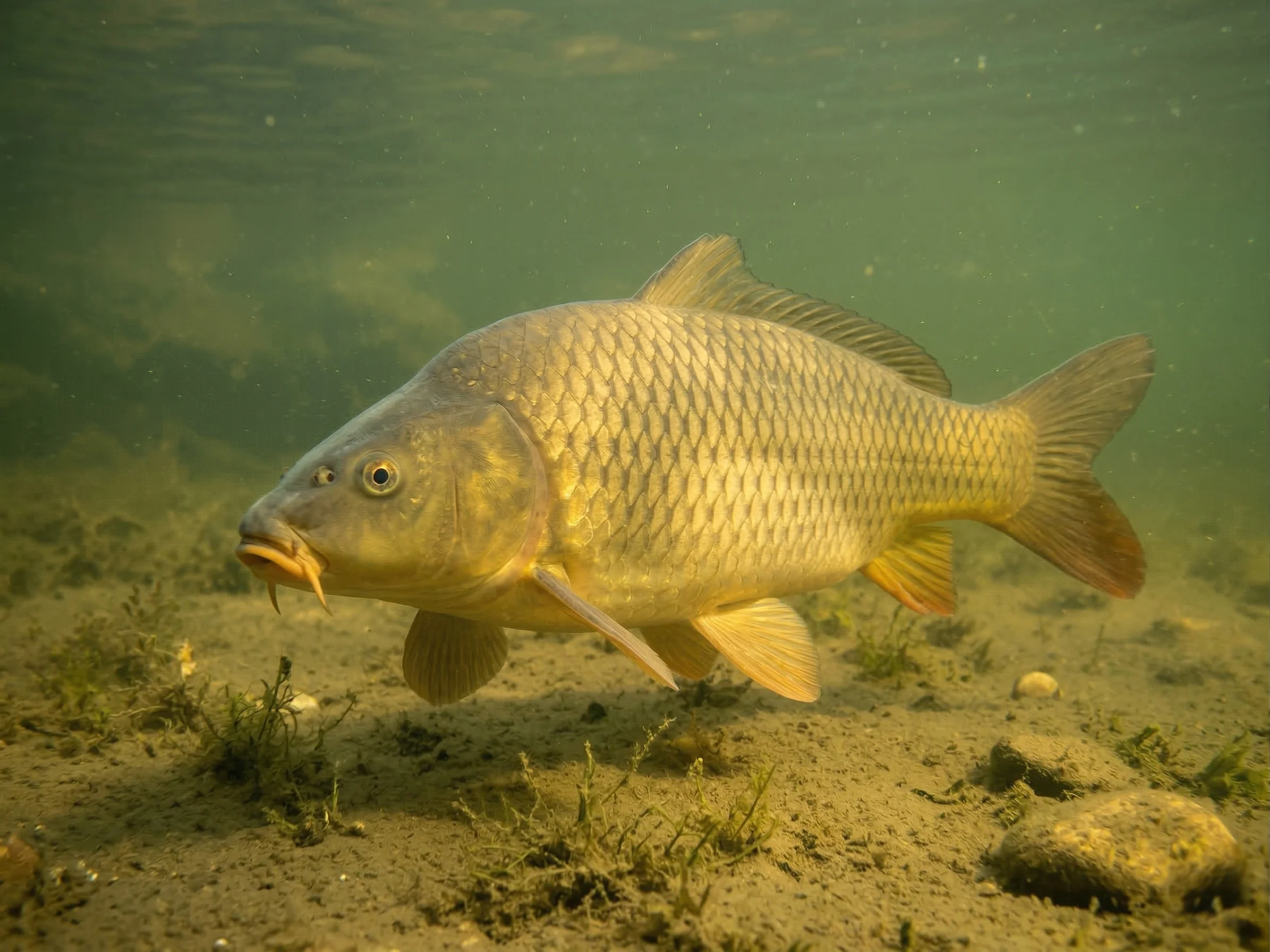 Common carp (Cyprinus carpio)
Here too the carp is the strongest name, and by a distance: together worth a good fifth of the model. Then come roach, bream, ruffe and zander.
For the grass carp that means something different than it does for other fish. FishBase says this species spawns only on riverbeds with very strong current, after which the eggs hatch while drifting. That does not work in the Netherlands. Every grass carp in Dutch water was put there by people.
So its strongest mark is another stocked fish. This model points partly at where people stock fish, not at what the grass carp itself looks for. That is a limit of THIS model, not of the idea.
One name in the list is interesting precisely because it does NOTHING: pondweed (Potamogetonaceae). That is exactly the plant the grass carp is stocked for — it eats water plants away. But pondweed grows in so much Dutch water that it does not separate grass carp water from any other water.
What does separate it: besides the carp, those are bleak, zander, ruffe and eel. Mayflies (Baetidae) are in the list too — here the pond and ditch mayfly — along with two water values, turbidity and rainfall.


