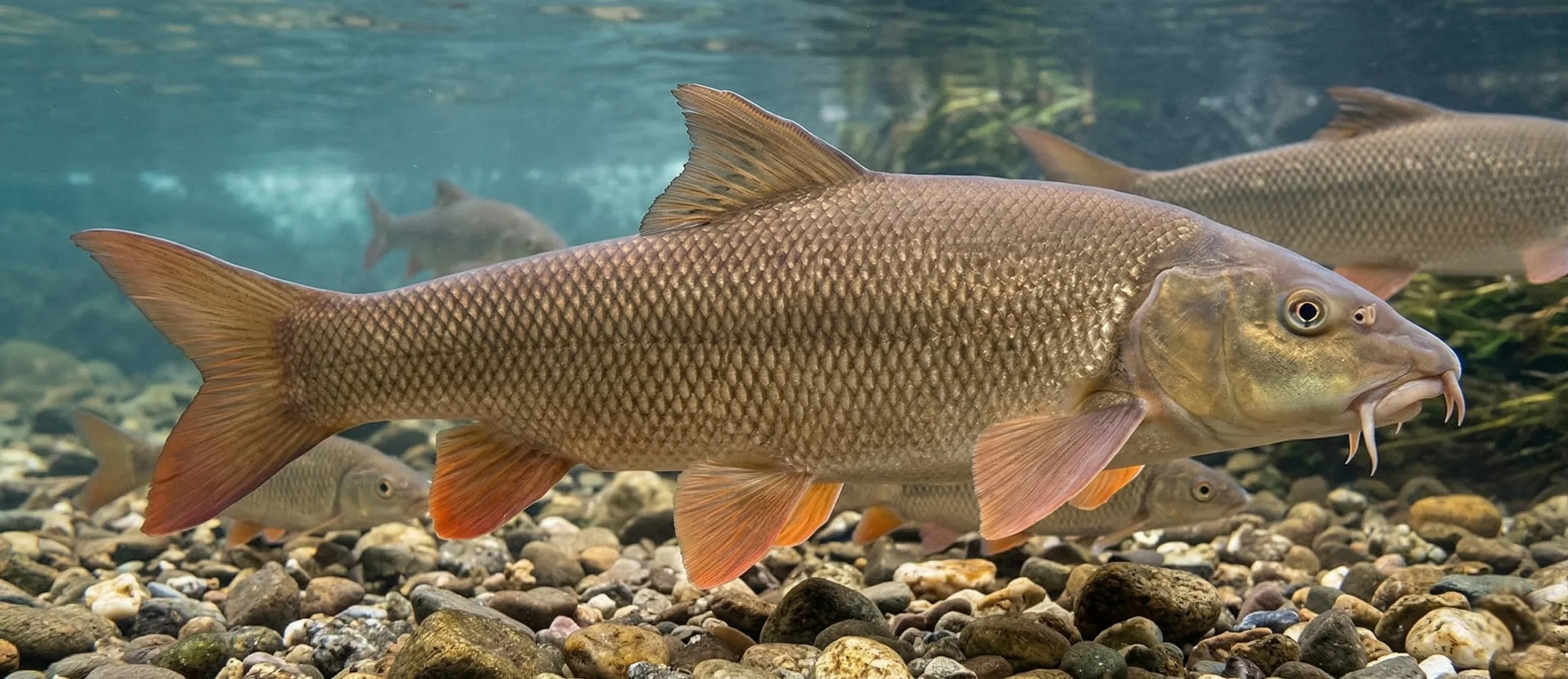
Identification
The gudgeon is a small, slender bottom-dwelling fish with a distinctive appearance. The body is elongated and cylindrical, the back olive-brown with dark blotches along the lateral line. Characteristic are the two barbels at the corners of the mouth, used to probe the bottom for food. The belly is whitish and the fins light yellow-brown. With an average length of 8-12 cm it is one of the smaller fish species — specimens up to 15 cm are rare.
Behavior & ecology
The gudgeon lives on the bottom of all sorts of water types: streams, rivers, canals and even ponds with a hard bottom. It is a schooling fish that forages in groups over sand and gravel beds on insect larvae, small worms and crustaceans. Gudgeon are most active at dusk and in overcast conditions. They spawn from May to June: the male digs a shallow pit in sand or gravel where the female deposits her eggs. The gudgeon is an important prey species for larger predatory fish such as perch, pike and trout.
Fishing techniques
The gudgeon is a fun bycatch when light coarse fishing and a popular fish for beginners:
- Light float fishing — small float rig (0.5-2 gram) with a piece of worm or maggot just above the bottom
- Pole fishing — short pole (4-6 meters) with fine rigs; ideal for fishing along banks of streams and canals
Use fine tackle: 0.10-0.14 mm hooklength, hook size 18-22. Feed with fine groundbait or loose maggots to hold a school of gudgeon at your swim.
In the Netherlands
The gudgeon is native and common throughout the Netherlands. The species is found in virtually all water types with a hard bottom, from mountain streams in Limburg to city canals in the Randstad. There is no closed season or minimum size. The population is stable and the gudgeon benefits from stream restoration projects that restore hard bottoms. As a prey species, the gudgeon plays a key role in the food web of Dutch waters.
What our models found for Gudgeon
Below is what our models see in the data. These are links: where one thing occurs, the other occurs more often. That is not a cause. Each model answers one question and may not say more than it measured. The label by the heading tells you which question — and how sure the answer is.
Where this species lives A set, not a ranking Strong model
 Stone loach (Barbatula barbatula)
The names here sit too close together to put one on top. What you do see is the company: the stone loach, the three-spined stickleback, pike, the banded demoiselle (Calopterygidae), the tubenose goby, spined loaches, the pumpkinseed, tench, roach and bleak.
Four of those animals are in the list twice, once as a species and once as a family: the stone loach, the pike, the spined loach and the pumpkinseed. So the list looks longer than it is.
FishBase puts the gudgeon in fast flowing rivers with sand or gravel bottom, but also in still waters. That explains why both stream animals and still-water animals are in it.
One name we cannot place: heavy metals. It is in the model, but this model gives no direction, and the FishBase page for the gudgeon says nothing about sensitivity to pollution. So we leave it standing without an explanation.
Where there are many A set, not a ranking Strong model
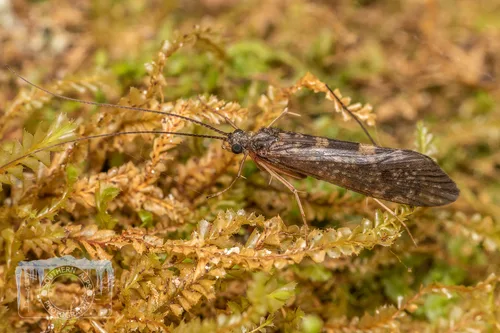 Caddisflies (Hydropsychidae)
Plenty of gudgeon goes with caddisflies of the family Hydropsychidae, which spin a catching net in the current. Also mud snails (Hydrobiidae), golden algae (Chromulinaceae), blue-green algae (Aphanizomenonaceae) and diatoms of the family Melosiraceae.
We count fewer gudgeon with pond skaters (Gerridae) and riffle bugs (Veliidae) — bugs that walk on the water surface — with fish leeches (Piscicolidae) and with water fleas of the family Bosminidae. So the current comes back twice: the caddisfly needs it, the surface bugs do not.
Where they grow big A set, not a ranking Strong model
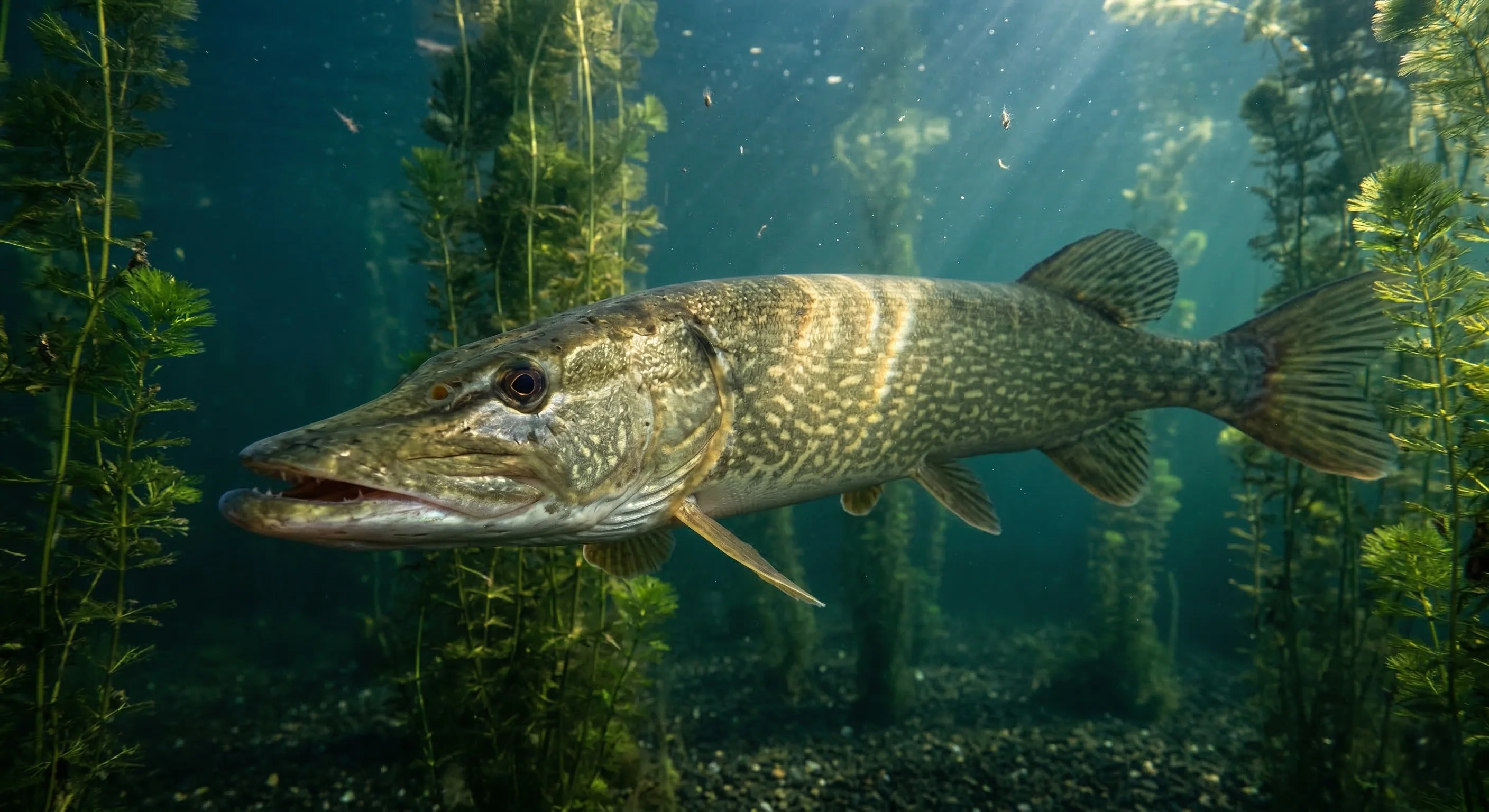 Pike (Esox lucius)
Bigger gudgeon go with roach, barbel, perch, with horsetails (Equisetaceae) and with water mites of the family Lebertiidae. The barbel is a nice one: on the barbel page the gudgeon appears in the list the other way round.
They are smaller with pike and with backswimmers (Notonectidae). That pike is tempting to explain — the gudgeon is classic pike prey — but all we counted is that they occur together, not what one does to the other.