Skip to content
LAKE

Sneekermeer

Lake and the waters around it·53.03206, 5.74869·11.4 km²

On average 2.5 m deep and 7 m at the deepest point (bed below NAP, surveyed by Provincie Fryslân in 2019–2021).

25
Fish species recorded
72% of NL
More diverse than
cm
Biggest catch
Surveyed
Depth data
Map layers Specialist

This lake has a surveyed depth map, with bottom structure and edges.

Free example: IJsselmeer
What do Common / Notable / Rare / Mythic mean?

The label says how widespread a species is: the share of Dutch survey areas that have ever recorded it. It does not say how many live here. A species found in only a few areas can still be abundant in them. The records come from surveys of the water. A plant of the bank or of dry land, such as bracken, rarely turns up in them, so it can be labelled “rare” or “mythic” even where it is common on land. Freshwater species are compared with freshwater areas and sea species with salt ones. Over half of all survey areas are at sea: measured against the whole country, no freshwater fish could ever count as “common”.

Common≥30%Notable10–30%Rare3–10%Mythic<3%
Ruffe
gymnocephalus cernuus
Commonin 67.6% of fresh NL
Fish recorded
biggest cm
suitable99%
Bream
abramis brama
Commonin 82.4% of fresh NL
Fish recorded10,700
biggest cm
suitable100%
Zander
sander lucioperca
Commonin 55.2% of fresh NL
Fish recorded
biggest cm
suitable98%
Roach
rutilus rutilus
Commonin 91.9% of fresh NL
Fish recorded4,798
biggest cm
suitable98%
Perch
perca fluviatilis
Commonin 91.9% of fresh NL
Fish recorded3,378
biggest cm
suitable100%
European smelt
osmerus eperlanus
Notablein 11.8% of NL
Fish recorded
biggest cm
suitable90%
Round goby
neogobius melanostomus
Notablein 19.4% of fresh NL
Fish recorded
biggest cm
suitable94%
White Bream
blicca bjoerkna
Commonin 69.5% of fresh NL
Fish recorded
biggest cm
suitable96%
Eel
anguilla anguilla
Commonin 70.7% of fresh NL
Fish recorded
biggest cm
suitable96%
Rudd
scardinius erythrophthalmus
Commonin 81.7% of fresh NL
Fish recorded
biggest cm
suitable88%
Gudgeon
gobio gobio
Commonin 55.9% of fresh NL
Fish recorded
biggest cm
suitable25%
Monkey goby
neogobius fluviatilis
Rarein 7.5% of fresh NL
Fish recorded
biggest cm
suitable86%
Ide
leuciscus idus
Commonin 44.6% of fresh NL
Fish recorded
biggest cm
suitable92%
Bleak
alburnus alburnus
Commonin 36.9% of fresh NL
Fish recorded
biggest cm
suitable72%
Three-spined stickleback
gasterosteus aculeatus
Commonin 56% of fresh NL
Fish recorded
biggest cm
suitable71%
Pike
esox lucius
Commonin 88.8% of fresh NL
Fish recorded
biggest cm
suitable94%
Spined loach
cobitis taenia
Commonin 51.5% of fresh NL
Fish recorded
biggest cm
suitable46%
Tubenose goby
proterorhinus semilunaris
Commonin 32.6% of fresh NL
Fish recorded
biggest cm
suitable71%
Bullhead
cottus gobio
Notablein 12.7% of fresh NL
Fish recorded
biggest cm
suitable88%
Belica
leucaspius delineatus
Commonin 52.4% of fresh NL
Fish recorded
biggest cm
suitable64%
Asp
aspius aspius
Notablein 27.8% of fresh NL
Fish recorded
biggest cm
suitable79%
European bitterling
rhodeus amarus
Commonin 41% of fresh NL
Fish recorded
biggest cm
suitable51%
Houting
coregonus oxyrinchus
Mythicin 0.5% of fresh NL
Fish recorded
biggest cm
Tench
tinca tinca
Commonin 76.2% of fresh NL
Fish recorded
biggest cm
suitable65%
Carp
cyprinus carpio
Commonin 53.8% of fresh NL
Fish recorded
biggest cm
suitable57%
Food web

The food chain of the Sneekermeer

The Sneekermeer is murky, green water. Every month the water board, Wetterskip Fryslân, measures how far you can see into it. From 2009 to 2025 that was usually between 40 and 90 centimetres, with 60 in the middle. Those 60 centimetres are normal for a large, shallow lake: at roughly half of the comparable measuring points in the Netherlands the water is clearer, at the other half murkier. According to the management plan of the Province of Fryslân, several things keep the water murky: plenty of algae in the nutrient-rich water, wind that sweeps freely across the open lake, bream that stir up the bottom as they feed, and passing ships. The water of the Terkaplesterpoelen is murky too: in 2021 you could see 40 to 50 centimetres down there.

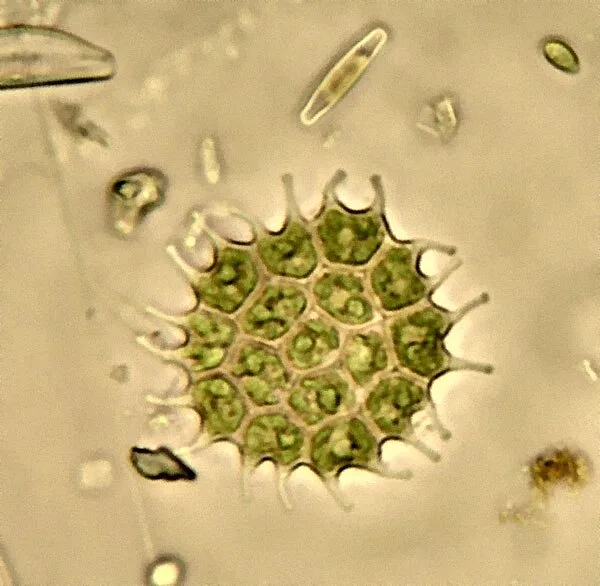
The thread-like blue-green alga Planktothrix agardhii turned up in seven out of ten algae samples from the lake and the pools, from 1990 to 2023. That is twice as often as in comparable samples from other lakes. Water fleas live on algae: tiny crustaceans, a few millimetres long, that drift in the water. From 1998 to 2010 the water fleas here were counted three to six times a year, 52 times in all. The water flea Daphnia or a close relative was in 44 of those 52 counts, and another water flea, Bosmina, in 48.

What does a water flea eat? Researchers from the laboratory at the Tjeukemeer, another Frisian lake, described it in 1984. In the guts of Daphnia from a nutrient-rich lake they found almost nothing but algae. The water fleas preferred a green alga. But by number and by weight they took in more of a thread-like blue-green alga: the same species as here, then still called Oscillatoria agardhii. They left long threads alone.

Water fleas are food for young fish. Every spring, water from the IJsselmeer was let into the Frisian lakes, and with it came large numbers of smelt larvae, researchers studying the Tjeukemeer wrote in 1985. They grew up feeding on zooplankton: tiny animals that drift in the water, such as water fleas. By the next spring almost all of them were gone, eaten by zander. In our data from the lake and the pools, smelt turned up in 31 of 62 catches, where similar surveys of other freshwater lakes would lead you to expect 19. In 2021 the researchers caught 328 smelt in the Sneekermeer and 98 in the Terkaplesterpoelen, all of them small, 5 to 9 centimetres, according to the fish survey for Wetterskip Fryslân.

Ruffe eat zooplankton too, mainly when they are young. In a shallow, murky lake in Estonia, young ruffe ate mostly water fleas and other tiny crustaceans, Daphnia among them. Older ruffe there lived mainly on midge larvae (Kangur and Kangur, 1996).

Below are two food chains from the lake and the pools. Both start with the algae and the water fleas, and both end with zander: one runs through the smelt, the other through the ruffe. The dashed line to the ruffe holds for young ruffe only. The source for every arrow is listed under the figure.
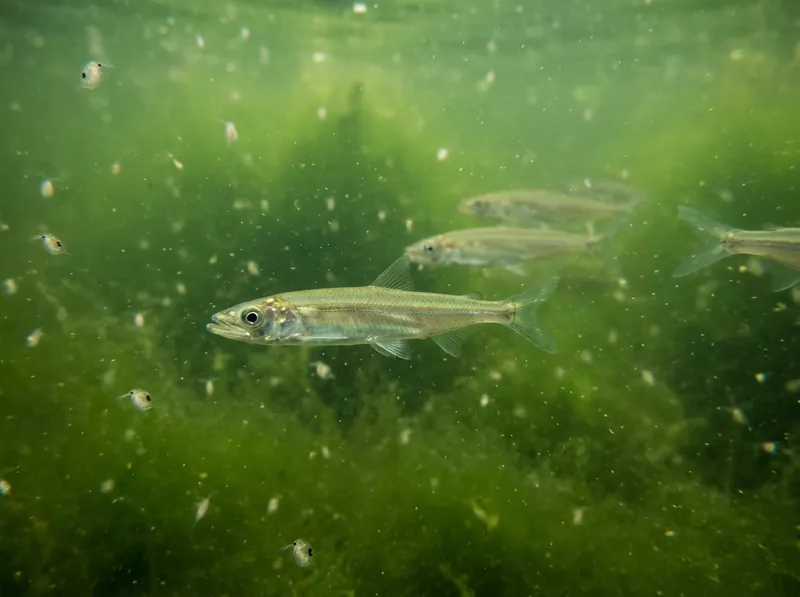
Young smelt in turbid green water among water fleas
Food chains from this lake
MicroorganismsAlgaein 233 of 233 samples1990–2023
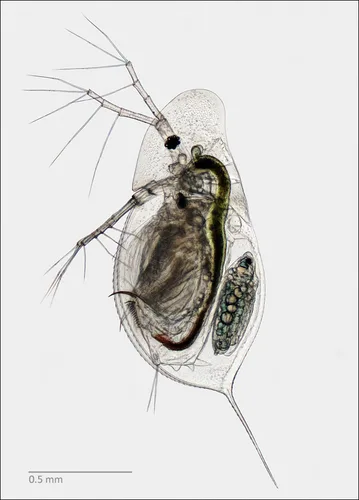
InvertebratesWater fleas (Daphnia)in 44 of 71 samples1998–2022
FishSmeltin 31 of 62 catches2006–2021
FishRuffein 56 of 62 catches2006–2021
PredatorZanderin 50 of 62 catches2006–2021

What lives here comes from samples and catches in the lake itself. Each arrow points to what eats it. That comes from studies elsewhere, listed below. A dashed line holds for part of the group only.

Water plants

The water plants of the Sneekermeer

In 2021 no plants grew in the open water of the Sneekermeer, and none grew under water in the Terkaplesterpoelen, the water board noted during its fish survey. It was not always like this. Around the middle of the last century these Frisian lakes still held beds of pondweed, the management plan says. They disappeared as the water got worse, and they have hardly come back, even though the water has since improved.

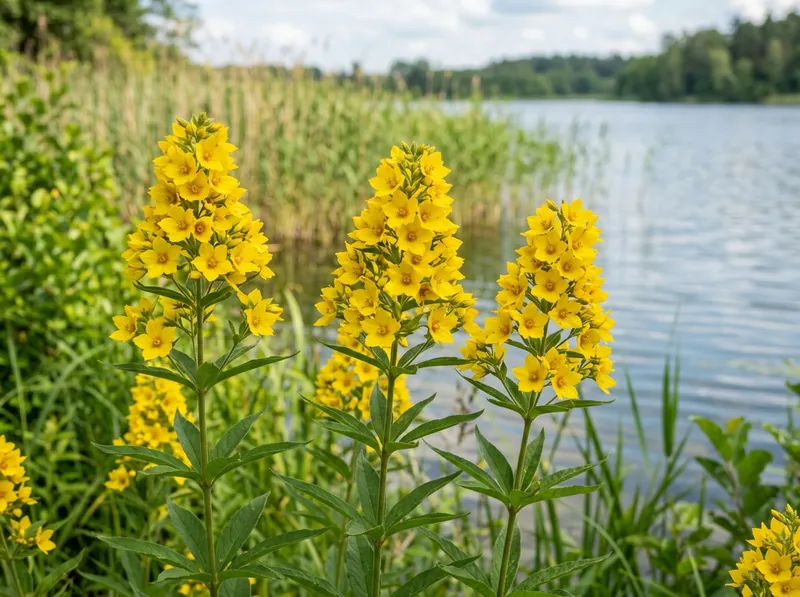
Most plants here grow on the shore. In 28 plant surveys of the lake and the pools, from 1994 to 2022, researchers almost always found common reed and bulrush (cattail), and often great willowherb, yellow iris, purple loosestrife and bittersweet. The yellow water-lily, a member of the water-lily family with small yellow flowers, turned up in 20. Two yellow-flowered shore plants turned up far more often than you would expect: yellow loosestrife and tufted loosestrife, each in 18 of the 28 surveys. They belong to the primrose family; purple loosestrife, despite its name, does not. Plants of the primrose family turned up in 20 surveys, where comparable surveys of other lakes would lead you to expect 6. Meadowsweet, with broad clusters of small, white, scented flowers, was common too: it turned up in 14.

Yellow loosestrife in flower
The water

About this water

The Sneekermeer, Snitser Mar in Frisian, lies east of the town of Sneek, near the village of Terherne. Together with the Goëngarijpsterpoelen, the Terkaplesterpoelen and De Blaugerzen it has always formed one area, says the Natura 2000 designation. So this page covers the lake and the waters around it: the Goëngarijpsterpoelen south of the lake, the Terkaplesterpoelen to the east, the Houkesloot towards Sneek and smaller pools nearby. They are all linked by water. The Terkaplesterpoelen, for example, connect to the lake through the Heerenzijl and the Heerengat, the water board's fish survey says. The map above names each water.

The lake is open and mostly shallow, and the pools are shallower still. The lake bottom is mainly peat and sand, with a layer of silt up to half a metre thick in places. In the Terkaplesterpoelen the bottom is sand, the water board reports. The water level has hardly changed since the 1970s: about half a metre below NAP, the Dutch reference level. The depth at the top of this page is measured down from NAP. Subtract half a metre and you have roughly the depth of the water.

The shipping channel of the Prinses Margrietkanaal runs straight across the lake. It is part of the main waterway from Lemmer to Delfzijl, used by large cargo ships. On the depth map above, the channel shows as a deep, straight line through the shallow lake. The depth on the map was measured: the Province of Fryslân surveyed the lake and nearly all the pools between 2019 and 2021. Only the small Kruiswater has no depth measurements.

All these waters lie in the Natura 2000 site Sneekermeergebied, a European nature area designated for birds. The site is the largest roost of greater white-fronted geese within the Natura 2000 network. The reed beds of the Sneekermeer hold one of the key populations of sedge warblers in the Frisian lakes.

History

Origin and history

The management plan explains how the lakes here formed. In the Middle Ages people dug away the peat, for fuel and to win salt from it. In places this left many pits filled with water. In storm floods the water could wash away the narrow strips of land between the pits, and large lakes formed. A number of lakes formed this way in the first half of the thirteenth century. The sea water also left a layer of clay on top of the peat.

The Prinses Margrietkanaal is much younger. The Frisian part of the waterway opened on 30 May 1951, with Princess Margriet present, and was later named after her. The route runs partly through lakes, partly through existing waterways and partly through dug canals, Rijkswaterstaat writes.

Fishing

Fishing the Sneekermeer

Check the VISplanner to see whether and where you may fish on the Sneekermeer and the pools.

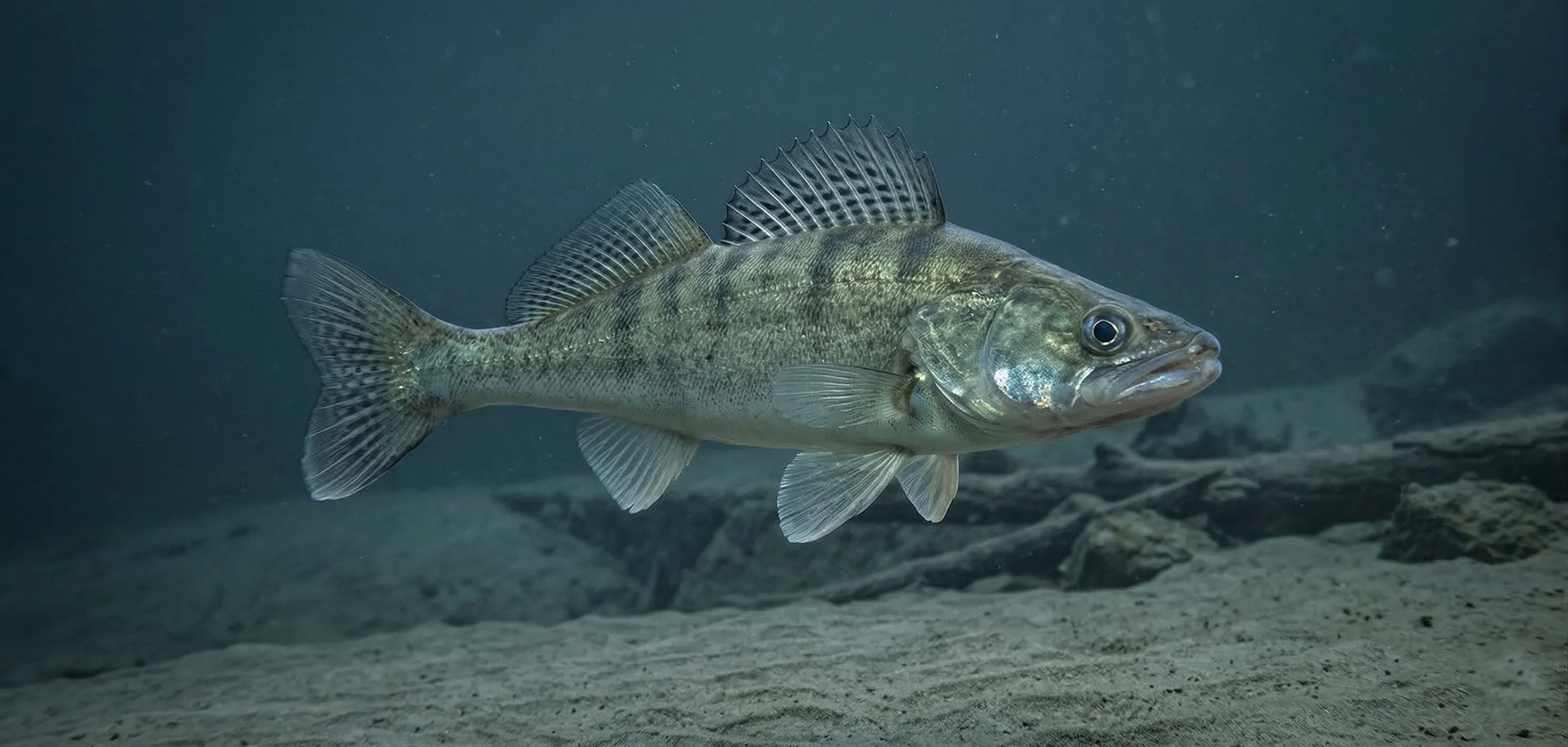
Wetterskip Fryslân has had the fish here surveyed six times since 2006. We hold the data of four of those years: 2006, 2009, 2012 and 2021, with 62 catches from the lake and the pools, by trawl net in open water and by electric fishing along the shore. Ruffe made up almost half of all the fish caught. With the same methods in other freshwater lakes that is 4 percent on average. Zander made up 11 percent, where you would expect 2 percent elsewhere. That fits what RAVON, the Dutch society for reptiles, amphibians and fish, writes: in murky, nutrient-rich lakes zander can become very common and take over from pike as the predator.

Perch and roach were in almost every catch, but in small numbers: perch were only 5 percent of all fish and roach 7 percent, where the same methods elsewhere would lead you to expect 15 and 18 percent. Perch hunt by sight during the day and like clear water, according to RAVON. In murky water they catch less and stay smaller. Ruffe do not have that problem. They hunt with a sensitive lateral line, and a layer in their eyes catches extra light. That is why they do well in murky, dark water, RAVON writes.

Eel turned up in 52 of the 62 catches. In similar surveys of other freshwater lakes you would expect it in 33. Pike were in 24 catches, as often as elsewhere, but always in small numbers: 32 pike among almost 67,000 fish. Yet in the catch reports on mijnvismaat.nl (Sportvisunie), anglers named pike most often here, followed by zander, bream and asp. The two need not contradict each other: reports follow where anglers fish and what they fish for.

Zander
Notable

Notable species

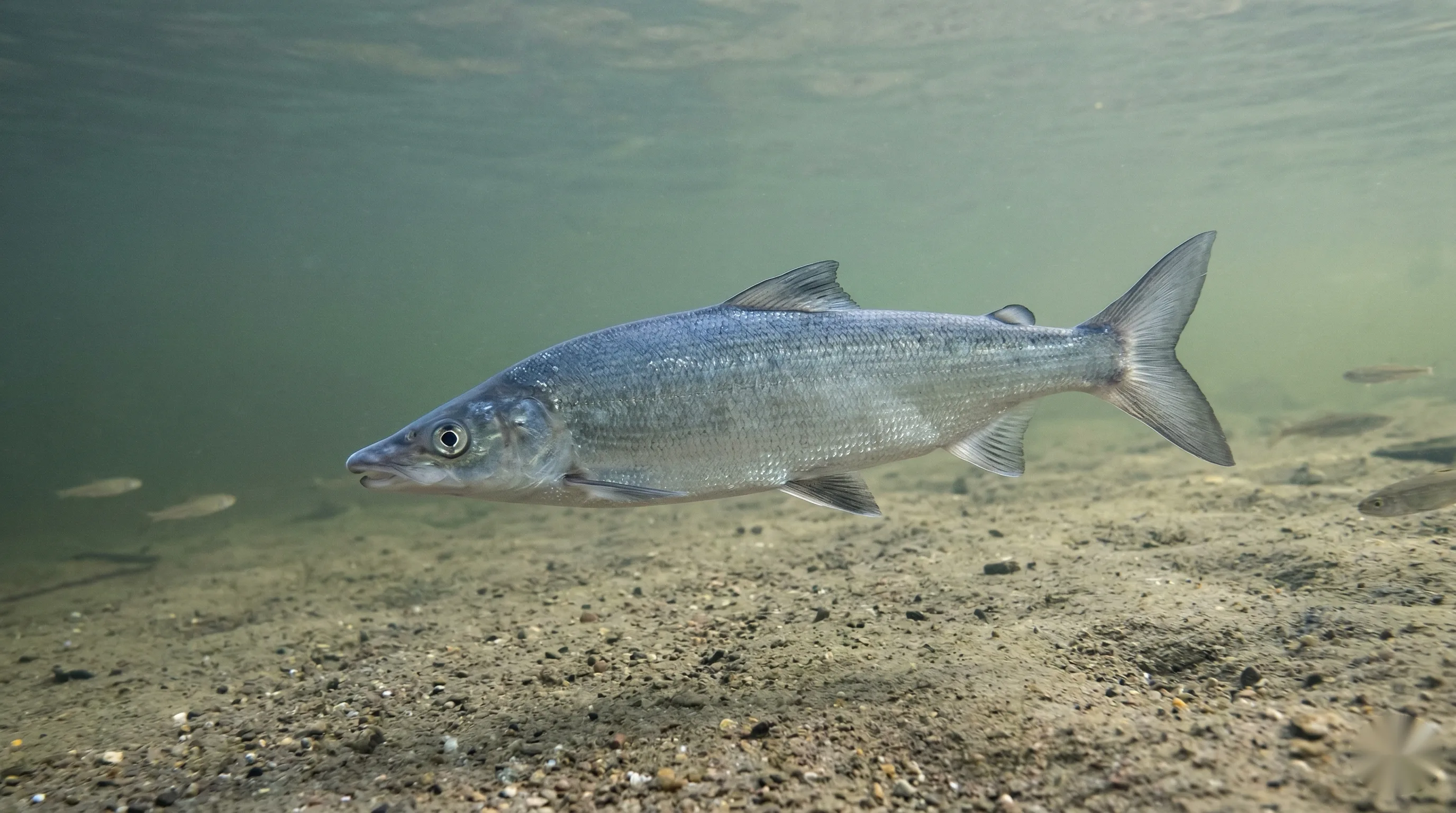
The rarest fish in our data from this area is the houting. In 2021 the fish survey for Wetterskip Fryslân caught one in the Sneekermeer. Across the Netherlands, our data hold the houting in only 20 of the more than 1,400 areas where fish have been surveyed in fresh water. In 13 of them it is listed under the name Coregonus maraena. FishBase lists the houting released in the Rhine basin under that name too. It is a migratory fish of the salmon family, with silver flanks and a striking, pointed, blue-black snout. It died out in the Rhine early in the twentieth century. Only a small group survived, in the Danish river Vida. Fish from that group were used from 1999 to 2006 to bring the species back to the German part of the Rhine. Adults now live in the IJsselmeer and the Wadden Sea, among other places, and some grow up in the IJsselmeer, RAVON writes. The species is still fairly rare in the Netherlands, but its numbers seem to have risen sharply in recent years. It is on the Dutch Red List in the category "gevoelig" (sensitive). How this fish reached the Sneekermeer, we do not know. The Prinses Margrietkanaal links the lake to the IJsselmeer.

The monkey goby is rare too: our data hold it in 108 of those more than 1,400 areas. It comes from the coasts of the Black Sea and reached the Rhine through the Main-Danube Canal, RAVON writes. It was first found in the Netherlands in 2009. In Friesland it was first caught in 2014, at an angling match on the Prinses Margrietkanaal near Spannenburg, RAVON's journal reported. It likes sandy bottoms, where it digs in until only its eyes stick out. In 2021 the researchers caught 66 in the Terkaplesterpoelen, where the bottom is sand, and 25 in the Sneekermeer.

The round goby comes from the region around the Black Sea and the Caspian Sea. It was first found in the Netherlands in 2004, probably carried in the ballast water of ships, says RAVON. Until the spring of 2014 the inland waters of Friesland had none. Then it moved up the Prinses Margrietkanaal from the IJsselmeer, and the first sightings followed the line of the canal, RAVON's journal reported in 2015. In our data from the lake and the pools it was never caught in 2006, 2009 or 2012, not even in the 18 catches made by electric fishing along the shore. In 2021 the researchers caught 1,666 in the Sneekermeer, at nearly every spot they fished. In the Terkaplesterpoelen they caught 415, according to the fish survey for Wetterskip Fryslân.

The bullhead, a small fish of the bottom, used to be caught in small numbers among the stones along the shores of the large Frisian lakes. In 2018 it was missing from the nets there. This is probably linked to the rise of the round goby, the researchers wrote in their report for Wetterskip Fryslân. In our data the bullhead was in 5 of 54 catches from the lake and the pools between 2006 and 2012, and in none in 2021. Whether it has gone from here, we do not know. On the Zwarte Meer the bullhead has not been found after 2011.

Houting

Water composition
Oxygen saturation
79.2%
Total phosphorus
0.218mg/l
Total nitrogen
2.64mg/l
Ammonium
0.455mg/l
Chlorophyll-a
34.0ug/l
Chloride
106mg/l
Zinc
6.00ug/l
Lead
0.795ug/l
Blue-green algae in past surveys
found often
not a current measurement
vs all monitored NL waters since 2015 · 24 sample point(s)
Over the years
Total phosphorus0.19 mg/l
Total nitrogen2.14 mg/l
Ammonium0.44 mg/l
2009percentile vs all NL waters — lower is cleaner2025